Chrome Web Extension
 Edge Web Extension
 Android App
 iOS App


“You won’t believe what happened next…”
That line still works because it is built to bother you. It withholds the important part, pokes at your curiosity, and pushes you to click before you stop and think. That is the basic trick behind clickbait ads. They show up on news sites, video pages, mobile apps, social feeds, and sketchy corners of the web, often dressed up as urgent warnings, miracle fixes, or shocking celebrity updates.
The problem is not only that they are annoying. Many of them lead to junk pages, scam offers, shady redirects, or pages built to squeeze one more click out of you. In Q3 2025, auto-redirects made up 80% of malicious ad activity tracked by GeoEdge, the highest share it had recorded, which gives you a sense of how aggressively deceptive ads now push users away from the page they meant to visit. No need to fret, because we’re going to cover what clickbait ads are, show common examples, what kinds of risks they bring, and how to block them before they hijack your screen.
What are clickbait ads?
Clickbait ads are ads designed to win the click first and worry about honesty later. In simple terms, clickbait advertising uses misleading or overhyped headlines, images, or messages to pull people into opening a page, starting a download, or visiting a destination that is often lower quality than promised.
Most of these ads share a few familiar traits:
- They make vague or exaggerated claims
- They lean hard on shock, fear, or curiosity
- They use thumbnails or headlines that do not match the destination
They also tend to show up in places where people react quickly, including websites, pop-ups, mobile apps, and social feeds.
A useful rule is this: if the message tries to trigger you before it explains itself, be suspicious. A clickbait ad is built around emotional pressure, not clear information.
Common clickbait ads examples
The easiest way to spot them is to look at patterns you have probably seen many times before. Here are six familiar clickbait ads examples and why they keep getting clicks.
1. “Doctors hate this one trick…”
This format borrows authority, then adds a secret. It suggests there is a hidden shortcut that experts do not want you to know. The trick is the curiosity gap. You are nudged to click to find out what is supposedly being hidden.
2. “You’ve been doing this wrong your whole life…”
This one mixes insult and intrigue. It tells you that a normal habit is somehow embarrassingly wrong, then hints that the fix is just one click away. It works because people do not like feeling uninformed.
3. “This app will change your life overnight…”
Now the hook is transformation. The message promises a huge outcome with almost no effort or time. That exaggeration is a major sign of click bait ads, especially when the landing page turns out to be a thin sales pitch.
4. “Drink This Before Bed to Burn Belly Fat Overnight!”
Health claims are one of the most common categories because they combine insecurity, urgency, and wishful thinking. The ad offers an easy answer to a hard problem, which is exactly why so many users click.
5. “This One Tip Will Save Your Life.”
This is pure pressure. It frames the message as something too important to ignore. Fear-based hooks like this are often tied to scareware, fake emergency claims, or pages that turn a small worry into a reason to act fast.
6. “You’ll Never Guess What [Celebrity] Looks Like Now!”
Celebrity bait is cheap and effective. It relies on familiarity, gossip, and surprise. Many of these ads lead to slide shows, spammy galleries, or pages packed with junk links.
These ads often send users to low-value destinations: cluttered pages, misleading offers, fake warnings, endless galleries, or forms meant to collect personal data rather than help you.
Why clickbait advertising works so well
Clickbait is not sloppy marketing. It is built on predictable human behavior.
Curiosity gap
A curiosity gap happens when an ad gives you just enough information to make you feel incomplete. You know there is more, but not enough to satisfy the question in your head. That unresolved curiosity pushes the click.
FOMO
Fear of missing out is another big driver. Some ads suggest that other people already know the trick, found the deal, or avoided the danger. You click because you do not want to be the last person left out.
Emotional manipulation
The strongest clickbait usually triggers emotion before logic. Fear, anger, hope, insecurity, or shock can all speed up decisions. That is why fake virus warnings, miracle health tips, and celebrity scandals do so well. They hit fast and ask questions later.
More clicks usually mean more ad revenue, more page views, more affiliate chances, or more leads for shady offers. That is why clickbait keeps spreading. It is intentional and the ad is not trying to inform you first. It is trying to win the click.
The hidden risks of clickbait ads
Many people treat clickbait as harmless internet junk. Some of it is just low-grade annoyance. Some of it is not.
Scam pages and misleading offers
A lot of clickbait leads to pages promising instant savings, miracle products, investment riches, or giveaway prizes. The destination is often built to collect money, email addresses, or card details rather than deliver anything useful.
Malware and unsafe redirects
Some deceptive ads act as a doorway to harmful pages, suspicious downloads, or redirect chains. In rougher corners of the web, this can overlap with malvertizing, where the ad itself becomes part of a wider abuse setup.
Privacy concerns
Some ads disguised as quizzes, surveys, or free offers are there to harvest data. They may ask for email addresses, phone numbers, or payment details, then pass you into a funnel you never intended to join.
Wasted time and mounting frustration
Even when there is no direct scam, the damage is still there. You lose time, end up on junk pages, and train yourself to distrust more of what you see online. That is part of why clickbait makes browsing feel dirtier and more tiring.
Use Poper Blocker to stop clickbait ads
Even if you know how to spot clickbait ads, avoiding them completely is almost impossible. They are built into the places people already spend time: news sites, streaming pages, sidebars, social feeds, and pages stacked with aggressive ad units.
That is where Poper Blocker comes in. Instead of asking you to manually dodge every trap, it helps remove many of the formats where clickbait shows up in the first place.
Where it works
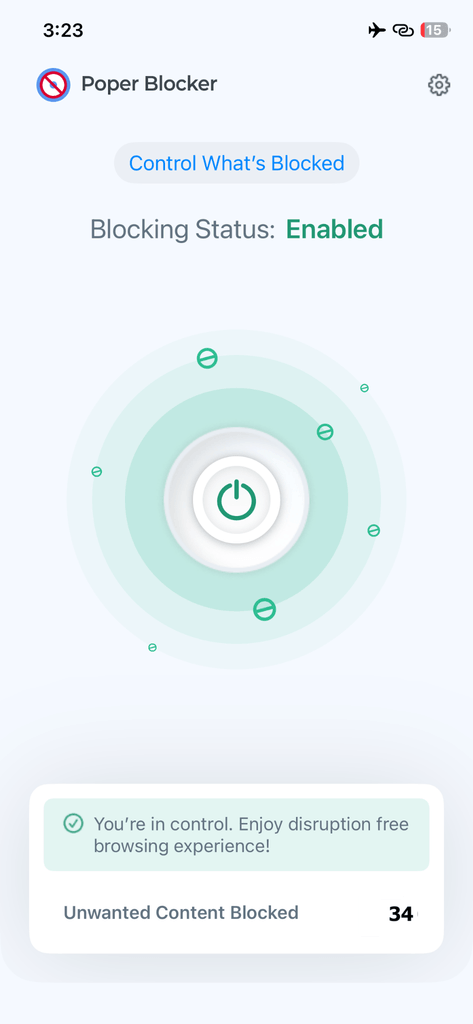
Poper Blocker is supported on Chrome and Edge for desktop browsing, and Android and iOS for mobile use.
What it helps block
Its value is not limited to one site or one ad type. It helps by cutting off the formats that clickbait leans on most:
- Pop-ups that interrupt the page and force attention
- Overlays that sit on top of content
- Redirect traps that send you somewhere you never meant to visit
- Intrusive ad surfaces that turn browsing into a chase for the close button
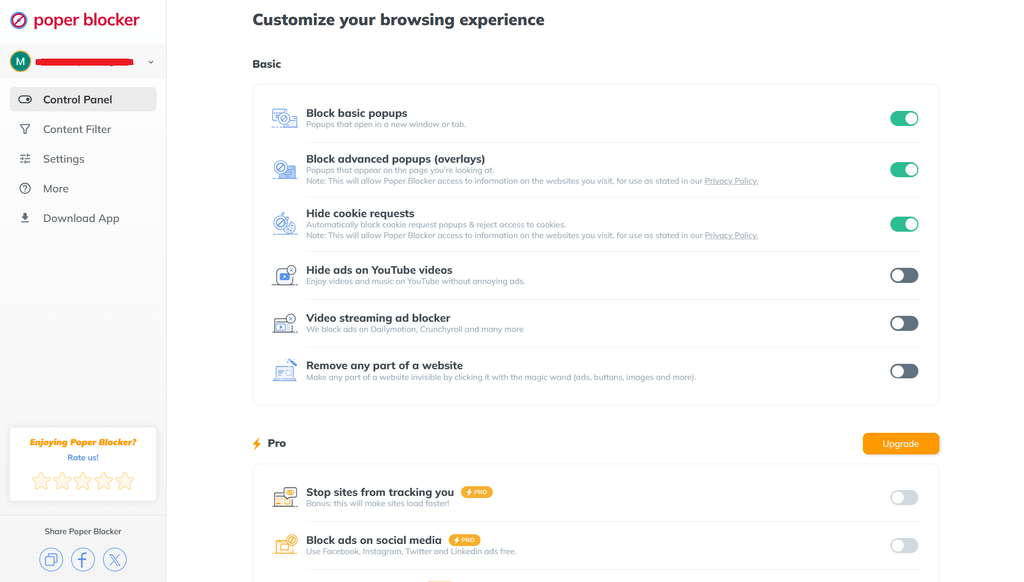
A good pop-up blocker helps here because many clickbait campaigns rely on sudden interruption. If the message cannot jump in front of you, it loses a lot of its power.
Why that improves browsing
When those interruptions are reduced, the web feels cleaner and easier to use. Pages are less cluttered. There is less bait competing for your attention. You spend more time on the content you wanted and less time closing junk.
Why ease of use helps
One reason people give up on blocking tools is setup fatigue. Poper Blocker is built to install simply and then keep working in the background. That helps because users dealing with clickbait are often not trying to fine-tune a dozen settings. They just want the mess reduced.
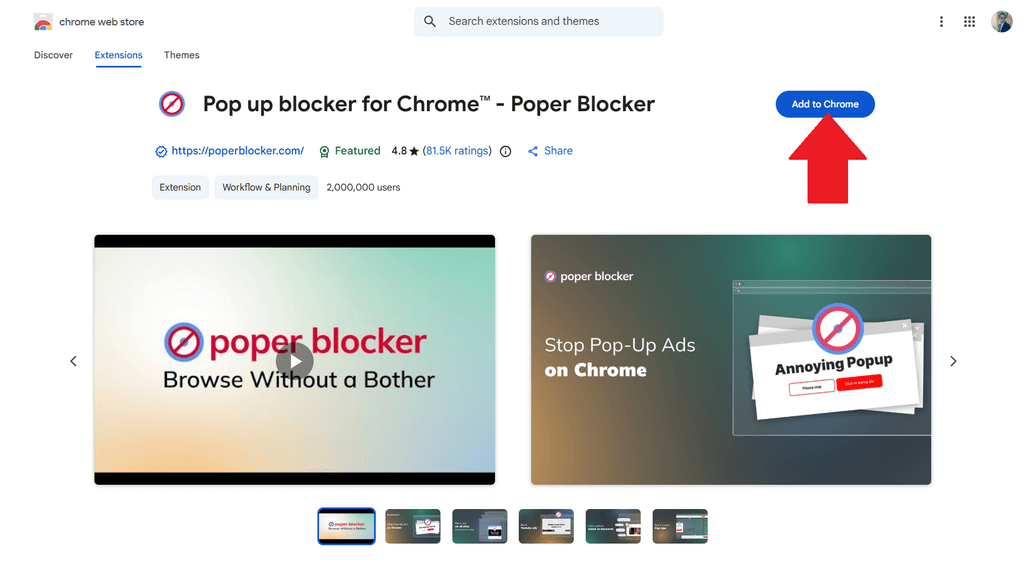
This is not only about installing an ad blocker. It is about taking back control of the page in front of you. When fewer deceptive prompts get screen space, you make fewer rushed clicks and run into fewer bait-heavy pages.
You do not have to browse on the ad ecosystem’s terms
Clickbait ads are everywhere because they are cheap to produce and good at grabbing attention. But being common does not make them harmless. They waste time, create distrust, and sometimes lead users straight into scams, junk offers, and misleading pages.
The good news is that they are avoidable. Once you know the patterns, they become easier to spot. Once you use a blocking tool that cuts off pop-ups, overlays, and redirects, they become much easier to avoid.
You do not have to keep accepting a web full of bait. Notice the patterns, avoid the hooks, and use Poper Blocker to keep more of that junk off your screen.
FAQ
What are clickbait ads in simple terms?
They are ads that use hype, vagueness, or emotional pressure to get you to click. The destination often gives you much less than the ad promised.
Are clickbait ads illegal?
Not always. Some are only misleading or low quality. Others cross into fraud, unsafe redirects, or deceptive claims that can create legal problems for advertisers or publishers.
How can I tell if a headline is clickbait?
Watch for big promises, missing details, emotional pressure, strange urgency, or a headline that seems designed to trigger curiosity rather than explain anything.
Why do I keep seeing fake virus warnings?
They work because fear is fast. Fake system alerts are built to push immediate action before you slow down and question the message.
Can a blocking tool help with clickbait on news and streaming sites?
Yes. A tool that blocks pop-ups, overlays, and redirect behavior can remove many of the formats clickbait relies on most. This is what Poper Blocker can do.
Doomscrolling usually starts in a familiar way. You check your phone late at night for one update. Then one post turns into ten. A bad headline becomes a thread, then a comment fight, then a video, then another post that makes your chest tighten a little. You tell yourself you are just catching up, staying informed, making sure you did not miss anything important. Then you look at the time and realize far more of your night is gone than you meant to give away.
That emotional pattern is part of why doomscrolling feels so sticky. Curiosity pulls you in. Anxiety keeps you there. A short burst of relief arrives when you find a post that seems to explain what is happening, but that relief rarely lasts. The feed gives you one more thing to react to, one more thing to check, one more reason not to stop.
That endless scroll is not just a habit. It is a business model. The longer you scroll, the more valuable you become.
What is doomscrolling (and why is it so hard to stop)
Doomscrolling is the repeated habit of scrolling through upsetting, stressful, or negative content, especially on social media and news-heavy feeds. Researchers have described it as persistent attention to negative information in feeds about crises, disasters, and other distressing events, and they have linked it with anxiety, poor self-control, passive social media use, and fear of missing out.
Part of the trap comes from negativity bias. Human attention is naturally drawn toward possible threats. Your brain would rather overreact to bad news than miss something important. In a social feed, that means alarming headlines, angry posts, conflict clips, and fear-heavy commentary can pull stronger reactions than neutral updates or ordinary daily content.
That is why doomscrolling can feel oddly productive even when it leaves you drained. Negative news creates the feeling that you are staying informed or staying prepared. But what often happens is not clarity. It is repeated exposure to emotionally loaded fragments that keep your attention activated without giving you a satisfying stopping point.
There is also the dopamine loop, a reward system layered on top of the stress. Even when the content feels bad, checking again can still create a small hit of anticipation. Maybe the next post will explain everything. Maybe the next reply will make the story make sense. Maybe the next update will be better. That uncertainty keeps the hand moving.
So the contradiction sits right in the middle of the experience. It feels bad, but it is hard to stop. You do not leave the feed feeling better, yet you keep checking because the design keeps offering another cue, another alert, another reason to stay.
Why social media platforms encourage doomscrolling
Social platforms do not make money because you feel better after using them. They make money by holding attention long enough to show more ads, gather more behavioral signals, and improve ad targeting.
That is the simplest way to understand the system. More time spent in the feed usually means more ad impressions. More ad impressions usually mean more revenue opportunities. More scrolling also gives the platform more information about what catches your attention, what you pause on, what you skip, what you tap, and what emotional tone keeps you engaged.
This is why engagement-based revenue influences the feed so strongly. The algorithm is not built around your well-being. It is built around signals that suggest you will stay longer, react more, and come back again. Scientific American’s take if social media is addictive summarized this plainly: never-ending feeds, autoplay, and revenue-driven recommendation systems keep people going, and experts argue that platforms benefit from holding user attention.
That also helps explain the outrage premium. Fear, anger, conflict, and shock tend to keep people watching more than neutral posts do. Platforms do not need to sit a user down and say, “Here is upsetting content because it earns more.” They only need ranking systems that keep promoting the kinds of posts that produce stronger reactions and longer sessions. If the content that performs best is emotionally charged, the system keeps feeding more of it.
Doomscrolling is not a bug. It is a feature of the system.
The role of ads in the doomscrolling cycle
Ads do not sit beside doomscrolling as a separate issue. They are woven into it.
In social feeds, ads are placed directly between posts, replies, clips, and recommendations. On Facebook, Instagram, X, and LinkedIn, sponsored content often arrives in the same visual rhythm as the rest of the feed. That means the user is not moving between “content mode” and “ad mode.” Everything arrives inside one continuous stream.
Negative content is the bait. Ads are the monetization engine.
Native ads make this stronger because they often resemble ordinary posts at a glance. You are already in a reactive state, already scanning quickly, already emotionally activated. In that condition, an ad can work as an attention reset, a curiosity trigger, or an emotional amplifier. It interrupts the previous post, but it does not fully break the session. It gives the feed a fresh prompt and keeps the thumb moving.
This becomes even more significant because doomscrolling often creates an extended, vulnerable state. When someone has been scrolling for a while, especially late at night or while feeling stressed, they are not browsing with much intention but rather reacting. That gives the platform more chances to expose them to ads and more chances to learn from what they do next.
The longer the session runs, the more precise the targeting can become. A user who lingers on posts about burnout, layoffs, conflict, parenting worries, productivity guilt, or health fears is handing the platform a stream of behavioral clues. The ads shown during or after that session are already guided by signals gathered during that scrolling behavior and don’t just appear randomly.
Infinite scroll + ads = no escape
Older media had built-in stopping cues. A newspaper page ended. A TV segment cut to something else. Even early web pages had a bottom. What’s different with social feeds is that they removed that structure.
Infinite scroll means there is no natural stopping point, only more content loaded beneath the last item. A 2026 research update from the ADDICT project also reinforces this point. It examined addictive design strategies on social media and highlighted features such as infinite scroll, autoplay, ads, and notifications as mechanisms that can encourage compulsive use patterns and keep users in the feed longer.
That design choice has a big psychological effect. When there is no clear endpoint, stopping becomes a personal discipline problem instead of a product structure. The platform does not help you pause. It waits for you to do all the work.
Ads fit neatly into that design. They are inserted between content pieces so the stream never needs to break. A stressful post is followed by a sponsored post. Then another update. Then another ad. Then a suggested account. Then a thread. The feed keeps changing just enough to prevent boredom, but not enough to create a clean exit.
There is no moment to pause, only more content, and more ads.
Once ads blend into the same rhythm as posts, they start to feel like part of the feed itself. That is one reason the experience can feel so slippery. You are moving through a mixed stream designed to keep attention alive and monetize it at the same time.
Why this feels so draining
The exhaustion is not just about “too much screen time.” It comes from the way the system stacks stress on top of interruption.
Emotional overload from negative content
If a feed keeps serving conflict, disaster, outrage, fear, or social comparison, your nervous system stays activated. Even when you know the content is not helping, the repeated exposure adds up. Doomscrolling research has linked the behavior with anxiety, and newer work continues to find positive associations between doomscrolling and anxiety in different contexts.
Cognitive fatigue from constant switching
The feed constantly switches your attention between posts, comments, clips, headlines, sponsored messages, suggested accounts, and notifications. That repeated switching is tiring on its own. Add ads into the middle of it, and the experience becomes even more fragmented.
Loss of intentional control
You may open an app to check one message or one update, but after a while you are no longer choosing what to see in any meaningful way. You are reacting to what is fed to you.
That is why doomscrolling often leaves people feeling both overstimulated and oddly empty. You spent attention, emotion, and time, but you did not get much back besides more agitation and more prompts to continue.
Use Poper Blocker to break the cycle on social media
If ads help fuel the doomscrolling experience, removing them can change the texture of the feed.
Poper Blocker can block ads and sponsored content on Facebook, Instagram, X, and LinkedIn to create a more distraction-free browsing experience across social platforms.
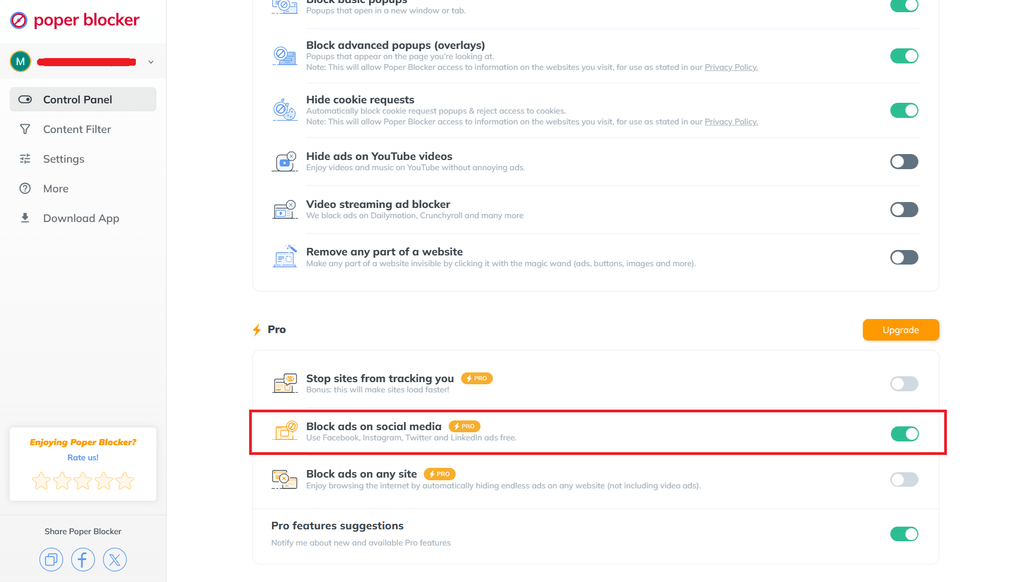
So what does that change in everyday use?
- It removes interruptions from the feed. When sponsored posts disappear, there are fewer sudden prompts competing for your attention.
- It cuts down on attention hijacking. Ads are built to interrupt, tempt, provoke, and redirect. Fewer of them means fewer artificial pulls inside a session.
- It can make scrolling less addictive. Not because one tool magically fixes doomscrolling, but because removing feed-level ad triggers can reduce some of the cues that keep the session going.
Fewer ads can also mean fewer moments where the platform tries to convert your emotional state into a click, a view, or a purchase. That matters when you are already tired, stressed, or browsing on autopilot.
When ads disappear, the scroll loses some of its grip. You are no longer being pulled as often. You have more room to choose.
That is the useful way to think about ad blocking here. It is not only about cleaning up the screen. It is about regaining control over attention in an environment built to keep taking it.
Get more control over your feed
Doomscrolling and ads are deeply connected because they serve the same attention economy. One keeps you in the feed. The other turns that time into money.
That does not mean you need to quit social media altogether or treat every platform like an enemy. Many people use these apps for work, updates, community, and entertainment. The issue is not that scrolling exists. It’s that the system is built to keep extending it, especially when emotional content and sponsored content are working together.
Small changes can shift the experience more than people expect. Removing ads will not solve every digital well-being problem, but it can reduce interruptions, cut down on triggers, and make the feed feel less engineered against you.
Start by changing what you allow into your feed.
FAQ
What is doomscrolling in simple terms?
Doomscrolling is the habit of repeatedly scrolling through upsetting or negative posts, even when the experience leaves you stressed or tired. It often feels like staying informed, but it can quickly turn into compulsive checking.
Why do social media apps make doomscrolling easy?
Because endless feeds, engagement-based ranking, and ad-driven business models all reward longer sessions. The more time people spend in the feed, the more chances platforms have to show ads and gather behavioral signals.
Are ads part of the doomscrolling problem?
Yes. Ads are not just sitting next to the experience. They are built into the feed and often blend with organic posts. That helps keep attention moving while turning long sessions into ad revenue and better targeting data.
Does removing ads stop doomscrolling completely?
No. Doomscrolling is also driven by habit, stress, curiosity, and platform design. But reducing ads can remove some of the extra triggers and interruptions that keep a scrolling session going longer than intended.
Can Poper Blocker remove ads from social media feeds?
Yes. Poper Blocker can remove ads and sponsored content on Facebook, Instagram, X, and LinkedIn, while also blocking ads across websites more broadly.
You mention a brand once, maybe a jacket, a blender, or a beach trip, and then it shows up in your feed a few hours later. Sometimes it feels even stranger than that, like you never typed anything at all and the ad still found you. That is why so many people ask why do I get ads for things I talk about and, in a more uneasy version of the same question, whether apps can somehow react to things you only half-formed in your head. For the year 2026, social media ad spending is expected to reach $124.88 billion based on EMARKETER’s December 2025 forecast, so there is a lot of money behind making ads feel highly relevant.
That feeling is easy to understand. When an ad appears right after a conversation, it does not feel random. It feels personal. It feels timed. It feels like your phone was paying attention in a way it should not. So the question becomes simple: are apps listening to you, or is something else going on?
Why it feels like some ads are based on your conversations
The creepy feeling is not made up. What you are noticing is a very specific mix of timing, data, and psychology.
First, ads often show up soon after a conversation. That timing alone makes them feel more noticeable. If you chatted about air fryers at lunch and saw one in your feed that night, your brain naturally links the two events.
Second, some ads feel too accurate to dismiss. Not just “kitchen stuff,” but the exact category you had just been discussing. That is where the suspicion starts.
Three things usually make this feeling more convincing than it is:
1. Timing coincidence
You are surrounded by ads all day, but most of them barely register. The one that lines up with a recent conversation grabs your attention instantly. It feels important because it arrived at the perfect moment.
2. Pattern recognition
Human brains are built to spot connections. That helps in daily life, but it can also make random or semi-random events feel linked with more certainty than they are.
3. Selective attention
You might have been seeing similar ads before and simply ignored them. Once a topic is in your head, those ads suddenly feel much more relevant. That can make it seem like the ad appeared out of nowhere, even when it did not.
This is also why some people describe getting ads for things I think about. It is usually not thought-reading. It is that a topic is already loosely connected to your recent searches, interests, feed behavior, or the behavior of people around you, and once it enters your awareness, you start spotting it everywhere.
Are your apps really listening to you? (short answer: not usually)
That answer is not absolute because there have been edge cases involving microphone-triggered tools, permission abuse, or privacy scandals. But for mainstream ad delivery, the simpler explanation is usually the right one: most platforms do not need to secretly listen to your private conversations in order to show you highly specific ads.
There are a few reasons for that.
Legal risks
If a major platform were secretly recording conversations for ad targeting at scale, the blowback would be enormous. Lawsuits, regulatory action, and long-term brand damage would follow quickly. That does not mean every company behaves perfectly, but it does make constant hidden eavesdropping for ads a very high-risk move.
Battery and data constraints
Always-on listening would create a lot of battery drain, bandwidth use, storage demands, and messy data. It is a clunky way to target ads when platforms already have easier signals that are cheaper, cleaner, and often better.
Lack of evidence
Ad systems already know a lot about what you search, watch, click, pause on, buy, and discuss with others online. They can also infer likely interests from shared location, device signals, account logins, and lookalike behavior. In other words, they do not need your microphone to get uncomfortably close.
So if your first thought is do our phones listen to us, the more grounded answer is this: not in the way most people imagine, and not as the main reason these ads show up.
What’s actually happening behind the scenes
If your apps are not secretly transcribing dinner-table conversations, why do the ads still feel psychic? Because the targeting system behind them is much more layered than most people realize.
Your browsing and search history
This is one of the biggest signals.
Every product page you open, every category you browse, every search you start and never finish gives ad platforms another clue. Even a quick visit to a site can put you into an audience bucket.
That includes:
- Websites you visit
- Products you view
- Pages you linger on
- Searches you type
- Shopping behavior linked to your account or device
Sometimes the signal comes from you directly. Sometimes it comes from a family member using the same network, device group, or shared account ecosystem.
Social media tracking
Social platforms build a detailed picture from tiny actions that do not feel important in the moment.
That includes:
- Likes and follows
- Watch time
- Replays
- Comments
- Shares
- Which posts make you stop scrolling
- Which topics keep pulling you back
That is why social feeds can get very close to your current interests without needing audio input. On platforms like Facebook, Instagram, X, and LinkedIn, your feed behavior alone gives the system a steady stream of clues.
If you have ever asked is Facebook listening to me, the less dramatic answer is that Facebook does not need to hear you to make a strong guess. It already has a lot of behavior data to work with.
The same goes for is Instagram listening to me. What often feels like eavesdropping is usually the result of interest modeling, feed behavior, and ad matching.
Cross-device and data sharing
This is one of the most underrated reasons ads seem spooky.
You search for hiking shoes on your laptop, then later see the ads on your phone. Or your partner shops for baby gear on one device and suddenly your feed starts filling with similar promotions.
That can happen because apps, browsers, logins, ad IDs, Wi-Fi signals, and shared data partnerships can connect activity across screens and across people in the same orbit.
So when people talk about ads based on conversations, what they are often seeing is a system connecting multiple weak signals into one confident guess.
Location and context
Your location can influence what ads you see even when you never searched for the thing directly.
Here are some scenarios:
- You were near a store or restaurant
- You attended an event
- You were in the same place as someone else who searched for the topic
- A local campaign was running in your area
- A product trend was already active around you
That can make the timing feel eerie. You mention something, then an ad appears. But the ad may have been triggered by place, timing, nearby activity, or an active campaign already aimed at people in your area.
Psychological effect
Two mental shortcuts can make targeted ads feel much more uncanny than they are.
1. Confirmation bias
Once you suspect that your phone is listening, every matching ad feels like proof. The many ads that do not match anything you said fade into the background.
2. Frequency illusion
This is often called the Baader-Meinhof effect. Once a topic becomes top-of-mind, you start noticing it everywhere. The ads may not be new. Your attention to them is.
That is also the best answer to why do I get ads for things I think about. Most of the time, the ad system is not reacting to your thoughts. It is reacting to your behavior, your context, and the behavior of similar users, while your brain is reacting to the coincidence.
Use Poper Blocker to stop these ads completely
At some point, the deeper explanation stops being the point.
Maybe the ads are showing up because of searches, site visits, social signals, shared networks, or location clues. Maybe they feel creepy because of timing and pattern recognition. Either way, the result is the same: your screen gets filled with ads you never asked to see.
This is where Poper Blocker makes the conversation much simpler. We’re no longer just talking about privacy here, but immediate control over what shows up on your screen.
Block ads across websites
Poper Blocker can hide ads on websites across the web, including the kinds of pages people open every day, like news sites, entertainment sites, blogs, and other ad-heavy destinations.
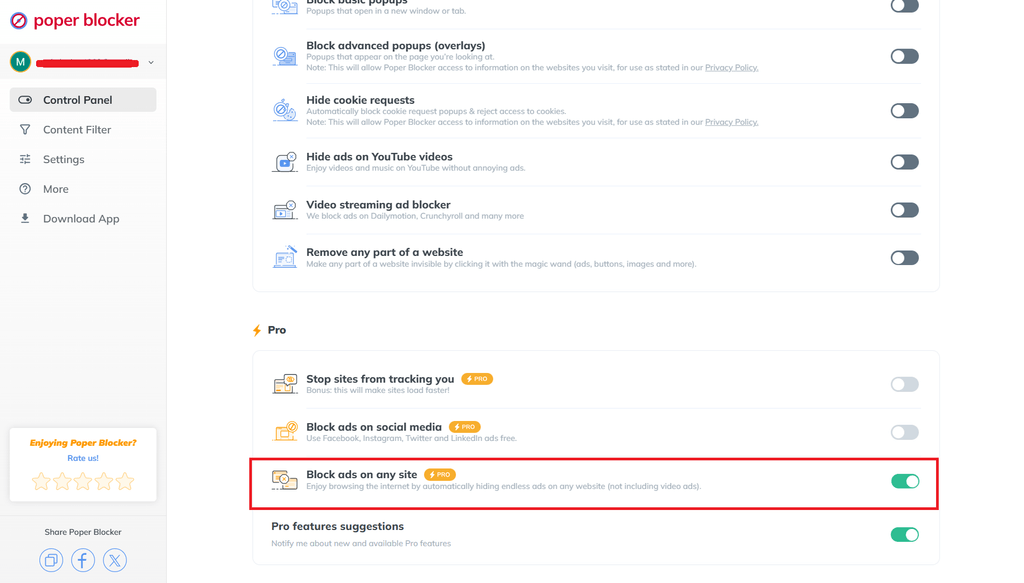
So if you read a celebrity news story, open a sports article, or browse a movie recap site, you do not have to keep dealing with banners, sponsored placements, or other interruptions.
Remove ads from social media
It can also remove ads and sponsored content from major social platforms, including Facebook, Instagram, X, and LinkedIn.
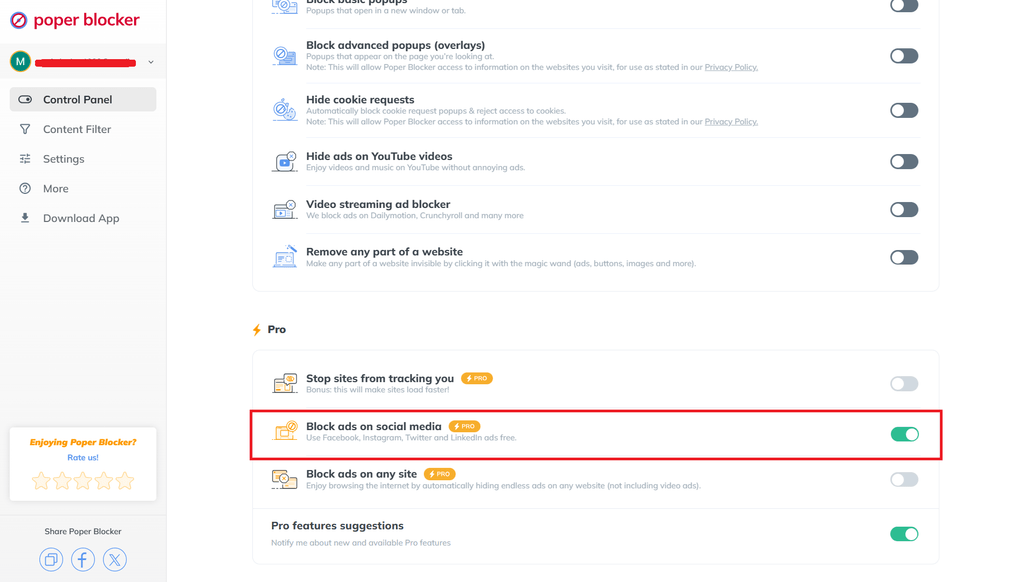
This is especially relevant here because many of the ads people find most invasive appear inside social feeds. Those are also the places where platforms collect the most signals from your watch time, interests, and scrolling habits.
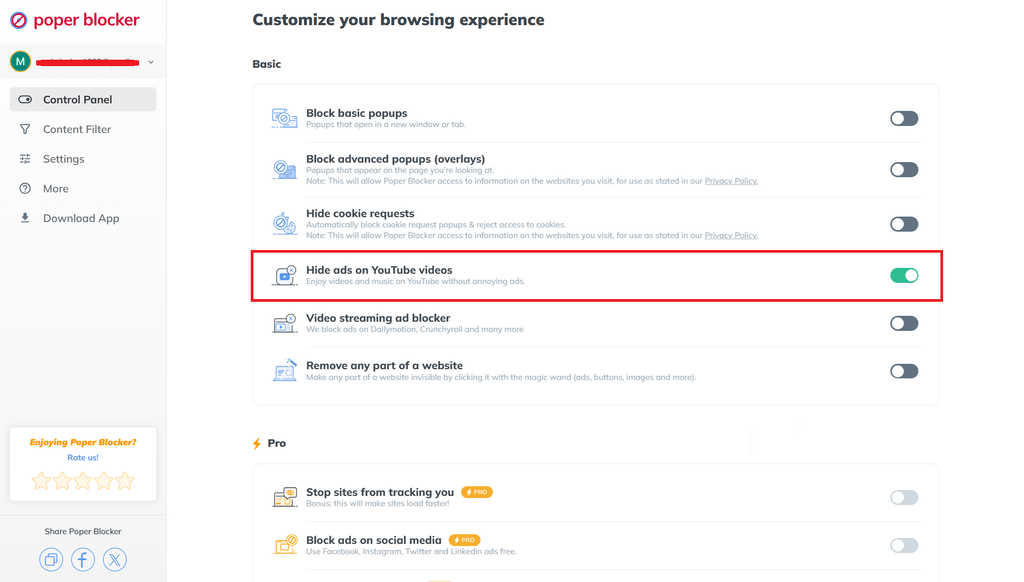
Hide YouTube ads
YouTube is another place where ad targeting can feel especially personal, because it is tied so closely to what you watch and how long you watch it. Poper Blocker includes a YouTube ad-blocking feature, so video sessions are not constantly interrupted by pre-rolls and mid-rolls.
Why this works so well
Instead of trying to outsmart ad tracking systems, you can remove ads entirely and stop them from dominating the screen.
Even if ads are targeted based on your behavior, you simply won’t see them. That changes the whole experience right away.
Other upsides include:
- Cleaner browsing with fewer interruptions
- Pages that often load faster because there is less ad clutter competing for space
- Less visual noise across websites, feeds, and videos
If your main concern is how to stop getting ads for things I talk about, this is the shortest answer: reduce the data you share where you can, but also block the ads themselves so they stop showing up in the first place.
It’s not mind-reading, and you still get the final say
The unsettling part is not your imagination. Some ads really do appear at moments that feel way too close for comfort.
But that does not mean your phone is secretly reading your mind. In most cases, it is a mix of data collection, ad matching, shared signals, location clues, and the way your brain notices patterns once a topic is already on your radar.
That is also why targeted ads based on conversation can feel so convincing even when the system is mostly working from behavior and context rather than audio.
You do have options. You can trim app permissions, limit tracking, deny access that does not make sense, and clear activity data. And when you want the fastest fix, you can skip the cat-and-mouse game and just block the ads.
Poper Blocker gives you the simple version of control: fewer interruptions, fewer sponsored posts, fewer YouTube ads, and a cleaner feed.
FAQ
Can apps show me ads without listening to my microphone?
Yes. They can use browsing history, app activity, watch time, location clues, account signals, and interest modeling to make very strong guesses without relying on hidden audio recording.
Why do ads sometimes appear right after I mention something out loud?
Usually because of coincidence, existing behavior signals, or nearby activity that already made you a likely match. The timing is what makes it feel suspicious.
Can being near other people affect the ads I see?
Yes. Shared Wi-Fi, shared places, overlapping interests, and similar audience profiles can all influence ad targeting.
Is it possible for apps to ask for too many permissions?
Yes. Some apps request access they do not strictly need. It is worth checking microphone, location, contacts, camera, and phone permissions and turning off anything that feels unrelated to the app’s use.
Can an ad blocker help even if tracking still happens?
Yes. Blocking the ad itself changes what you see on the page, even if the targeting system still tried to serve it.