Chrome Web Extension
 Edge Web Extension
 Android App
 iOS App


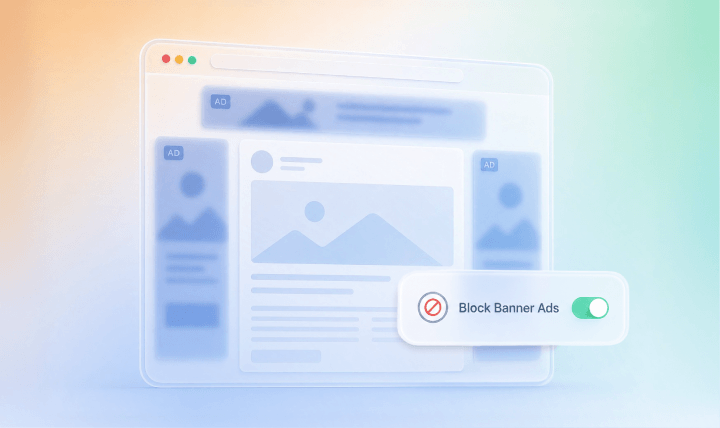
You know that moment when you open a website, scroll for a few seconds, and later realize you could not describe a single ad on the page? That is not random. It is a habit your brain has built over time.
Banner blindness is what happens when people stop noticing content that looks like advertising. You keep browsing, your eyes keep moving, but certain page elements barely register. In many cases, your brain is ignoring ads on purpose so you can get to the part you actually came for.
According to a report by eMarketer, worldwide ad spending was forecast to pass $1 trillion in 2026. That helps explain why so many people have become faster at tuning ad-like content out.
That sounds helpful at first. But there is a catch. Even when ads fade into the background, they can still clutter the page, slow things down, and make browsing feel more tiring than it should.
What is banner blindness?
Banner blindness is a psychological behavior where users automatically ignore content that looks like an advertisement, even when it is right in front of them. People may do this consciously, but most of the time it happens unconsciously.
The term came out of usability research in the late 1990s, and later eye-tracking studies helped show the same pattern again: users often skip over page areas and visual styles they associate with ads. That is why this behavior shows up across both desktop and mobile browsing.
It also goes beyond classic display units. People can tune out:
- banner ads at the top, side, or inside content
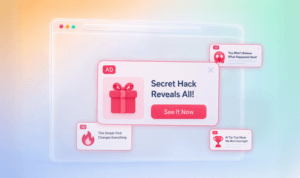
- popups and overlays that interrupt the page
- sponsored posts and promotions inside social feeds
In simple terms, what is banner blindness really asking? It is asking why people can look straight at a page full of promotions and still process very little of it.
Why banner blindness happens
This behavior is not just about dislike. It is a mix of habit, focus, overload, and self-protection.
Overexposure to ads
People see so many promotions online that the brain gets faster at filtering them out. After enough repetition, anything that resembles an ad starts to feel like background noise. That is one reason ad blindness becomes more common the more time someone spends online.
Predictable ad placement
Users have learned where ads usually appear. Top banners, right rails, sticky footers, in-content promo boxes, and sponsored tiles all follow patterns. Once those patterns are familiar, people skip them almost automatically.
Distrust of ads
A lot of users have had bad experiences with advertising online. Some ads are irrelevant. Some are misleading. Some open new tabs, trigger redirects, or cover content. After enough frustration, people become quicker to avoid anything promotional. That reaction is closely tied to what is ad blindness, where avoidance becomes a default browsing behavior.
Goal-focused browsing behavior
Most people go online with a job to do. They want to read, compare, message, study, shop, or finish a task. If an element does not help with that goal, it gets filtered out. This is one reason banner blindness is often described as a form of selective attention.
Ad clutter on modern websites
Some pages are simply overloaded. Promoted cards, side widgets, popups, video units, cookie prompts, sticky banners, and sponsored posts all compete for attention at the same time. That level of ad saturation trains users to shut more of the page out just to stay focused.
Why banner blindness is actually a problem
It is easy to assume this is only an advertiser problem. It is not. Even when you do not click ads, they can still make your online experience worse.
You still get distracted
Ignoring an ad is not the same as never noticing it. Your brain still has to recognize something as irrelevant before filtering it out. That tiny split-second decision adds extra mental effort to the browsing experience, especially when it happens over and over again on the same page.
Clutter increases cognitive load
Too many competing elements make a page feel mentally noisy. Even if you are skimming past them, they still create extra visual processing. This can make it harder to read, concentrate, or finish something quickly.
Pages can feel slower and heavier
A cluttered page often feels worse to use. More visual interruptions, more things moving, and more interface elements competing for attention can make browsing feel slower and less comfortable, even before you think about performance in a technical sense.
Content becomes less enjoyable
When the screen is crowded, the actual content loses breathing room. Articles feel messier. Social feeds feel more exhausting. Research feels harder. Entertainment feels interrupted. This is where ad fatigue becomes part of the user experience and not just a marketing issue.
So yes, you may be tuning ads out. But the page around them can still feel more draining because of their presence.
Use Poper Blocker to eliminate ad distractions
Instead of relying on banner blindness, you can reduce the visual noise before it reaches you.
Poper Blocker is built to reduce interruptions and make browsing cleaner. Instead of depending on your brain to keep filtering clutter, this ad blocker removes many of the distractions that create that clutter in the first place.
Here is the difference:
- Banner blindness helps you ignore ads.
- Poper Blocker helps remove many of them from view.
What Poper Blocker is designed to help with
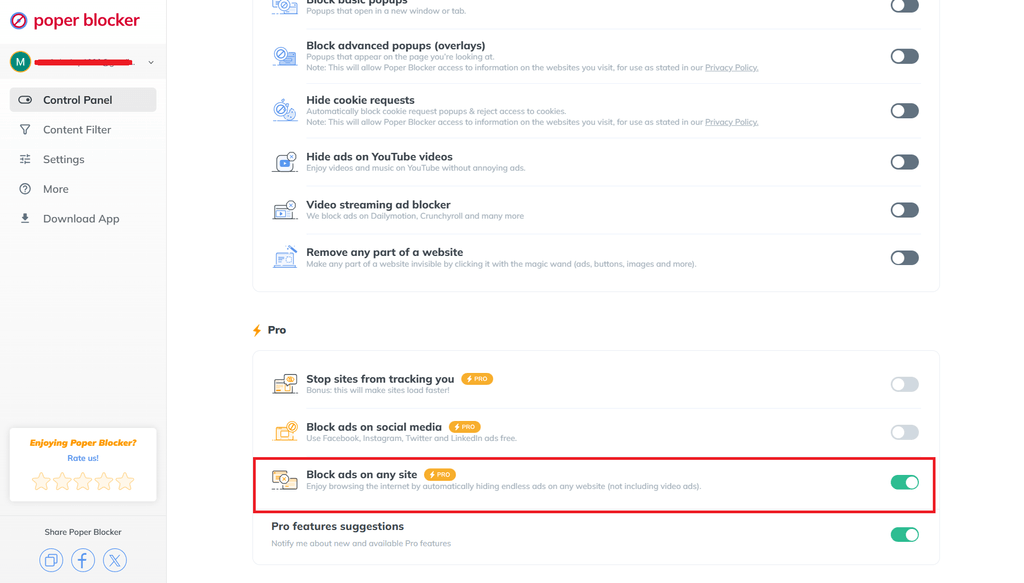
First, it blocks ads across websites. That means less clutter while you browse, read, work, or scroll.
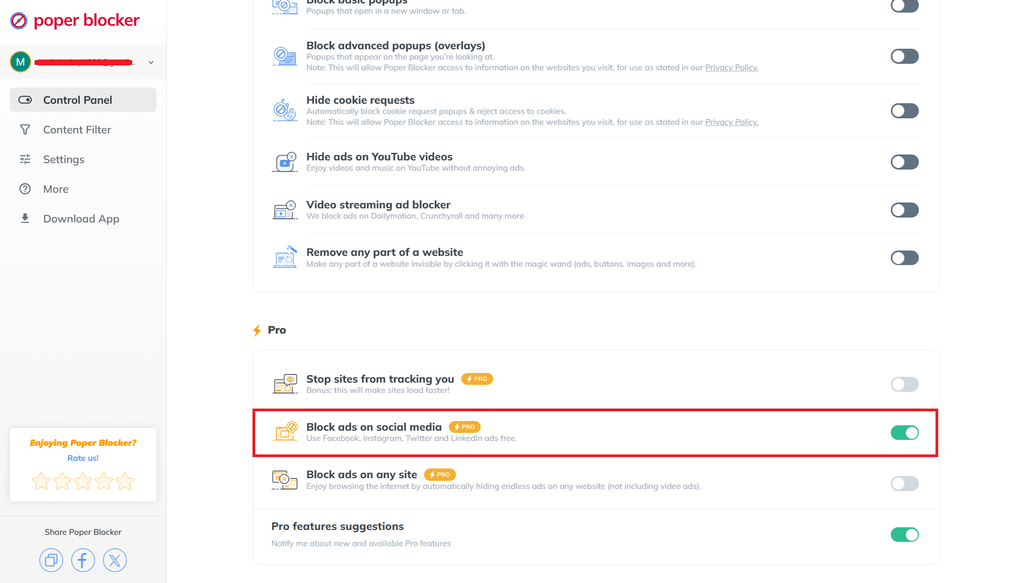
Second, it removes ads on social media platforms such as Facebook, Instagram, X, and LinkedIn. This helps make feeds feel less crowded and easier to move through.
Third, it works across Chrome, Edge, Android, and iOS. This gives you a more consistent experience across devices, so you are not dealing with one setup on your browser and a completely different one on your phone. It also makes it easier to keep your browsing experience cleaner whether you are working at your desk or scrolling on the go.
Relying on your brain to filter clutter is passive. Using an ad blocker is active. If you browse all day for work, study, or downtime, that difference adds up.
This can help create a cleaner viewing experience with fewer visual interruptions across the sites and platforms you use most. It also makes it easier to keep browsing more comfortable whether you are on your computer or on your phone.
A useful way to think about it is this: Banner blindness helps you ignore ads, but Poper Blocker removes them entirely.
Take back more of your screen
Ads often get ignored, but that does not mean they are harmless. They can still crowd your screen, break your focus, and make everyday browsing feel more tiring than it needs to be.
Once you understand why banner blindness happens, you start to notice the bigger issue. This is not only about what you click. It is also about what keeps getting in your way.
Awareness helps. Control helps more.
If you want a browsing experience that feels cleaner and less cluttered, Poper Blocker is the more direct option. Instead of depending on your brain to keep filtering distractions, you can reduce those distractions at the page level and make everyday browsing feel lighter.
FAQ
Is banner blindness a conscious choice?
Usually, no. Most of the time it is an automatic response. People learn what ads tend to look like and where they usually appear, then start skipping those patterns without thinking much about it.
Does banner blindness happen on mobile too?
Yes. It is not limited to desktop layouts. Mobile users also learn to ignore sponsored placements, in-feed promotions, sticky units, and interruptive formats that feel predictable or irrelevant.
Are popups part of banner blindness?
They are related, but not identical. Banner blindness usually refers to ignoring ad-like elements, while popups are more interruptive. Even so, repeated popup exposure can make users more defensive toward anything promotional on a page.
Why do ignored ads still make browsing worse?
Because they still add clutter. Even when you do not interact with them, they can compete for attention, crowd the layout, and make the page feel more mentally tiring.
Is the best solution to just keep ignoring ads?
Not really. Ignoring ads is a coping habit, not a clean fix. If you want a more comfortable browsing experience, reducing the number of distractions on the page is the stronger option.