Chrome Web Extension
 Edge Web Extension
 Android App
 iOS App


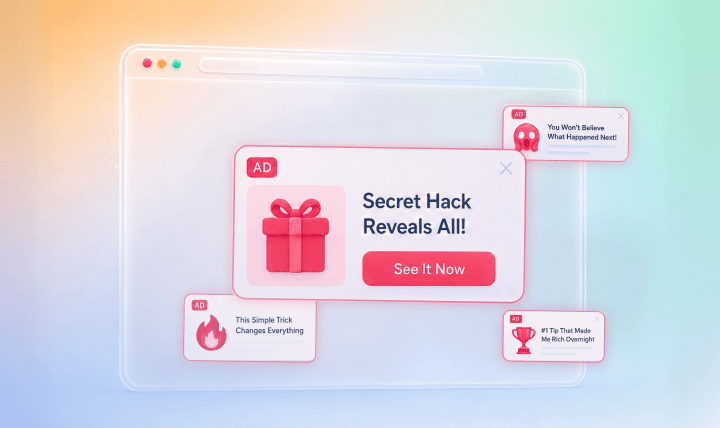
“You won’t believe what happened next…”
That line still works because it is built to bother you. It withholds the important part, pokes at your curiosity, and pushes you to click before you stop and think. That is the basic trick behind clickbait ads. They show up on news sites, video pages, mobile apps, social feeds, and sketchy corners of the web, often dressed up as urgent warnings, miracle fixes, or shocking celebrity updates.
The problem is not only that they are annoying. Many of them lead to junk pages, scam offers, shady redirects, or pages built to squeeze one more click out of you. In Q3 2025, auto-redirects made up 80% of malicious ad activity tracked by GeoEdge, the highest share it had recorded, which gives you a sense of how aggressively deceptive ads now push users away from the page they meant to visit. No need to fret, because we’re going to cover what clickbait ads are, show common examples, what kinds of risks they bring, and how to block them before they hijack your screen.
What are clickbait ads?
Clickbait ads are ads designed to win the click first and worry about honesty later. In simple terms, clickbait advertising uses misleading or overhyped headlines, images, or messages to pull people into opening a page, starting a download, or visiting a destination that is often lower quality than promised.
Most of these ads share a few familiar traits:
- They make vague or exaggerated claims
- They lean hard on shock, fear, or curiosity
- They use thumbnails or headlines that do not match the destination
They also tend to show up in places where people react quickly, including websites, pop-ups, mobile apps, and social feeds.
A useful rule is this: if the message tries to trigger you before it explains itself, be suspicious. A clickbait ad is built around emotional pressure, not clear information.
Common clickbait ads examples
The easiest way to spot them is to look at patterns you have probably seen many times before. Here are six familiar clickbait ads examples and why they keep getting clicks.
1. “Doctors hate this one trick…”
This format borrows authority, then adds a secret. It suggests there is a hidden shortcut that experts do not want you to know. The trick is the curiosity gap. You are nudged to click to find out what is supposedly being hidden.
2. “You’ve been doing this wrong your whole life…”
This one mixes insult and intrigue. It tells you that a normal habit is somehow embarrassingly wrong, then hints that the fix is just one click away. It works because people do not like feeling uninformed.
3. “This app will change your life overnight…”
Now the hook is transformation. The message promises a huge outcome with almost no effort or time. That exaggeration is a major sign of click bait ads, especially when the landing page turns out to be a thin sales pitch.
4. “Drink This Before Bed to Burn Belly Fat Overnight!”
Health claims are one of the most common categories because they combine insecurity, urgency, and wishful thinking. The ad offers an easy answer to a hard problem, which is exactly why so many users click.
5. “This One Tip Will Save Your Life.”
This is pure pressure. It frames the message as something too important to ignore. Fear-based hooks like this are often tied to scareware, fake emergency claims, or pages that turn a small worry into a reason to act fast.
6. “You’ll Never Guess What [Celebrity] Looks Like Now!”
Celebrity bait is cheap and effective. It relies on familiarity, gossip, and surprise. Many of these ads lead to slide shows, spammy galleries, or pages packed with junk links.
These ads often send users to low-value destinations: cluttered pages, misleading offers, fake warnings, endless galleries, or forms meant to collect personal data rather than help you.
Why clickbait advertising works so well
Clickbait is not sloppy marketing. It is built on predictable human behavior.
Curiosity gap
A curiosity gap happens when an ad gives you just enough information to make you feel incomplete. You know there is more, but not enough to satisfy the question in your head. That unresolved curiosity pushes the click.
FOMO
Fear of missing out is another big driver. Some ads suggest that other people already know the trick, found the deal, or avoided the danger. You click because you do not want to be the last person left out.
Emotional manipulation
The strongest clickbait usually triggers emotion before logic. Fear, anger, hope, insecurity, or shock can all speed up decisions. That is why fake virus warnings, miracle health tips, and celebrity scandals do so well. They hit fast and ask questions later.
More clicks usually mean more ad revenue, more page views, more affiliate chances, or more leads for shady offers. That is why clickbait keeps spreading. It is intentional and the ad is not trying to inform you first. It is trying to win the click.
The hidden risks of clickbait ads
Many people treat clickbait as harmless internet junk. Some of it is just low-grade annoyance. Some of it is not.
Scam pages and misleading offers
A lot of clickbait leads to pages promising instant savings, miracle products, investment riches, or giveaway prizes. The destination is often built to collect money, email addresses, or card details rather than deliver anything useful.
Malware and unsafe redirects
Some deceptive ads act as a doorway to harmful pages, suspicious downloads, or redirect chains. In rougher corners of the web, this can overlap with malvertizing, where the ad itself becomes part of a wider abuse setup.
Privacy concerns
Some ads disguised as quizzes, surveys, or free offers are there to harvest data. They may ask for email addresses, phone numbers, or payment details, then pass you into a funnel you never intended to join.
Wasted time and mounting frustration
Even when there is no direct scam, the damage is still there. You lose time, end up on junk pages, and train yourself to distrust more of what you see online. That is part of why clickbait makes browsing feel dirtier and more tiring.
Use Poper Blocker to stop clickbait ads
Even if you know how to spot clickbait ads, avoiding them completely is almost impossible. They are built into the places people already spend time: news sites, streaming pages, sidebars, social feeds, and pages stacked with aggressive ad units.
That is where Poper Blocker comes in. Instead of asking you to manually dodge every trap, it helps remove many of the formats where clickbait shows up in the first place.
Where it works
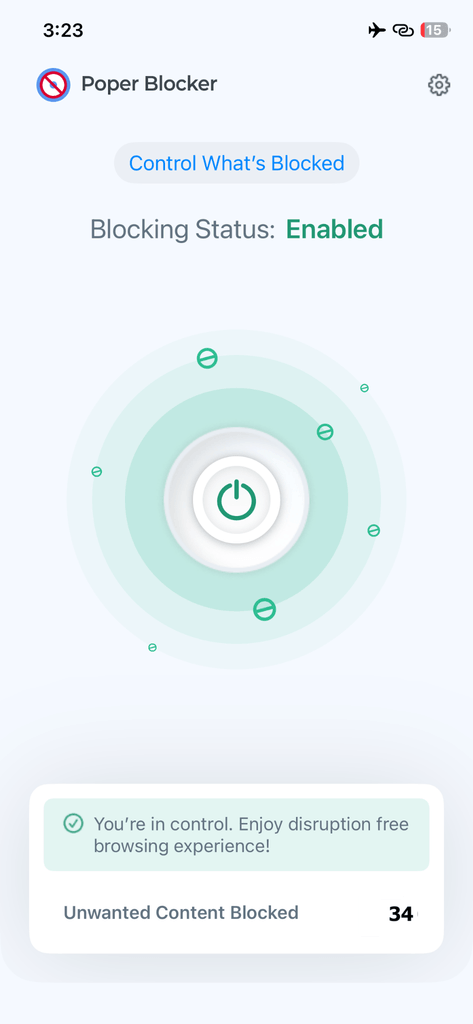
Poper Blocker is supported on Chrome and Edge for desktop browsing, and Android and iOS for mobile use.
What it helps block
Its value is not limited to one site or one ad type. It helps by cutting off the formats that clickbait leans on most:
- Pop-ups that interrupt the page and force attention
- Overlays that sit on top of content
- Redirect traps that send you somewhere you never meant to visit
- Intrusive ad surfaces that turn browsing into a chase for the close button
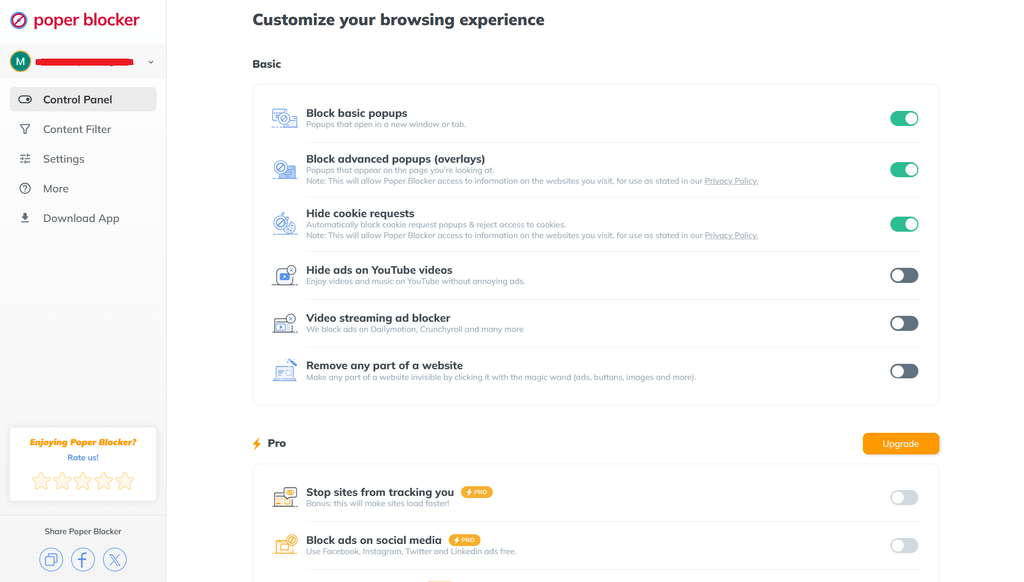
A good pop-up blocker helps here because many clickbait campaigns rely on sudden interruption. If the message cannot jump in front of you, it loses a lot of its power.
Why that improves browsing
When those interruptions are reduced, the web feels cleaner and easier to use. Pages are less cluttered. There is less bait competing for your attention. You spend more time on the content you wanted and less time closing junk.
Why ease of use helps
One reason people give up on blocking tools is setup fatigue. Poper Blocker is built to install simply and then keep working in the background. That helps because users dealing with clickbait are often not trying to fine-tune a dozen settings. They just want the mess reduced.
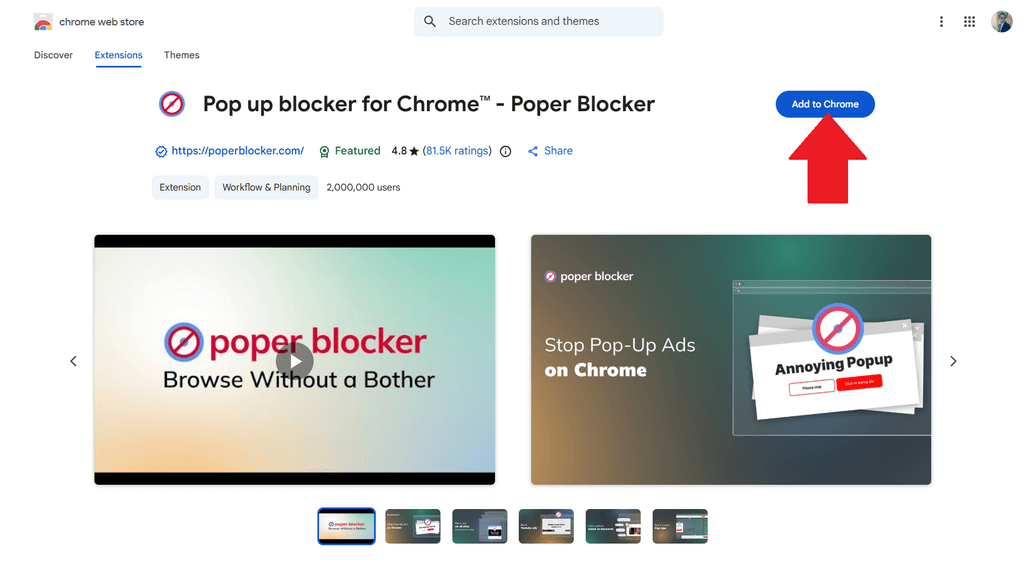
This is not only about installing an ad blocker. It is about taking back control of the page in front of you. When fewer deceptive prompts get screen space, you make fewer rushed clicks and run into fewer bait-heavy pages.
You do not have to browse on the ad ecosystem’s terms
Clickbait ads are everywhere because they are cheap to produce and good at grabbing attention. But being common does not make them harmless. They waste time, create distrust, and sometimes lead users straight into scams, junk offers, and misleading pages.
The good news is that they are avoidable. Once you know the patterns, they become easier to spot. Once you use a blocking tool that cuts off pop-ups, overlays, and redirects, they become much easier to avoid.
You do not have to keep accepting a web full of bait. Notice the patterns, avoid the hooks, and use Poper Blocker to keep more of that junk off your screen.
FAQ
What are clickbait ads in simple terms?
They are ads that use hype, vagueness, or emotional pressure to get you to click. The destination often gives you much less than the ad promised.
Are clickbait ads illegal?
Not always. Some are only misleading or low quality. Others cross into fraud, unsafe redirects, or deceptive claims that can create legal problems for advertisers or publishers.
How can I tell if a headline is clickbait?
Watch for big promises, missing details, emotional pressure, strange urgency, or a headline that seems designed to trigger curiosity rather than explain anything.
Why do I keep seeing fake virus warnings?
They work because fear is fast. Fake system alerts are built to push immediate action before you slow down and question the message.
Can a blocking tool help with clickbait on news and streaming sites?
Yes. A tool that blocks pop-ups, overlays, and redirect behavior can remove many of the formats clickbait relies on most. This is what Poper Blocker can do.