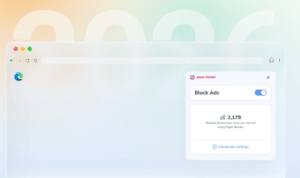
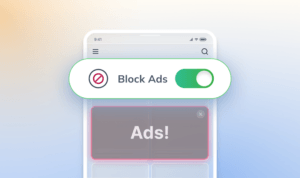
Chrome Web Extension
 Edge Web Extension
 Android App
 iOS App



You mention a brand once, maybe a jacket, a blender, or a beach trip, and then it shows up in your feed a few hours later. Sometimes it feels even stranger than that, like you never typed anything at all and the ad still found you. That is why so many people ask why do I get ads for things I talk about and, in a more uneasy version of the same question, whether apps can somehow react to things you only half-formed in your head. For the year 2026, social media ad spending is expected to reach $124.88 billion based on EMARKETER’s December 2025 forecast, so there is a lot of money behind making ads feel highly relevant.
That feeling is easy to understand. When an ad appears right after a conversation, it does not feel random. It feels personal. It feels timed. It feels like your phone was paying attention in a way it should not. So the question becomes simple: are apps listening to you, or is something else going on?
Why it feels like some ads are based on your conversations
The creepy feeling is not made up. What you are noticing is a very specific mix of timing, data, and psychology.
First, ads often show up soon after a conversation. That timing alone makes them feel more noticeable. If you chatted about air fryers at lunch and saw one in your feed that night, your brain naturally links the two events.
Second, some ads feel too accurate to dismiss. Not just “kitchen stuff,” but the exact category you had just been discussing. That is where the suspicion starts.
Three things usually make this feeling more convincing than it is:
1. Timing coincidence
You are surrounded by ads all day, but most of them barely register. The one that lines up with a recent conversation grabs your attention instantly. It feels important because it arrived at the perfect moment.
2. Pattern recognition
Human brains are built to spot connections. That helps in daily life, but it can also make random or semi-random events feel linked with more certainty than they are.
3. Selective attention
You might have been seeing similar ads before and simply ignored them. Once a topic is in your head, those ads suddenly feel much more relevant. That can make it seem like the ad appeared out of nowhere, even when it did not.
This is also why some people describe getting ads for things I think about. It is usually not thought-reading. It is that a topic is already loosely connected to your recent searches, interests, feed behavior, or the behavior of people around you, and once it enters your awareness, you start spotting it everywhere.
Are your apps really listening to you? (short answer: not usually)
That answer is not absolute because there have been edge cases involving microphone-triggered tools, permission abuse, or privacy scandals. But for mainstream ad delivery, the simpler explanation is usually the right one: most platforms do not need to secretly listen to your private conversations in order to show you highly specific ads.
There are a few reasons for that.
Legal risks
If a major platform were secretly recording conversations for ad targeting at scale, the blowback would be enormous. Lawsuits, regulatory action, and long-term brand damage would follow quickly. That does not mean every company behaves perfectly, but it does make constant hidden eavesdropping for ads a very high-risk move.
Battery and data constraints
Always-on listening would create a lot of battery drain, bandwidth use, storage demands, and messy data. It is a clunky way to target ads when platforms already have easier signals that are cheaper, cleaner, and often better.
Lack of evidence
Ad systems already know a lot about what you search, watch, click, pause on, buy, and discuss with others online. They can also infer likely interests from shared location, device signals, account logins, and lookalike behavior. In other words, they do not need your microphone to get uncomfortably close.
So if your first thought is do our phones listen to us, the more grounded answer is this: not in the way most people imagine, and not as the main reason these ads show up.
What’s actually happening behind the scenes
If your apps are not secretly transcribing dinner-table conversations, why do the ads still feel psychic? Because the targeting system behind them is much more layered than most people realize.
Your browsing and search history
This is one of the biggest signals.
Every product page you open, every category you browse, every search you start and never finish gives ad platforms another clue. Even a quick visit to a site can put you into an audience bucket.
That includes:
- Websites you visit
- Products you view
- Pages you linger on
- Searches you type
- Shopping behavior linked to your account or device
Sometimes the signal comes from you directly. Sometimes it comes from a family member using the same network, device group, or shared account ecosystem.
Social media tracking
Social platforms build a detailed picture from tiny actions that do not feel important in the moment.
That includes:
- Likes and follows
- Watch time
- Replays
- Comments
- Shares
- Which posts make you stop scrolling
- Which topics keep pulling you back
That is why social feeds can get very close to your current interests without needing audio input. On platforms like Facebook, Instagram, X, and LinkedIn, your feed behavior alone gives the system a steady stream of clues.
If you have ever asked is Facebook listening to me, the less dramatic answer is that Facebook does not need to hear you to make a strong guess. It already has a lot of behavior data to work with.
The same goes for is Instagram listening to me. What often feels like eavesdropping is usually the result of interest modeling, feed behavior, and ad matching.
Cross-device and data sharing
This is one of the most underrated reasons ads seem spooky.
You search for hiking shoes on your laptop, then later see the ads on your phone. Or your partner shops for baby gear on one device and suddenly your feed starts filling with similar promotions.
That can happen because apps, browsers, logins, ad IDs, Wi-Fi signals, and shared data partnerships can connect activity across screens and across people in the same orbit.
So when people talk about ads based on conversations, what they are often seeing is a system connecting multiple weak signals into one confident guess.
Location and context
Your location can influence what ads you see even when you never searched for the thing directly.
Here are some scenarios:
- You were near a store or restaurant
- You attended an event
- You were in the same place as someone else who searched for the topic
- A local campaign was running in your area
- A product trend was already active around you
That can make the timing feel eerie. You mention something, then an ad appears. But the ad may have been triggered by place, timing, nearby activity, or an active campaign already aimed at people in your area.
Psychological effect
Two mental shortcuts can make targeted ads feel much more uncanny than they are.
1. Confirmation bias
Once you suspect that your phone is listening, every matching ad feels like proof. The many ads that do not match anything you said fade into the background.
2. Frequency illusion
This is often called the Baader-Meinhof effect. Once a topic becomes top-of-mind, you start noticing it everywhere. The ads may not be new. Your attention to them is.
That is also the best answer to why do I get ads for things I think about. Most of the time, the ad system is not reacting to your thoughts. It is reacting to your behavior, your context, and the behavior of similar users, while your brain is reacting to the coincidence.
Use Poper Blocker to stop these ads completely
At some point, the deeper explanation stops being the point.
Maybe the ads are showing up because of searches, site visits, social signals, shared networks, or location clues. Maybe they feel creepy because of timing and pattern recognition. Either way, the result is the same: your screen gets filled with ads you never asked to see.
This is where Poper Blocker makes the conversation much simpler. We’re no longer just talking about privacy here, but immediate control over what shows up on your screen.
Block ads across websites
Poper Blocker can hide ads on websites across the web, including the kinds of pages people open every day, like news sites, entertainment sites, blogs, and other ad-heavy destinations.
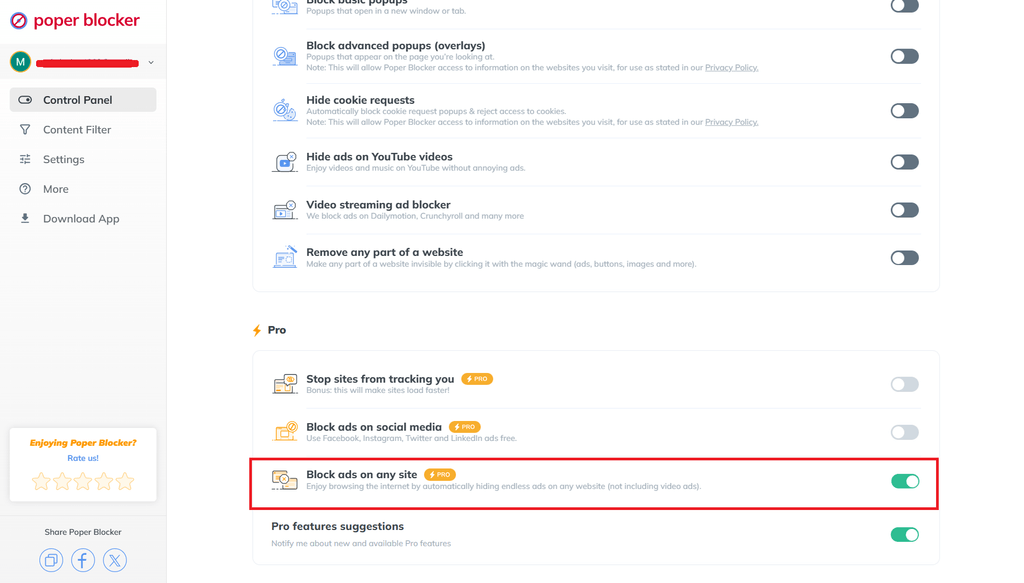
So if you read a celebrity news story, open a sports article, or browse a movie recap site, you do not have to keep dealing with banners, sponsored placements, or other interruptions.
Remove ads from social media
It can also remove ads and sponsored content from major social platforms, including Facebook, Instagram, X, and LinkedIn.
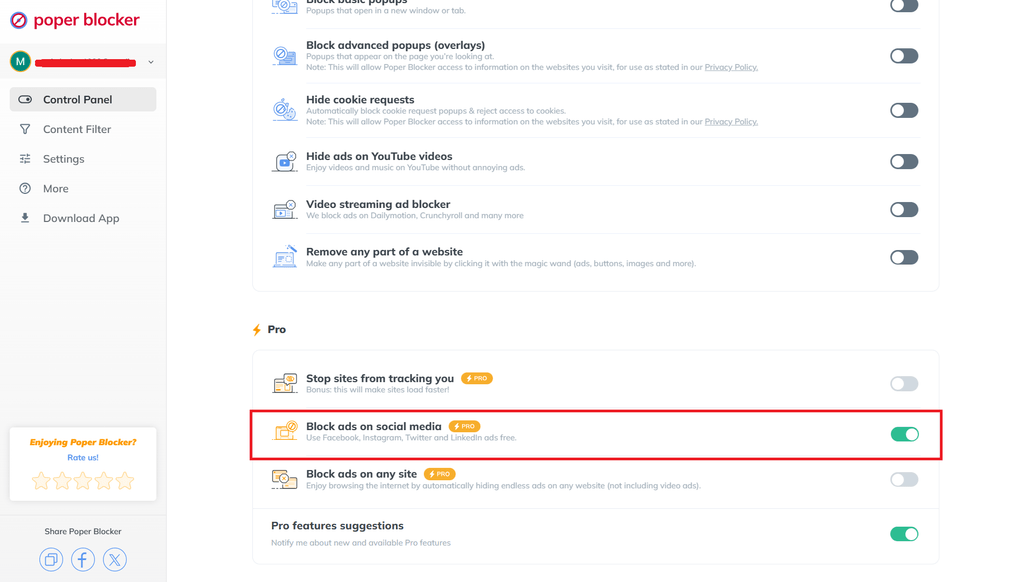
This is especially relevant here because many of the ads people find most invasive appear inside social feeds. Those are also the places where platforms collect the most signals from your watch time, interests, and scrolling habits.
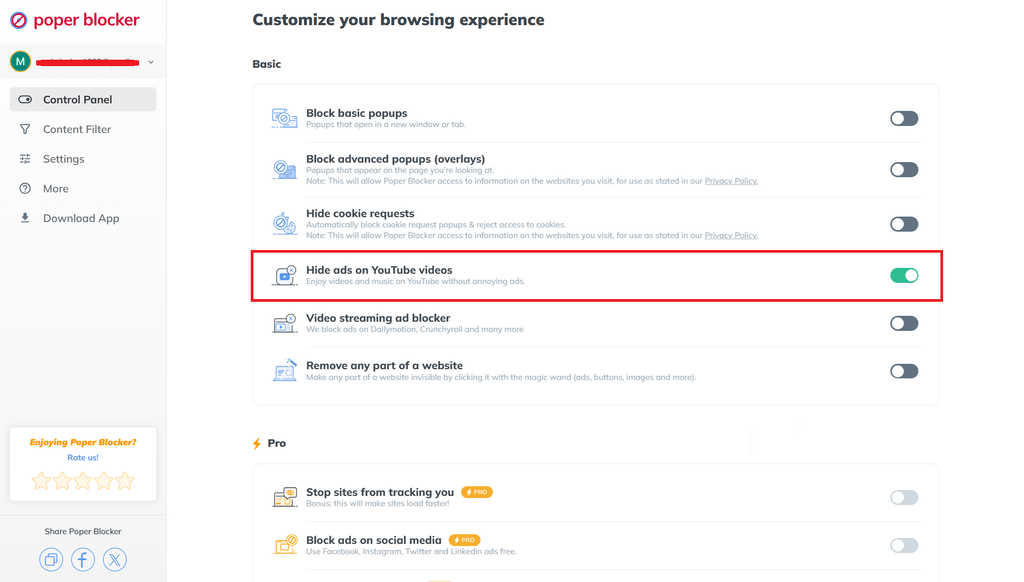
Hide YouTube ads
YouTube is another place where ad targeting can feel especially personal, because it is tied so closely to what you watch and how long you watch it. Poper Blocker includes a YouTube ad-blocking feature, so video sessions are not constantly interrupted by pre-rolls and mid-rolls.
Why this works so well
Instead of trying to outsmart ad tracking systems, you can remove ads entirely and stop them from dominating the screen.
Even if ads are targeted based on your behavior, you simply won’t see them. That changes the whole experience right away.
Other upsides include:
- Cleaner browsing with fewer interruptions
- Pages that often load faster because there is less ad clutter competing for space
- Less visual noise across websites, feeds, and videos
If your main concern is how to stop getting ads for things I talk about, this is the shortest answer: reduce the data you share where you can, but also block the ads themselves so they stop showing up in the first place.
It’s not mind-reading, and you still get the final say
The unsettling part is not your imagination. Some ads really do appear at moments that feel way too close for comfort.
But that does not mean your phone is secretly reading your mind. In most cases, it is a mix of data collection, ad matching, shared signals, location clues, and the way your brain notices patterns once a topic is already on your radar.
That is also why targeted ads based on conversation can feel so convincing even when the system is mostly working from behavior and context rather than audio.
You do have options. You can trim app permissions, limit tracking, deny access that does not make sense, and clear activity data. And when you want the fastest fix, you can skip the cat-and-mouse game and just block the ads.
Poper Blocker gives you the simple version of control: fewer interruptions, fewer sponsored posts, fewer YouTube ads, and a cleaner feed.
FAQ
Can apps show me ads without listening to my microphone?
Yes. They can use browsing history, app activity, watch time, location clues, account signals, and interest modeling to make very strong guesses without relying on hidden audio recording.
Why do ads sometimes appear right after I mention something out loud?
Usually because of coincidence, existing behavior signals, or nearby activity that already made you a likely match. The timing is what makes it feel suspicious.
Can being near other people affect the ads I see?
Yes. Shared Wi-Fi, shared places, overlapping interests, and similar audience profiles can all influence ad targeting.
Is it possible for apps to ask for too many permissions?
Yes. Some apps request access they do not strictly need. It is worth checking microphone, location, contacts, camera, and phone permissions and turning off anything that feels unrelated to the app’s use.
Can an ad blocker help even if tracking still happens?
Yes. Blocking the ad itself changes what you see on the page, even if the targeting system still tried to serve it.