Chrome Web Extension
 Edge Web Extension
 Android App
 iOS App


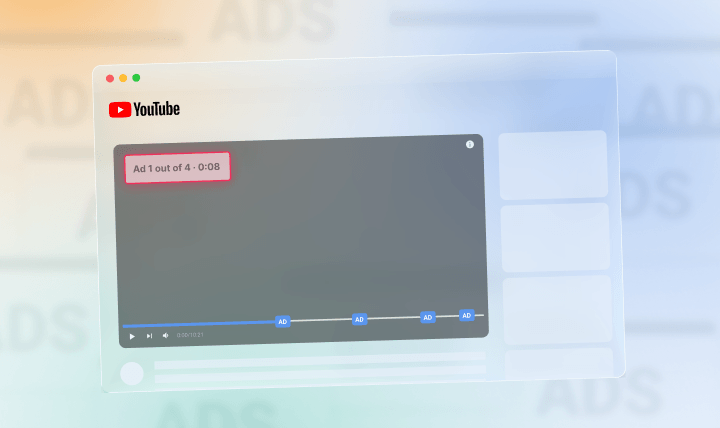
You tap a video while washing dishes, hoping for a few easy minutes, and before you even settle in, YouTube hits you with one ad, then another. Sometimes it is a long one. Sometimes it is an unskippable one. Sometimes your hands are wet and you are stuck waiting out 90 seconds you never asked for.
If YouTube feels harder to watch lately, you are not imagining it. In 2025, YouTube’s revenue across ads and subscriptions topped $60 billion, which helps explain why the platform keeps finding new ways to monetize attention (source: Alphabet Investor Relations).
Ads are not just showing up more often. They are showing up in worse places and in more annoying ways. The issue is no longer only how many ads you get. It is where they land, how long they hold you, and how often they break the flow of what you were trying to watch.
What’s changed with YouTube ads in 2025-2026?
The clearest documented change is YouTube’s push toward ad breaks that are longer, more automated, and more tightly managed by the platform. In YouTube’s mid-roll update, YouTube said it was improving mid-roll ads by serving more breaks at natural pauses and fewer at interruptive moments. At the same time, it offered to add automatic mid-roll slots to existing videos that only had manual placements, unless creators opted out by May 12, 2025. That is a meaningful move, because it gives YouTube’s system more influence over where ads can appear in long-form videos.
YouTube’s public framing is viewer-friendly, but the business logic is obvious. Its help documentation says automatic mid-roll slots are selected by default on eligible videos, and creators can combine manual and automatic slots to create more opportunities for ads to serve. It also says mid-roll ads can run on videos longer than eight minutes. So while YouTube presents the update as a quality improvement, it also expands the platform’s ability to place ads at scale.
There is a second shift on TV. In March 2026, Google announced that VRC Non-Skip ads were now generally available for YouTube on connected TV. Those formats include 6-second bumpers, 15-second standard non-skippable ads, and 30-second CTV-only non-skippable ads, with Google AI dynamically deciding which format to show. Google also said YouTube had been the number one streamer in the U.S. for three years running. That helps explain why TV viewers are seeing a more traditional commercial-style experience.
The subscription side also moved forward. In March 2025, YouTube expanded Premium Lite in the U.S. and said YouTube Music and Premium had reached more than 125 million subscribers globally, including trials. That is relevant because heavier monetization on the free tier and wider subscription options often move together.
Short videos and long-form content also create very different ad experiences:
- With short videos, the interruption usually comes before the content or between clips, so the viewer feels the delay right away. On YouTube Shorts, ads appear between Shorts in the feed rather than as traditional mid-roll breaks inside one clip.
- Long-form videos are different because once a video passes eight minutes, it becomes eligible for mid-roll ads, and YouTube now defaults to automatic mid-roll slots on eligible uploads unless the creator adjusts them. That makes long-form viewing more vulnerable to interruptions during the video itself, which is one reason a 20-minute essay, podcast, or commentary video can feel much more broken up than a short clip.
Supporting context also points in the same direction. Alphabet said YouTube revenue across ads and subscriptions exceeded $60 billion for full-year 2025. When a platform is that large, monetization pressure does not go away. It usually leads to more testing, more algorithmic delivery, and more effort to balance viewer drop-off against ad revenue. That does not prove every viewer will see more ads on every video, but it does show why YouTube keeps experimenting with how ads are inserted and how paid tiers are positioned.
Why ads feel more intrusive
The frustration is rising because the problem is no longer only ad volume. It is ad placement, ad length, and the way interruptions are spread across a viewing session. In other words, the distribution of ads matters more than the total number..
Awkward mid-roll timing
An ad that appears during a natural pause is annoying enough. An ad that cuts into a sentence, a joke, a reveal, or a key moment feels much worse because it breaks the rhythm of the video. YouTube’s own help documentation reflects this. It says ad slots placed at natural breakpoints are more likely to serve, while slots in the middle of a sentence or action are less likely to. That shows YouTube knows timing changes how an interruption feels.
Creator control also seems weaker than before. As YouTube leans further into automatic mid-roll placement, more of the ad timing is influenced by the platform’s system instead of the creator’s edit decisions.
Longer, unskippable segments
These add another layer. On connected TV, Google now supports 30-second non-skippable YouTube ads alongside 6-second and 15-second formats. Even outside TV, viewers often react badly when the skip button appears late or when two ads play back to back before the video returns.
Higher frequency in practice
The spacing can also feel tighter, even when YouTube describes it as fewer, longer breaks. That is because viewers do not measure ad load the way a platform does. They experience it as a stop-start pattern. If ad breaks show up at sensitive moments, or if they feel unevenly spread through a video, the session starts to feel crowded very quickly.
Loss of viewing flow
Frequent interruptions often feel worse than predictable ones because they keep pulling the viewer out of the moment. One clean break every so often is easier to tolerate than repeated disruptions that arrive just as the video starts to build momentum. That is why many people say YouTube feels worse now even when the platform frames some of its changes as improvements.
The decline in ad quality
It’s not just more ads, it’s harder to trust them.
Part of the frustration now comes from quality, not only quantity. Regulators and consumer watchdogs kept warning about scam advertising and AI-driven deception across digital platforms. The UK Advertising Standards Authority said it issued 10 Scam Ad Alerts in 2025 for ads that used deepfake videos, all tied to cryptocurrency scams, and it added that many more scam ads and websites appeared to use AI in some form.
That does not mean every ad on YouTube is suspicious. It does mean the distrust is understandable. When viewers keep running into fake celebrity endorsements, giveaway-style bait, miracle products, or ads built around urgency and hype, the platform starts to feel less dependable. Even when an ad is technically allowed, it can still look low-quality, misleading, or too polished in a way that feels suspicious.
Repetition makes the problem worse. A weak ad shown once is easy to ignore. A weak ad shown over and over becomes a nuisance. The same creative repeated too often can make the platform feel cheap, especially when it follows you across sessions and keeps interrupting the same type of content. The irritation builds because people are not only reacting to the ad itself. They are reacting to how relentlessly it comes back.
YouTube’s own self-promotion adds another layer. Premium is regularly positioned as the paid escape from interruptions, and Shorts remains a major part of YouTube’s product push. From the company’s side, that is easy to understand. From the viewer’s side, it can feel like the free experience is constantly steering you toward something else, whether that means paying for fewer ads or spending more time in a different format.
YouTube on TV: moving toward traditional commercials
The shift is easiest to see on TV screens. In March 2026, Google made 30-second non-skippable YouTube ads officially available for connected TV through its VRC Non-Skip format. These ads are built for the big screen and can be dynamically served alongside 6-second and 15-second formats. That means 30-second unskippable ads are no longer just an occasional annoyance, but are now part of YouTube’s official TV ad toolkit.
There have also been reports of 60-second ad breaks or minute-long non-skippable TV ads. Tubefilter reported in late 2024 that marketers were being offered both 30-second and 60-second unskippable ads, with the minute-long version aimed at TVs.
The business logic is fairly easy to read. TV viewers are in a more passive, lean-back setting than mobile or desktop viewers. They are on a couch, farther from the skip button, and more used to commercial-style interruptions. These formats were built for the big screen and optimized with AI for living-room viewing. This turns TV audiences to be more tolerant of longer, less skippable ad units than viewers who are tapping around on a phone.
That is why YouTube on TV is starting to feel closer to traditional television. It still does not carry the same ad load as old cable, where breaks can run for several minutes, but the direction is clear. Once 30-second non-skippable ads become a standard option, and reports of even longer breaks start circulating, the experience begins to look a lot less like the fast, flexible YouTube people got used to and a lot more like commercial TV with better targeting.
Why YouTube is increasing ads
There is a business reason behind all of this, and it is not complicated. Advertising is still one of YouTube’s main revenue engines. YouTube brought in more than $60 billion across ads and subscriptions in 2025, so Google has every reason to keep refining how ads are delivered instead of pulling back.
There is also the creator side. Ad serving is defined by a balance between viewer experience, creator earnings, and advertiser value. So when the platform adds more automation to ad placement, it doesn’t only try to earn more for itself, but also protects the system that pays creators for the videos people watch.
The push toward subscriptions is part of the same picture. YouTube has already expanded Premium Lite and described it as a lower-cost way to watch most videos without ads, while keeping background play and the fuller set of benefits inside the standard Premium plan. That makes the free tier and the paid tier work together: one is ad-supported, the other promises relief from those interruptions.
Competition is another factor. YouTube is not only competing with traditional streaming services. It is also competing with short-form apps and every other platform fighting for time, attention, and ad budgets. In that kind of market, more monetization testing is the predictable outcome. That helps explain why viewers are seeing longer TV ads, more automated mid-rolls, and a stronger push toward paid options at the same time.
Use Poper Blocker to watch YouTube with fewer interruptions
If you want a workaround instead of another monthly bill, this is where Poper Blocker fits.
On desktop (Chrome & Edge extensions)
On desktop, the browser extension can hide ads on YouTube videos after you install it and enable the setting for YouTube ad blocking. Poper Blocker is available on Chrome and Edge, with ad blocking across YouTube and other sites.
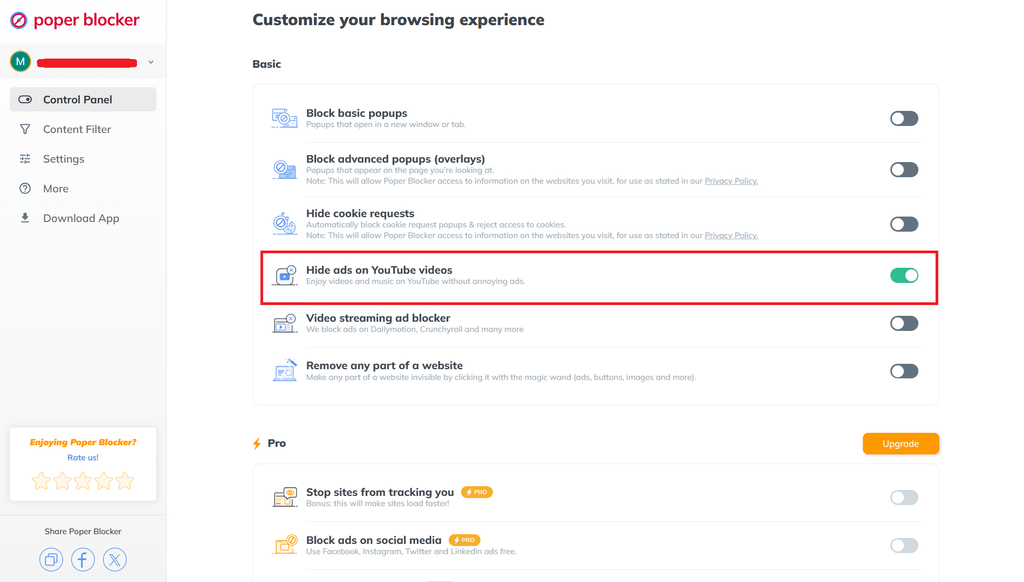
Desktop is still the easiest place to reduce YouTube interruptions without changing how you browse. You keep using the browser you already use, and the blocker handles the ad clutter in the background.
On mobile (iOS & Android app)
There’s also a mobile app version of Poper Blocker available for Android and iOS. On mobile, the YouTube viewing process is a bit different from desktop, since it works through the app’s built-in player rather than a browser extension.
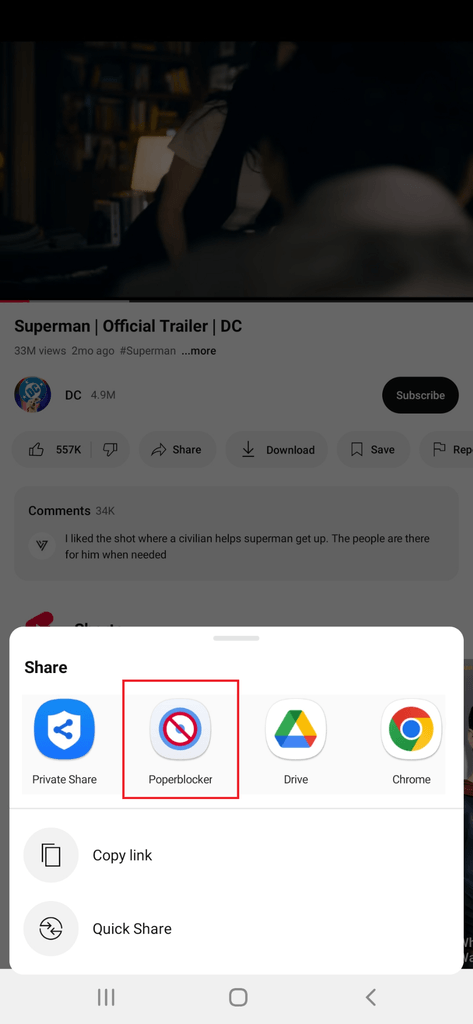
Here’s how the mobile flow works:
- Find a video in the YouTube app on Android.
- Tap Share.
- Send it to Poper Blocker.
- The video opens in the built-in player, where most ads are blocked.
- The player also supports background playback, so you can keep listening with the screen off.
There are a few extra benefits on mobile, especially if you use the built-in player:
- One is background playback, which means the audio can keep playing even when your screen is off.
- This also makes it more useful for music, podcasts, interviews, and long videos you mainly want to listen to.
- If you need to reply to a message, check another app, or lock your phone while a video keeps playing, you do not have to stop what you’re watching just to keep the audio going.
So, are YouTube ads getting worse?
For most users, yes.
The platform may be getting more sophisticated about when ads appear, but that does not automatically make the experience better. YouTube expanded automatic mid-roll logic, kept widening its subscription funnel, and introduced officially supported 30-second non-skippable ads for TV. Add weaker trust in ad quality and heavier repetition, and the experience feels worse for a lot of viewers.
So if it feels worse, that is because in several important ways, it is. The ad load problem is no longer only about how many ads appear. It is about where they land, how long they hold you, and how often they break the flow.
If you want fewer interruptions without paying for another subscription, Poper Blocker gives you a better option for watching YouTube on desktop and mobile.
FAQ
What are pre-roll ads on YouTube?
Pre-roll ads are the ads that play before your video starts. They are often the first interruption people notice because they delay the content before it even begins.
What are mid-roll ads and why do they feel worse now?
Mid-roll ads appear during a video, usually on content longer than eight minutes. They feel worse when they land in the middle of speech, jokes, or action, which breaks the viewing flow.
Do post-roll ads still matter?
Post-roll ads show after a video ends. They are usually less disruptive than the other two, but they can still add clutter, especially when autoplay or playlists keep the session going.
Is YouTube Premium worth it?
A lot depends on how much you use YouTube and whether you want background play, downloads, and a simpler experience inside the official app.
What is the easiest alternative to paying for Premium?
On desktop, a YouTube ad blocker is the most direct fix. On Android, an ad-free YouTube player can reduce interruptions without changing how you discover videos in the main app.