Chrome Web Extension
 Edge Web Extension
 Android App
 iOS App


Ad blockers are powerful tools for improving your online experience. In fact, 43% of internet users are already using ad-blocking apps or browser extensions according to the latest
GlobalWebIndex Ad-Blocking Trends Report. However, they can sometimes block content that you actually want to see. Whitelisting specific websites or pages is the best workaround for that. It can help you support your favorite sites while still keeping unwanted ads at bay.
What is whitelisting?
Whitelisting is a process where you specify certain websites to bypass the blocking rules of your ad blocker. This means that while your ad blocker continues to function, it still allows ads and popups from sites you trust. This is particularly useful for websites that need ads to operate properly or offer their full functionality. Whitelisting also benefits the user by maintaining a seamless browsing experience on chosen sites while keeping other sites ad-free. This strikes a balance between enjoying an ad-free environment and supporting content creators. You can whitelist your favorite news sites, streaming platforms, or blogs to keep your access uninterrupted and hassle-free.
Reasons to whitelist a website
Whitelisting websites while using an ad blocker can improve your browsing experience and support the sites you love. There are several compelling reasons to consider whitelisting certain websites, ranging from functional necessities to supporting content creators:
For proper functionality
Certain websites require ads or popups to function correctly. Government websites, online banking portals, and educational platforms often use these features for essential services. Ad blockers can inadvertently disable these necessary elements, which may lead to:
- Incomplete forms
- Missing information
- Broken navigation menus
Whitelisting these sites allows them to operate as intended. For instance, online banking often uses popups for secure login processes, and blocking these could hinder access to your account.
Support content creators
Advertising revenue is a critical source of income for many websites, especially those providing free content. When you whitelist trusted sites, you support the creators and publishers who invest time and resources into producing valuable content. This helps maintain the quality and availability of articles, videos, and other resources. Many content creators rely on ads to fund their operations. This includes:
- Bloggers
- Journalists
- Video producers
Allowing ads on their sites lets them continue to offer high-quality content without charging users.
Access streaming services
Streaming websites often use popups and ads as part of their content delivery system. These ads might be necessary for accessing videos or live streams. Disabling these ads can disrupt your viewing experience or prevent access to the content altogether. When you whitelist these sites, you’ll be able to enjoy uninterrupted streaming sessions.
Avoid annoying prompts
Many websites detect ad blockers and prompt users to disable them, which can be disruptive. These prompts can appear as popups or overlay messages that block the content until the ad blocker is turned off. Whitelisting these sites prevents such interruptions. Continuous prompts can be frustrating, especially when you’re visiting websites that you frequently use.
How to whitelist websites when using Poper Blocker?
Whitelisting websites with Poper Blocker allows you to block intrusive ads while still supporting your favorite sites. This process is very straightforward and helps maintain a balance between a clean browsing experience and supporting content creators. Here’s a step-by-step guide on how to turn off ad blockers for one site or page:
1. Access the Control Panel
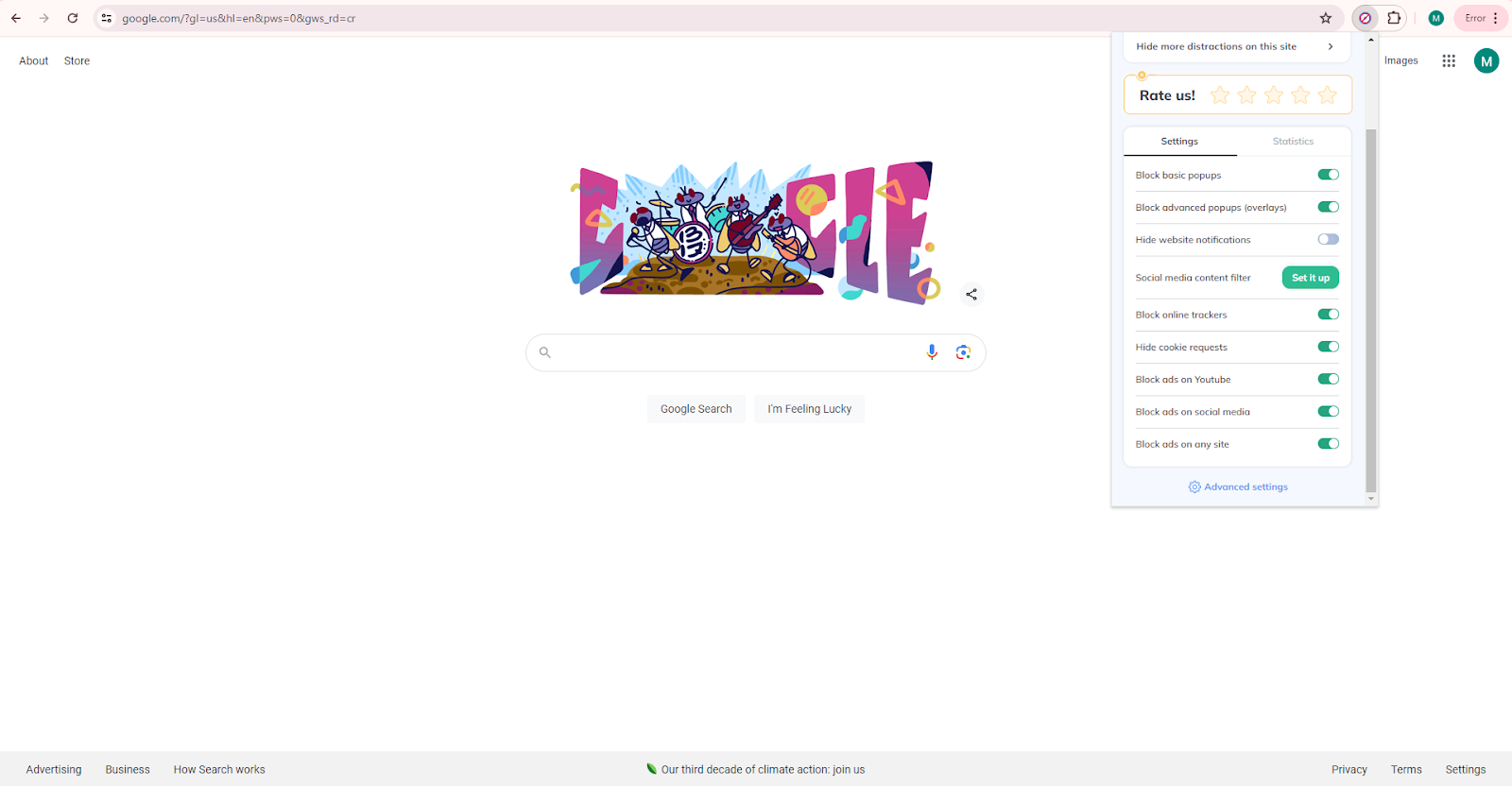
First of all, in case you still don’t have Poper Blocker installed, you can do that by installing it on Chrome or Edge. Now, begin by opening your browser and locating the Poper Blocker extension icon, which is found in the top right corner of your browser window. Click on the icon to open the dashboard, scroll down, and then click on “Advanced settings”.
2. Go to Settings
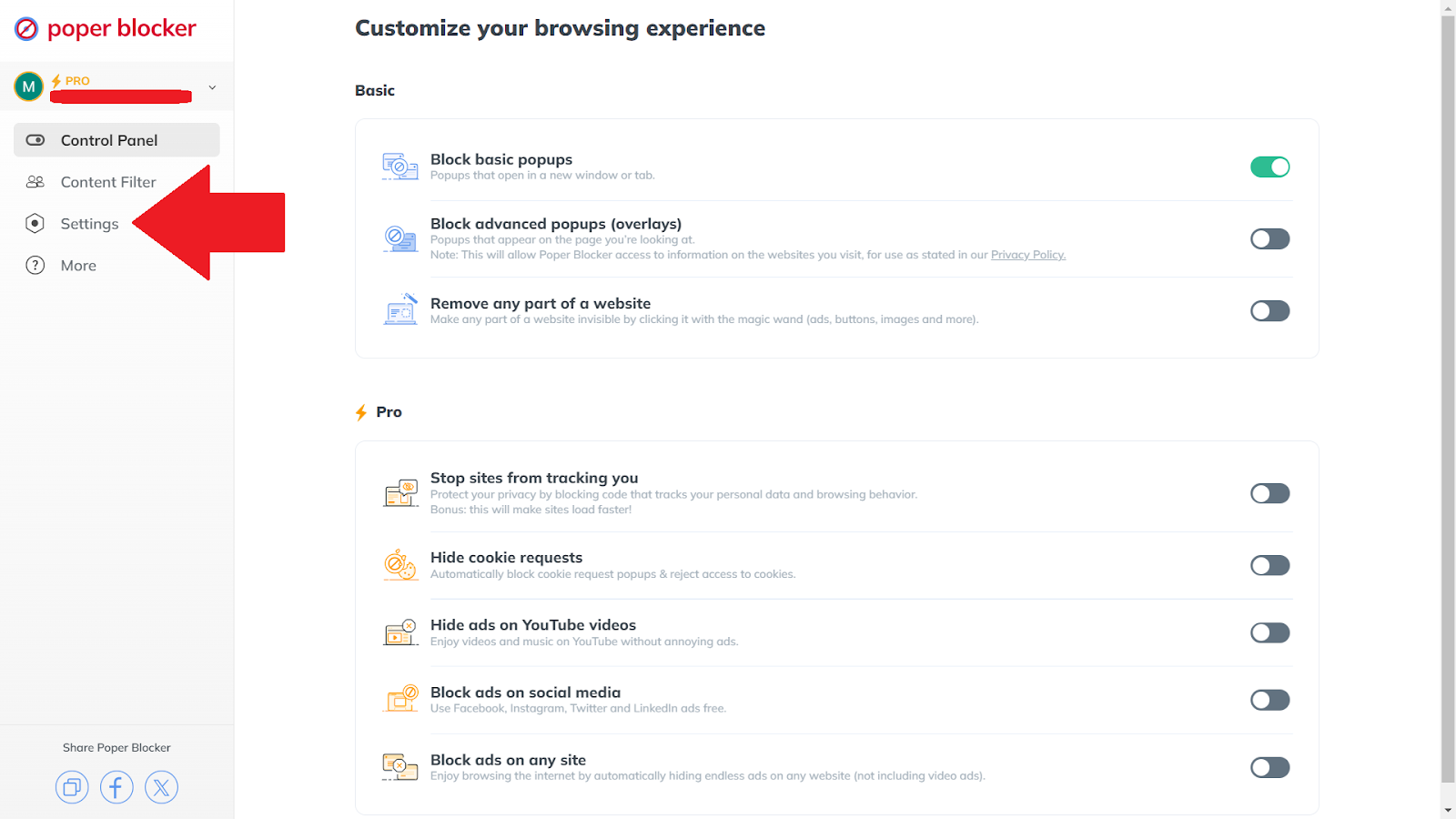
Once inside the Control Panel, look for the Settings tab. This section contains various options to adjust how Poper Blocker handles types of online ads and popups. Here, you can manage whitelists, block lists, and other important configurations.
3. Locate the Whitelist Section
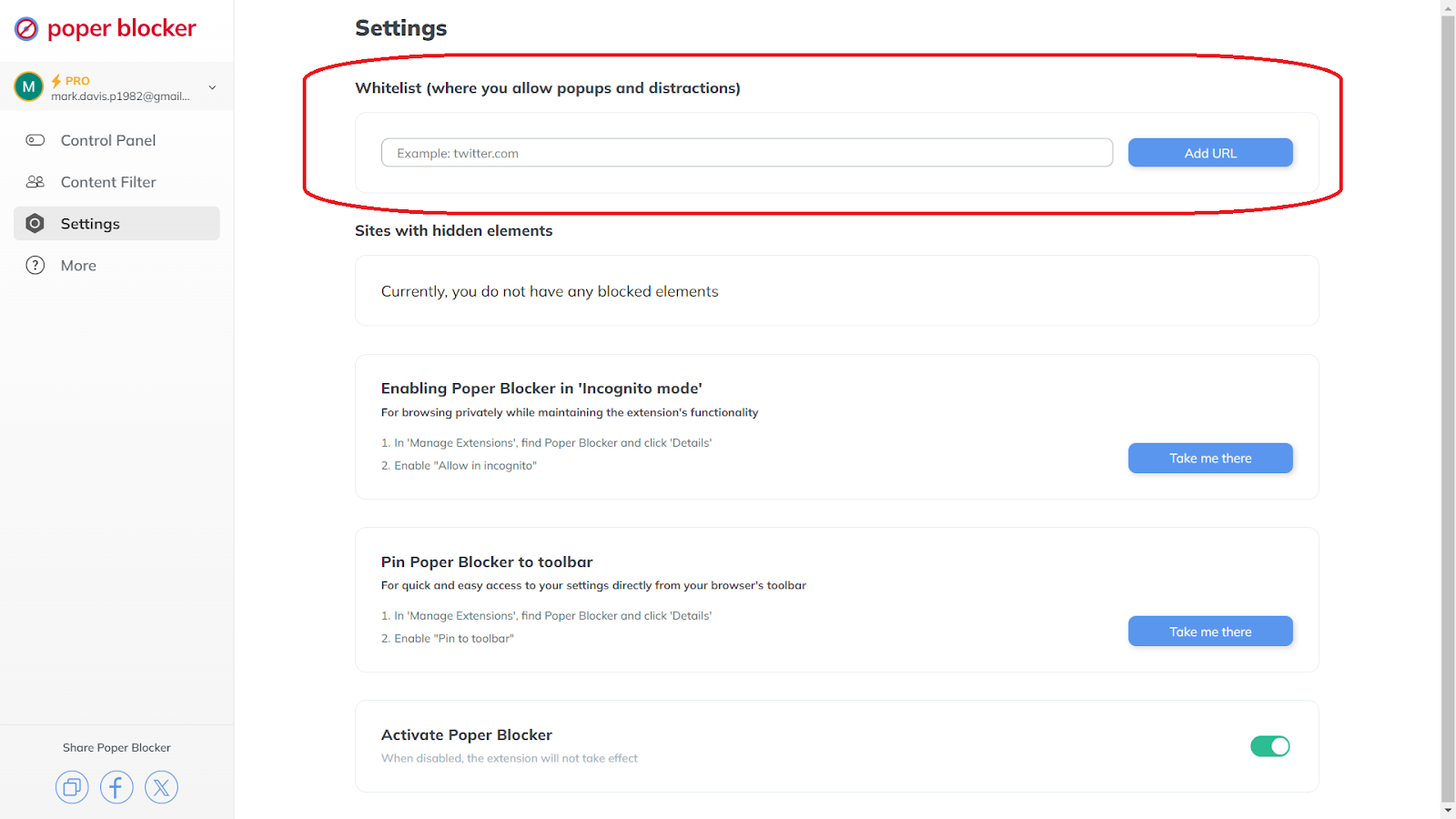
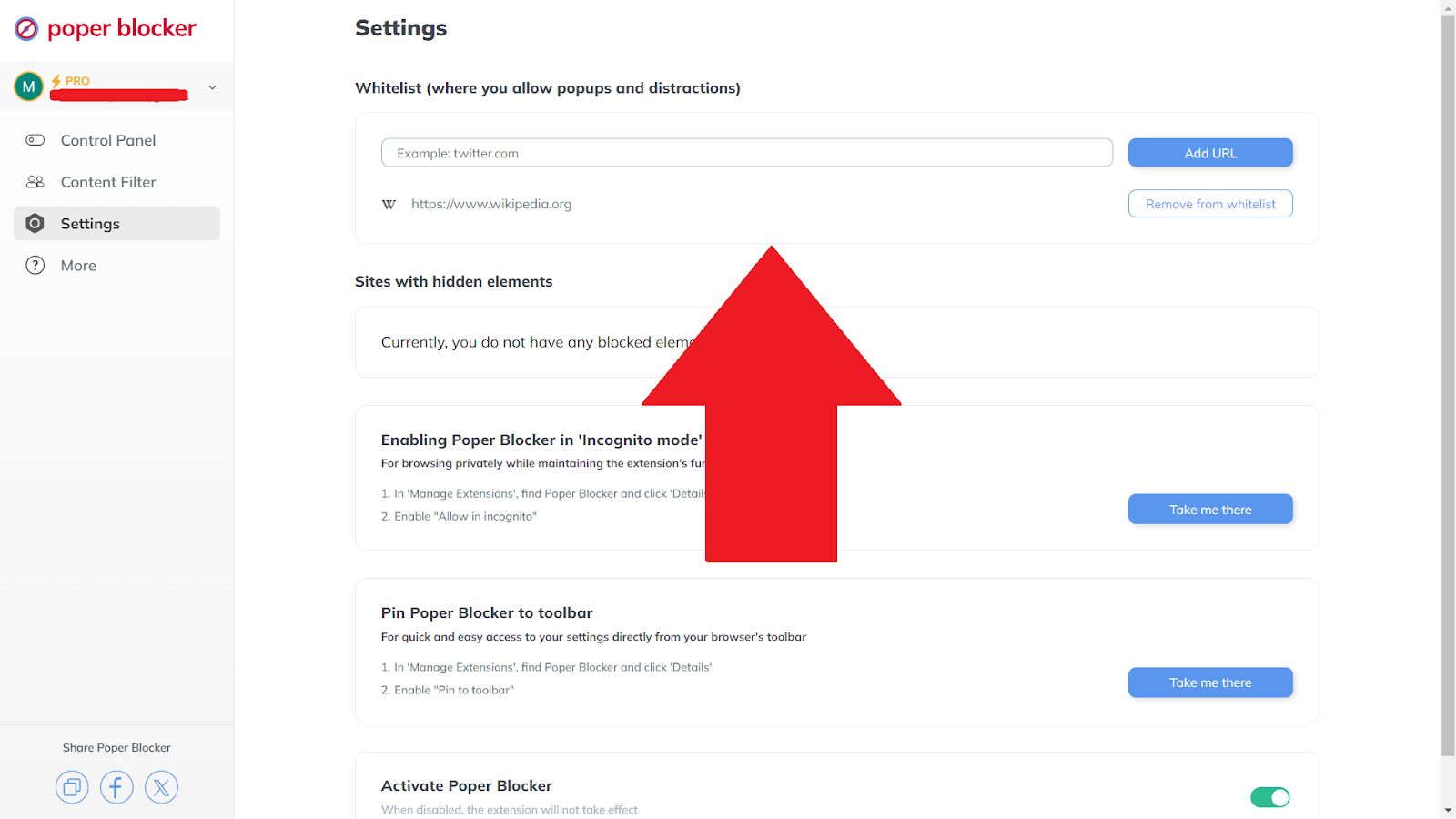
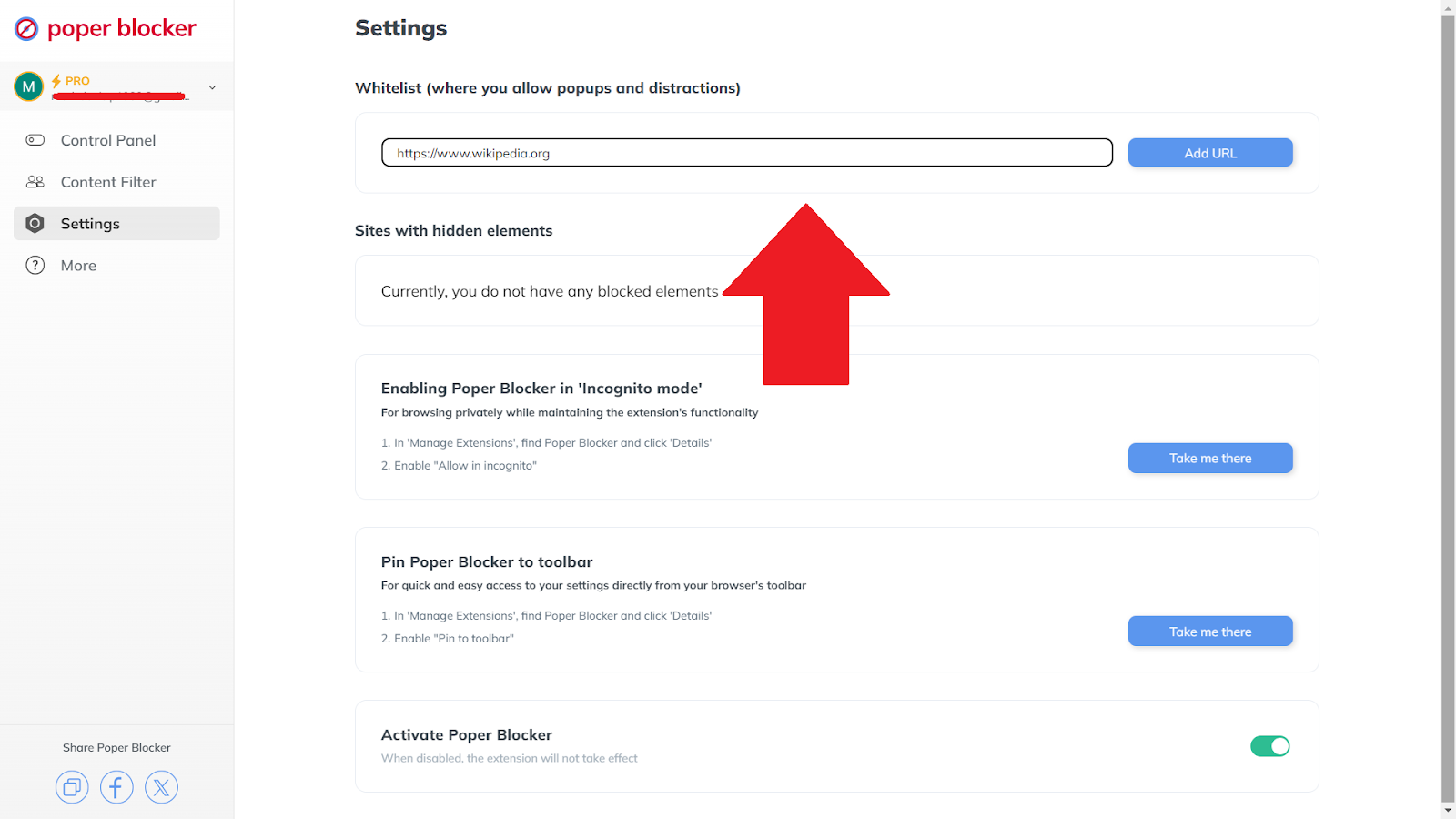
It’s easy to find the section labeled “Whitelist (where you allow popups and distractions)” since this is at the top portion of the screen. This is the area where you will specify which websites you want to exempt from ad-blocking.
4. Enter the URLs
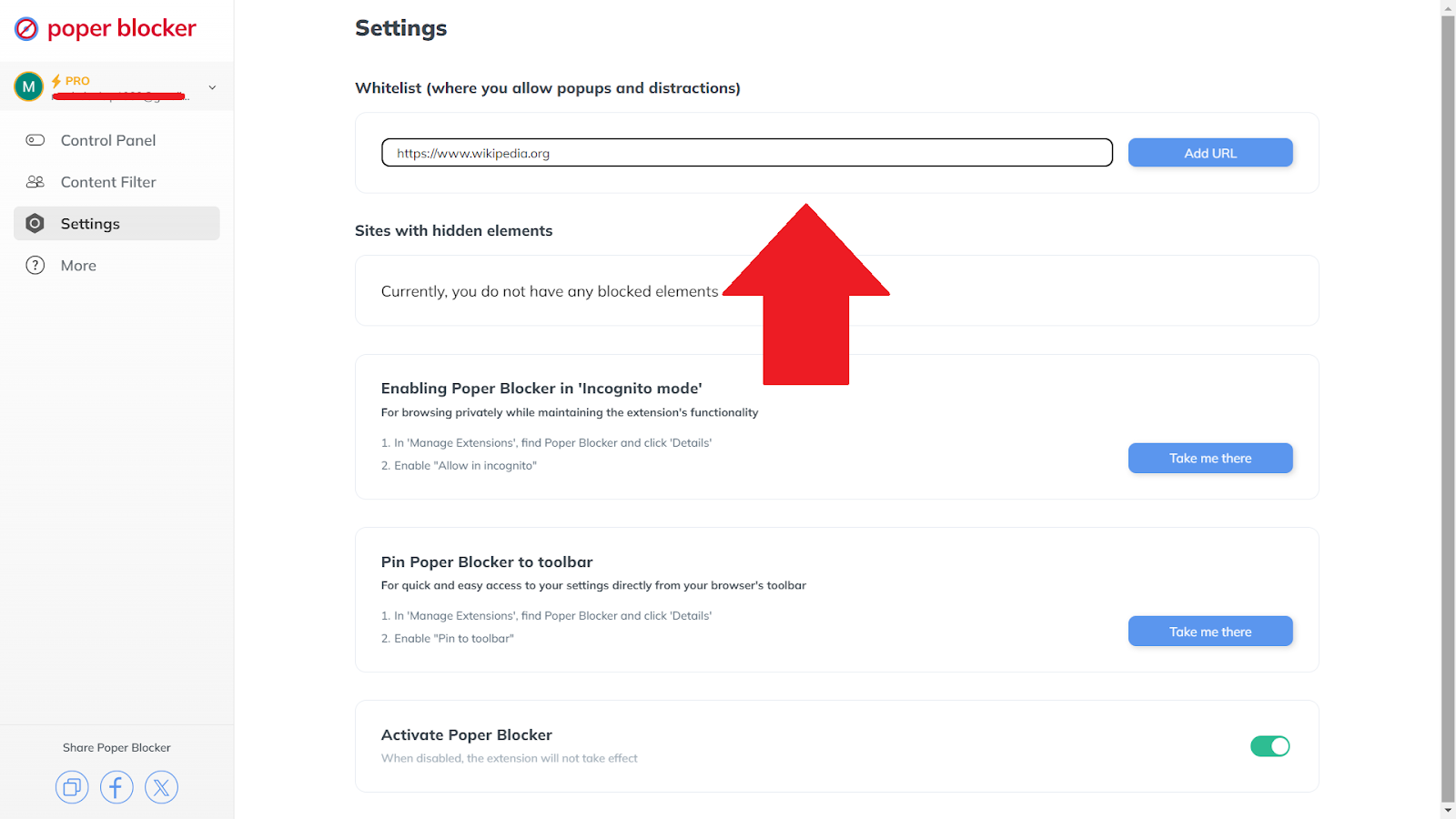
After locating the whitelist section, you will see a field where you can enter the URL of the site you wish to whitelist. Type the complete URL of the website, including the “https://” prefix. This step is important because a small error in the URL can result in the website not being whitelisted correctly.
5. Add the Site to the Whitelist
After entering the URL, click the “Add URL” button. This action will add the specified website to your whitelist, which will then allow ads and popups from this site to bypass Poper Blocker’s restrictions. You will notice the site appearing in your list of whitelisted sites. This confirms that it has been successfully added.
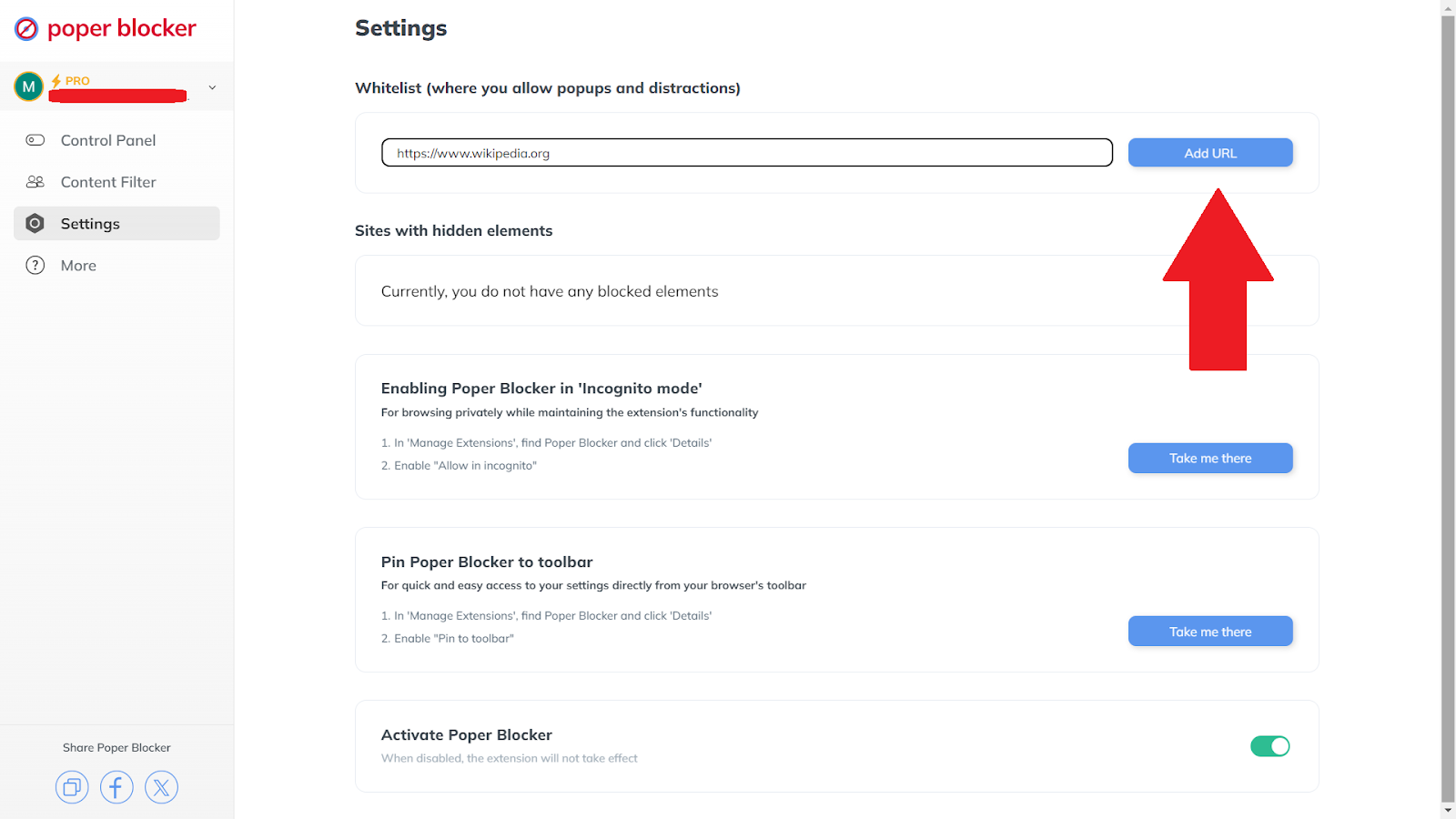
6. Verify the Whitelisting
It’s a good practice to verify that the site has been correctly whitelisted. Visit the website and check if the ads are displaying and all functionalities are working smoothly. If everything is in order, you have successfully whitelisted the site using Poper Blocker.
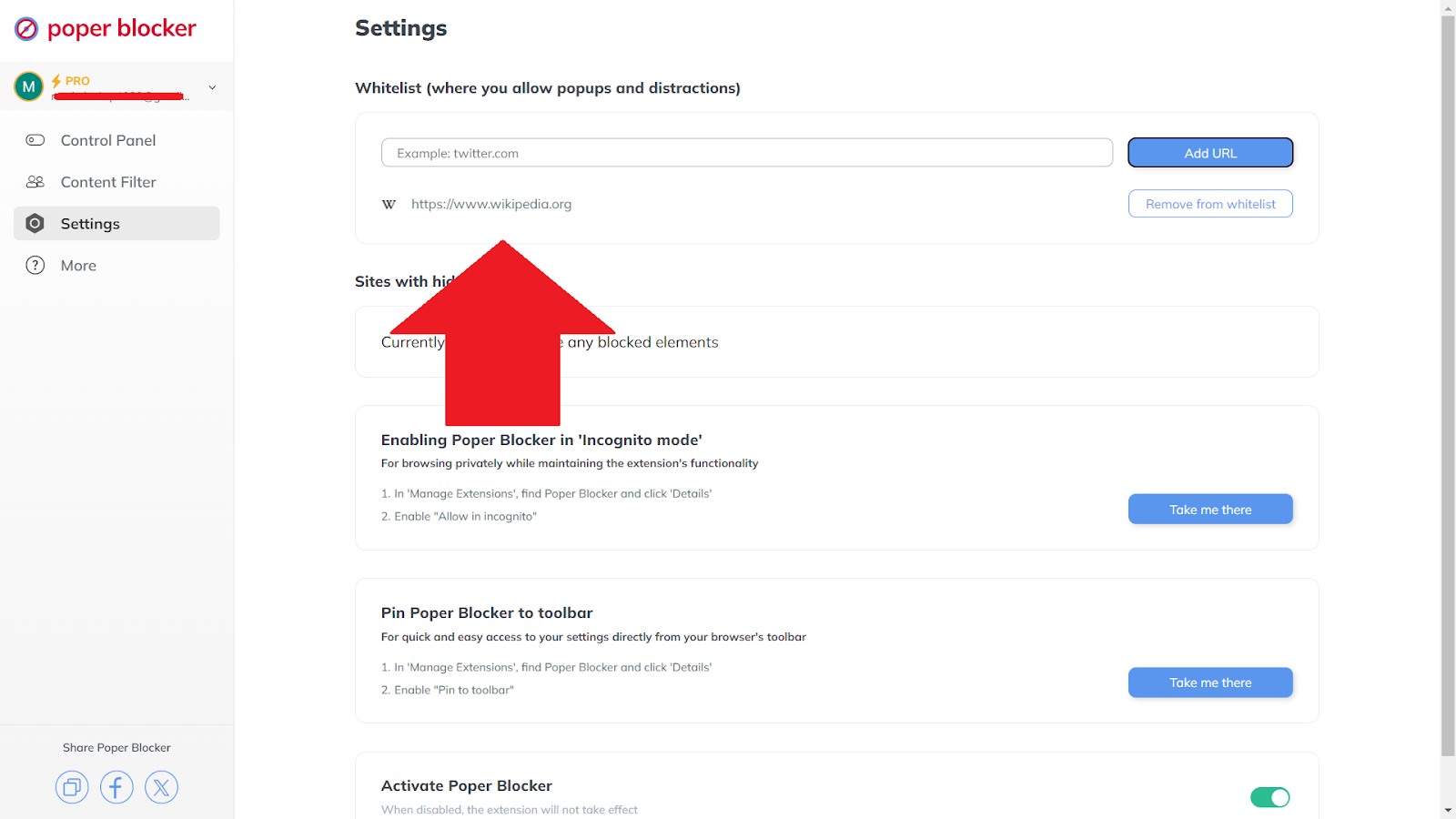
Whitelist wisely for a better browsing experience
Whitelisting websites while using an ad blocker is a balanced way to enjoy the internet. When you allow ads on trusted sites, you’re not only supporting the creators and services you value, but you’re also helping maintain the free availability of high-quality content. This practice helps your favorite websites continue operating and providing you with valuable information and entertainment. It’s a simple act that goes a long way in supporting the online ecosystem.
When you’re using Poper Blocker, the steps on how to disable your ad blocker for a website are straightforward and easy to follow. Start by identifying the sites you trust and want to support, and then use the tools provided by your ad blocker to add them to your whitelist. This will make your browsing experience more enjoyable, and in addition, you’ll contribute to the sustainability of the websites you love.
FAQs
Can I whitelist only specific pages on a website?
Yes, you can whitelist specific pages rather than the entire website. Adding exceptions to ad blockers allows you to maintain control over which parts of a site can display ads. For example, if you regularly visit a particular section of a news site, you can whitelist just those pages by entering their specific URLs.
Will whitelisting increase the number of ads I see?
Whitelisting a site will only display ads on that specific site. It doesn’t affect your ad-blocking settings on other websites. This means you can enjoy an ad-free experience on most of the internet while allowing ads on sites you trust and want to support.
Is it safe to whitelist websites?
Whitelisting trusted websites is generally safe and helps support their revenue model. In most cases, trusted sites have ads that are non-intrusive and are only relevant to their content. However, it’s still important to be cautious and only whitelist sites you know and trust. Avoid unfamiliar sites as they may have intrusive or malicious ads.
Can I remove a site from the whitelist later?
Yes, you can remove a site from your whitelist in case you change your mind. Most ad blockers have straightforward processes for managing your whitelist. Simply access the settings or preferences of your ad blocker, go to the whitelist section, and remove the sites that you no longer wish to include in this list.
What happens if I don’t whitelist a site that requests it?
You may experience issues with how the site functions. Some sites rely on ads for revenue and may restrict access to their content if you block their embedded ads. You might encounter pop-ups asking you to disable your ad blocker, or some features of the site may not work properly.
Get Poper Blocker and manage your ad-blocking settings effortlessly
In 2023, marketers across the globe spent a combined total of around $720 billion on digital ads according to a report by DataReportal. The good news is that ad blockers are helping users avoid these intrusive and distracting advertisements online.
So, how does an ad blocker work? Let’s understand the mechanisms behind these tools and know their benefits so you can make informed decisions about which one to use and how to customize its settings for the best browsing experience.
How do ad blockers work?
Ad blockers operate through several mechanisms, each contributing to their ability to disable ads effectively. Here’s a deeper look into how they achieve this:
Filter lists
Filter lists are at the core of ad blockers. These lists are collections of rules that dictate what should be blocked on a webpage. They include URLs, scripts, and various elements identified as sources of advertisements. Maintained by communities of volunteers and developers, filter lists are continuously updated to combat new advertising techniques.
Each filter list targets specific types of content. When you visit a webpage, the ad blocker checks the page’s elements against these lists and if an element matches a rule in the filter list, it is blocked from loading.
Machine learning
Machine learning optimizes traditional ad-blocking techniques by enabling ad blockers to identify and block ads more intelligently. While filter lists rely on predefined rules, machine learning models can analyze patterns and behaviors associated with ads. This capability allows ad blockers to adapt to new advertising methods that might not yet be covered by existing filter lists. For instance, machine learning can be used to recognize the visual and functional characteristics of ads, even those that try to disguise themselves as regular content.
Blocking third-party requests
Blocking third-party requests is another crucial function of ad blockers. Many ads are served by third-party domains that are separate from the content provider’s website. Ad blockers intercept these requests and prevent the ads from being downloaded and displayed. Third-party servers often have ad tracking to analyze user behavior across multiple sites for the purpose of gathering data for targeted advertising. Blocking these requests helps protect your privacy as it reduces the amount of data collected by advertisers.
Collaborative Efforts
The development and maintenance of ad blockers benefit greatly from collaborative efforts. Communities of developers and users work together to update filter lists, identify new ad-serving techniques, and share knowledge. Open-source projects rely on this collaborative model, which allows anyone to contribute to the improvement of the ad blocker. This also extends to the sharing of user reports. When you encounter unblocked ads, you can report them to the community so developers can update filter lists and refine the ad-blocking algorithms.
User-Defined Rules
Ad blockers offer you the ability to create your own rules. These are particularly useful for blocking ads that are specific to certain websites or for adjusting the ad-blocking behavior to suit your preferences. To add a custom rule, you just need to access the ad blocker’s settings and specify the elements you want to block. This might include particular scripts, images, or iframes associated with ads.
Block ads with Poper blocker
Poper Blocker is a highly effective browser extension for Chrome and Edge, that’s designed to eliminate annoying ads and provide a smooth browsing experience. With its user-friendly interface and powerful features, you can enjoy your time online without constant interruptions from advertisements. Here’s a detailed look at how you can block different types of online ads and customize your ad-blocking preferences through its Control Panel:
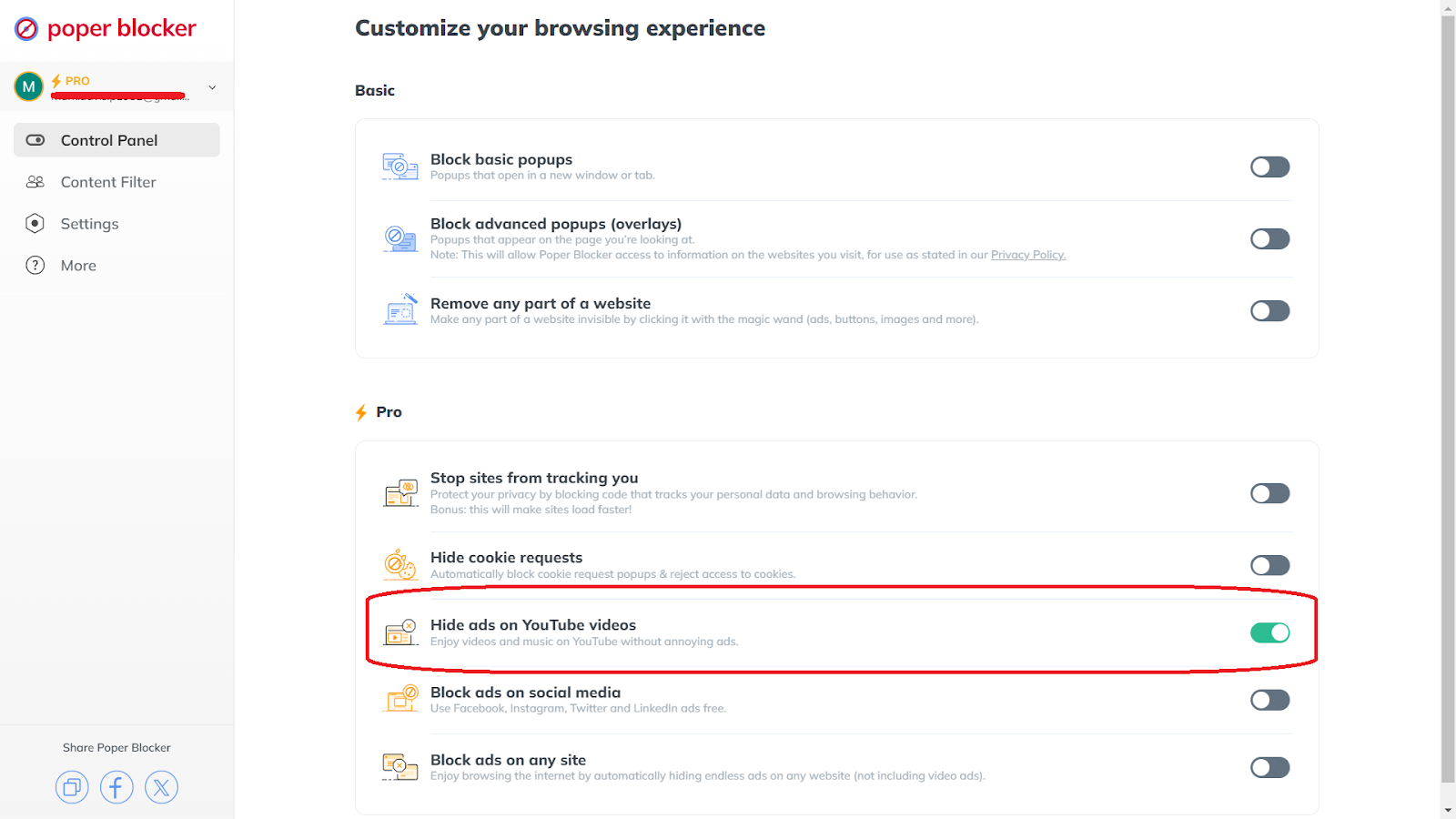
Hide ads on YouTube videos
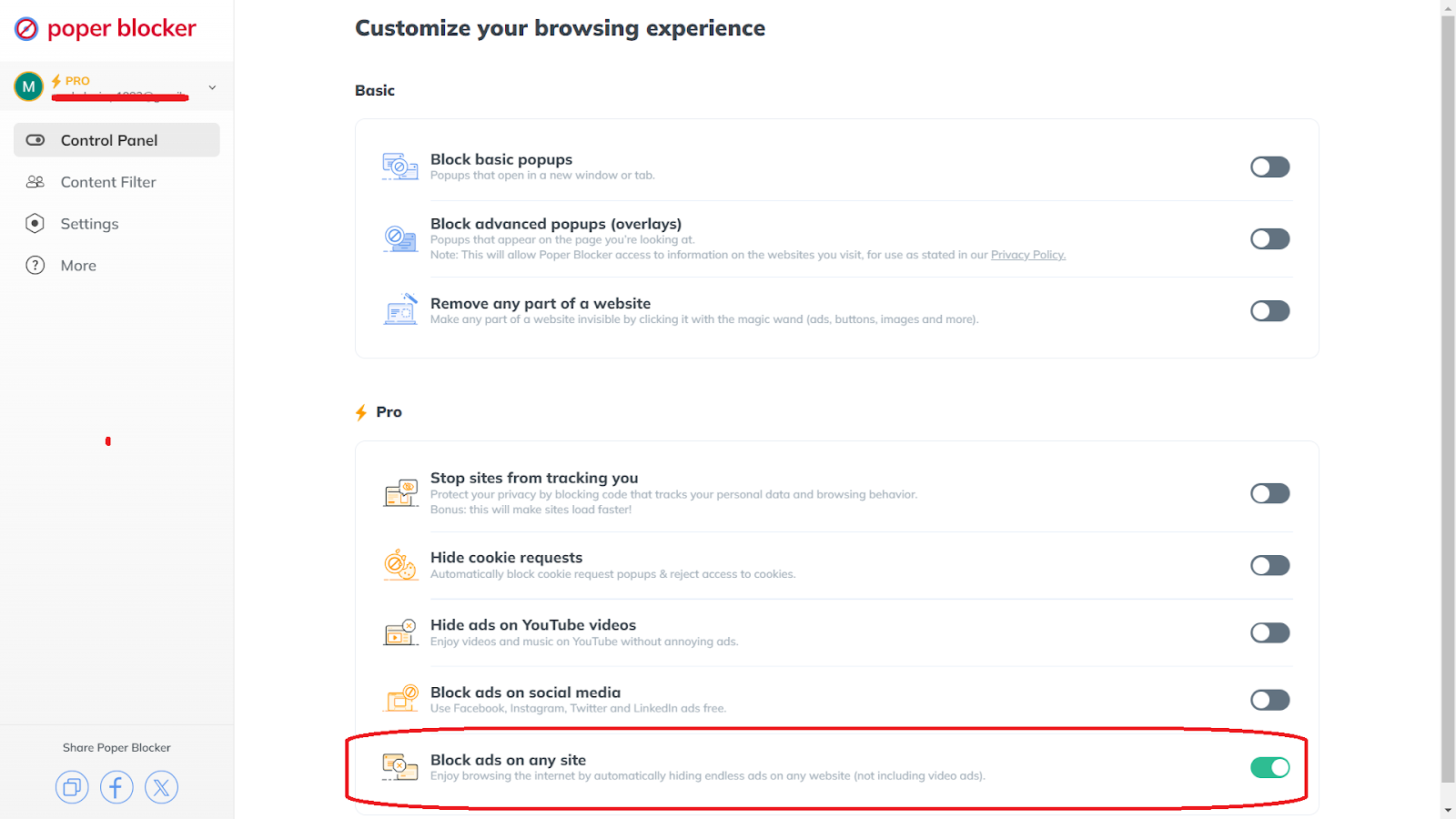
YouTube is one of the most popular platforms for video content, but it’s also known for its frequent ads that can disrupt viewing. Poper Blocker offers a feature to block YouTube ads so you can enjoy your favorite videos and music without interruptions. To enable this, simply go to the Control Panel and toggle the button for “Hide ads on YouTube videos”.
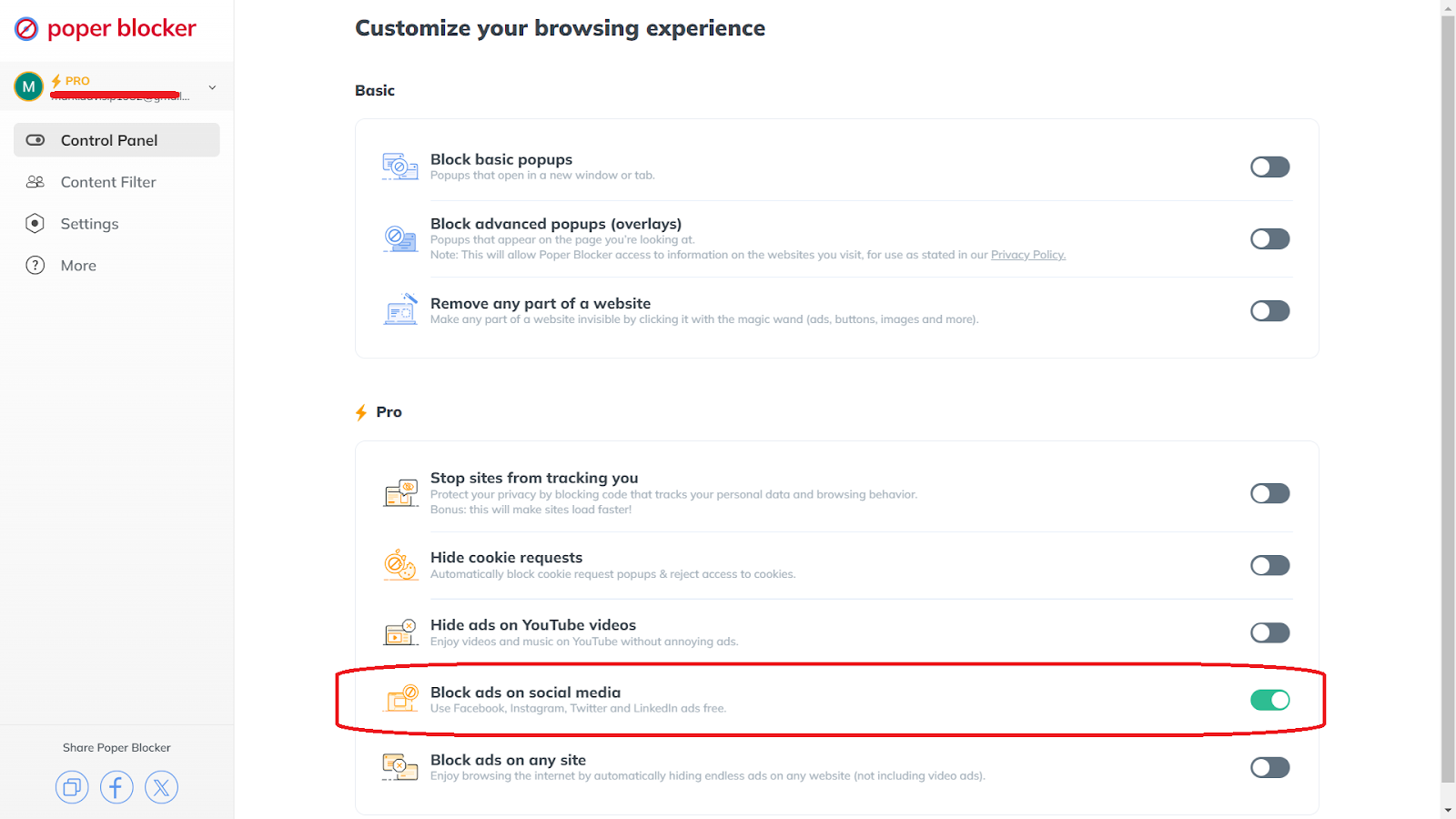
Block ads on social media
Social media platforms like Facebook, Instagram, Twitter, and LinkedIn are filled with ads that can clutter your feed. Poper Blocker identifies ad content on these platforms and blocks it from displaying. This includes sponsored posts, banner ads, and video ads that appear in your feed. To do this, find the “Block ads on social media” under the Control Panel and enable the feature.
Block ads on any site
For a comprehensive ad-blocking solution, Poper Blocker allows you to block ads on any website you visit. It basically scans each webpage you visit for ad elements and blocks them according to predefined rules. To turn this feature on, access the extension’s Control Panel and enable the button for “Block ads on any site”.
Whitelisting sites
While blocking ads is beneficial, there might be certain websites you want to access or support by allowing ads. Poper Blocker’s whitelisting feature gives you control over which sites can show ads. To do this, go to the Poper Blocker Control Panel and click on Settings. At the Whitelist section, add the URLs of the sites or pages that you want to allow to support.
The Future of Ad-Free Browsing
Ad blockers have become an indispensable tool for many internet users, offering a seamless and uninterrupted browsing experience. Poper Blocker provides comprehensive ad-blocking capabilities tailored to various needs. With features like blocking YouTube ads, social media ads, and ads across any site, this browser extension significantly improves user satisfaction. Additionally, its easy-to-use whitelist feature allows users to support their favorite websites without compromising on the benefits of ad blocking. By choosing Poper Blocker, you can enjoy a cleaner, faster, and more enjoyable online environment.
FAQs
What are filter lists in ad blockers?
Filter lists are important components of ad blockers. They contain rules that identify and block ad content on web pages. These lists are regularly updated by communities and developers to stay effective against new ad-serving techniques. The lists work by specifying URLs, scripts, and other elements that should be blocked.
How does machine learning improve ad blocking?
Machine learning optimizes ad blocking by analyzing patterns and behaviors associated with ads. Traditional filter lists rely on predefined rules, which can be circumvented by sophisticated ad technologies. Machine learning models can identify new and emerging ad formats by understanding their characteristics.
Can ad blockers speed up my browsing?
Yes, ad blockers can significantly speed up your browsing experience. Ads often include heavy multimedia content such as videos, animations, and large images that increase page load times. Ad blockers reduce the amount of data your browser needs to download by blocking these elements and this leads to faster page rendering. Additionally, blocking ads can decrease CPU usage and memory consumption.
What is the impact of ad blockers on websites?
Ad blockers can have a significant financial impact on websites that rely on advertising revenue. Many free online services and content providers depend on ads to fund their operations. When users block ads, these websites lose a primary source of income, which can lead to reduced content quality, fewer updates, or even the closure of the site.
How do I whitelist a website in an ad blocker?
Whitelisting a website in an ad blocker like Poper Blocker allows ads to be displayed on that specific site. This method supports the content creators you want to help. To whitelist a site in most ad blockers, go to the settings or preferences section, look for a whitelist or allowlist option, and add the URLs of the websites or pages you want to support.
Overlays, those annoying interruptions that pop up on websites, can be incredibly frustrating. They come in different forms, such as a newsletter sign-up, an exit ad, or something else. These can easily disrupt your browsing experience and make it harder for you to focus on the content that you care about.
What are overlays?
Overlays are intrusive elements that appear on top of a webpage’s content, which often blocks the view and demand user interaction. Unlike traditional pop-ups that open in separate windows or tabs, overlays are embedded within the webpage itself. They trigger automatically when you enter or leave a website and will ask you to take an action such as:
- Subscribe to newsletters
- Accept cookies
- Answer a survey
- View special offers
These elements are designed to capture your attention and often don’t have an easy-to-find close button, which makes them particularly disruptive.
For example, when you visit a blog, you might encounter a “subscribe to our newsletter” overlay that covers the screen, and it will require you to either subscribe or find the hidden close button. Overlays can also appear when you attempt to leave a site and it presents exit-intent ads to entice you to stay or make a purchase.
What’s the difference between a regular pop-up and an overlay?
Since overlays are not classified as traditional pop-ups, most browsers don’t automatically block them, which is why you’ll need to use specialized tools. Both of these basically serve as tools for capturing user attention, but they function in distinct ways and require different strategies in order to be disabled properly.
Pop-ups: separate windows or tabs
Pop-ups are external windows or tabs that open automatically when you visit a website. They are often triggered by actions such as clicking a link or simply visiting a page. These pop-ups often display:
- Advertisements
- Sign-up forms
- Promotional content
Because they open as separate entities from the main browser window, they can be easily identified and blocked by most modern browsers or ad-blocking extensions which are capable of disabling different types of online ads.
Overlays: embedded within web pages
Overlays, on the other hand, are elements that appear within the same browser window, overlaying the webpage’s content. These can be:
- Sign-up forms
- Special offers
- Exit-intent ads
Unlike pop-ups, overlays are part of the HTML structure of the webpage and are designed to blend seamlessly with the site’s design. This makes them harder to block with traditional pop-up blockers, which is why you’ll need specialized tools like Poper Blocker to manage them effectively.
How to block pop-up overlays with Poper Blocker
Blocking pop-up overlays can greatly improve your browsing experience, and Poper Blocker (Available for Chrome and Edge) makes it easy. Here’s a step-by-step guide to using this tool:
1. Open the extension
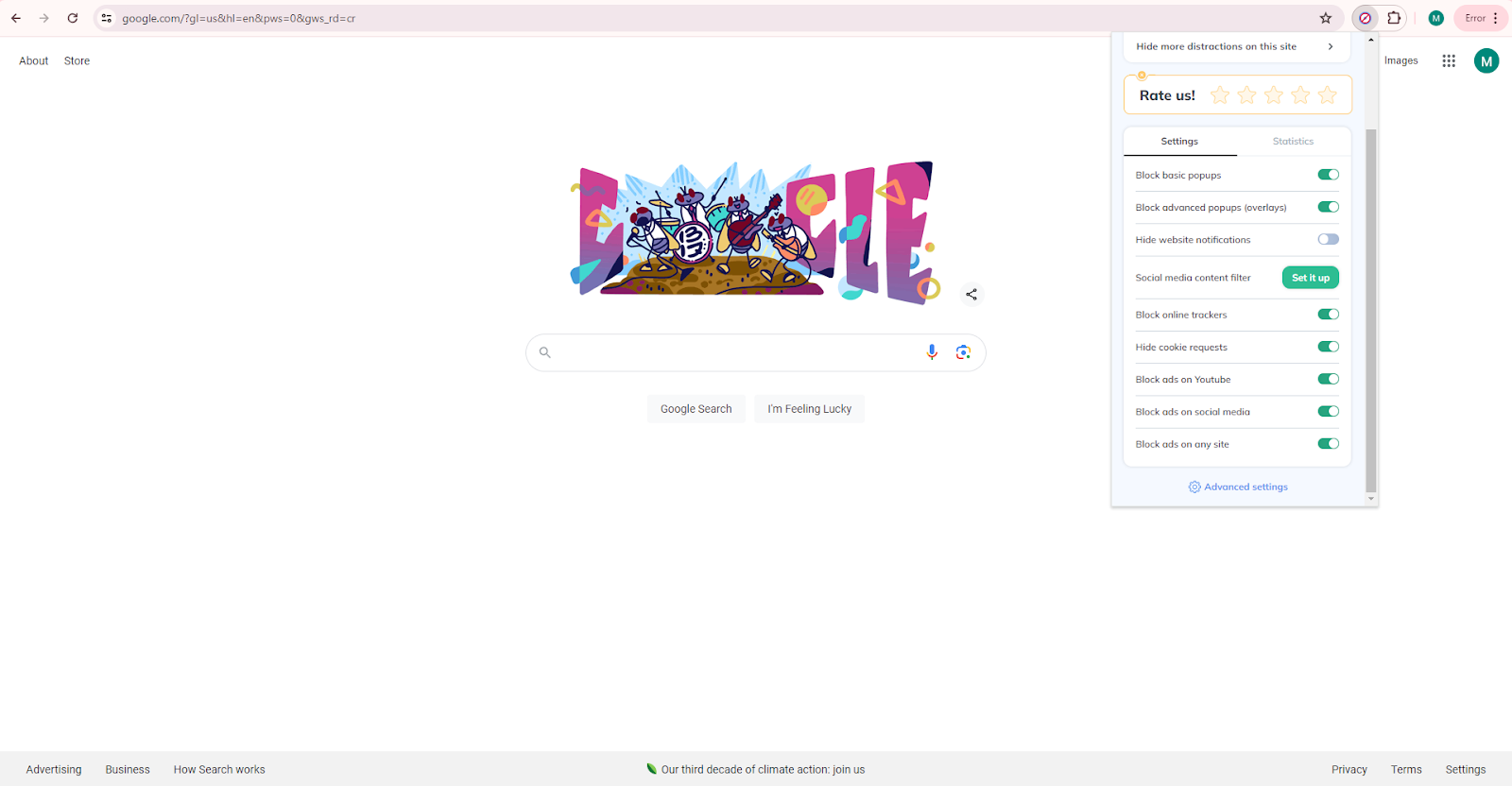
Once installed, click on the Poper Blocker icon in your browser toolbar. This will open the extension’s main interface where you can manage its settings and preferences.
2. Access the Control Panel
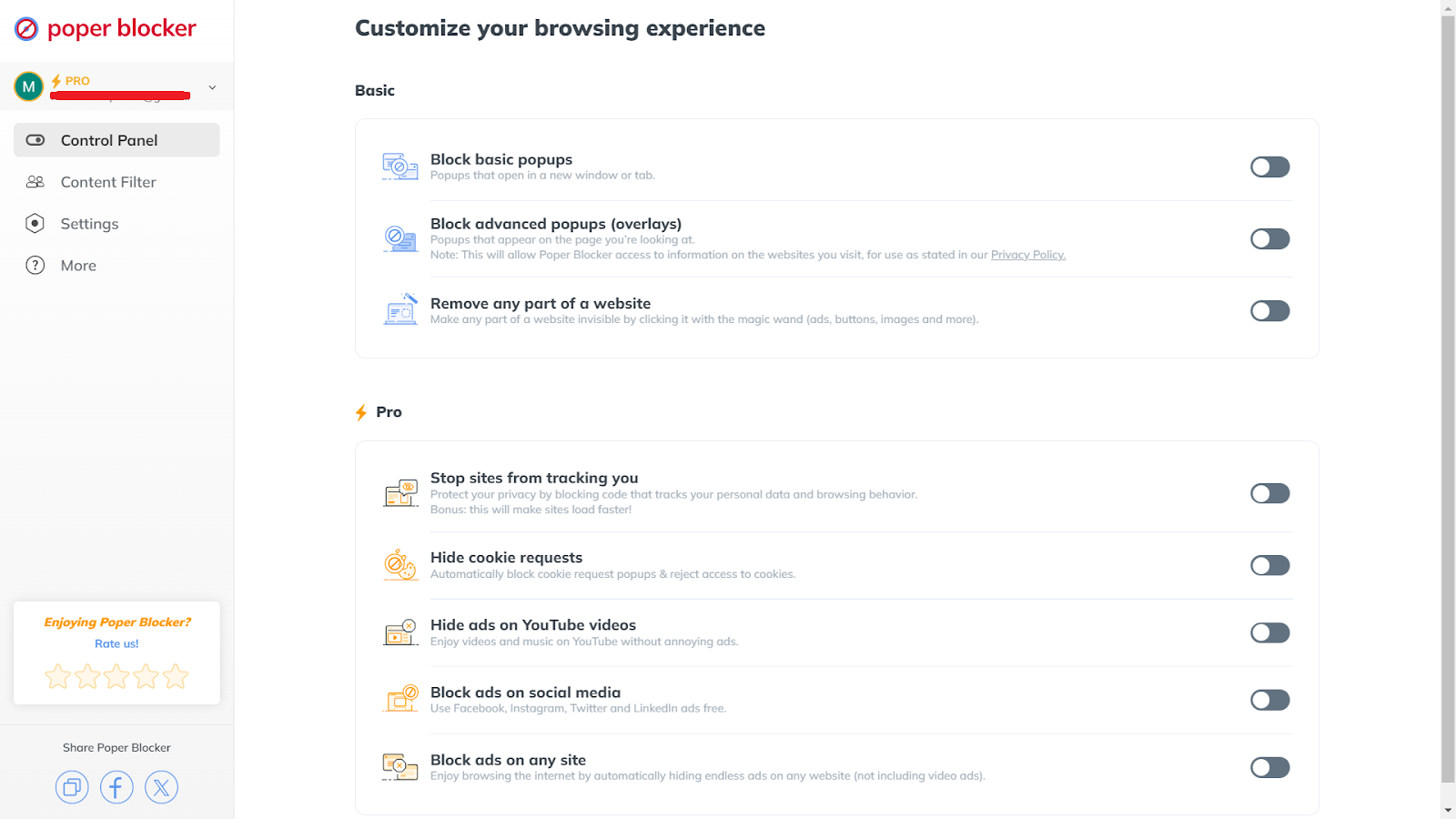
Go to the Control Panel by clicking the “Advance settings”. This is where you can customize how the extension handles different types of pop-ups and overlays.
3. Enable overlay blocking
Turn on the “Block advanced popups (overlays)” button. This one specifically does the job to block overlay ads that appear on the web pages that you visit and prevents them from obstructing your view and disrupting your browsing.
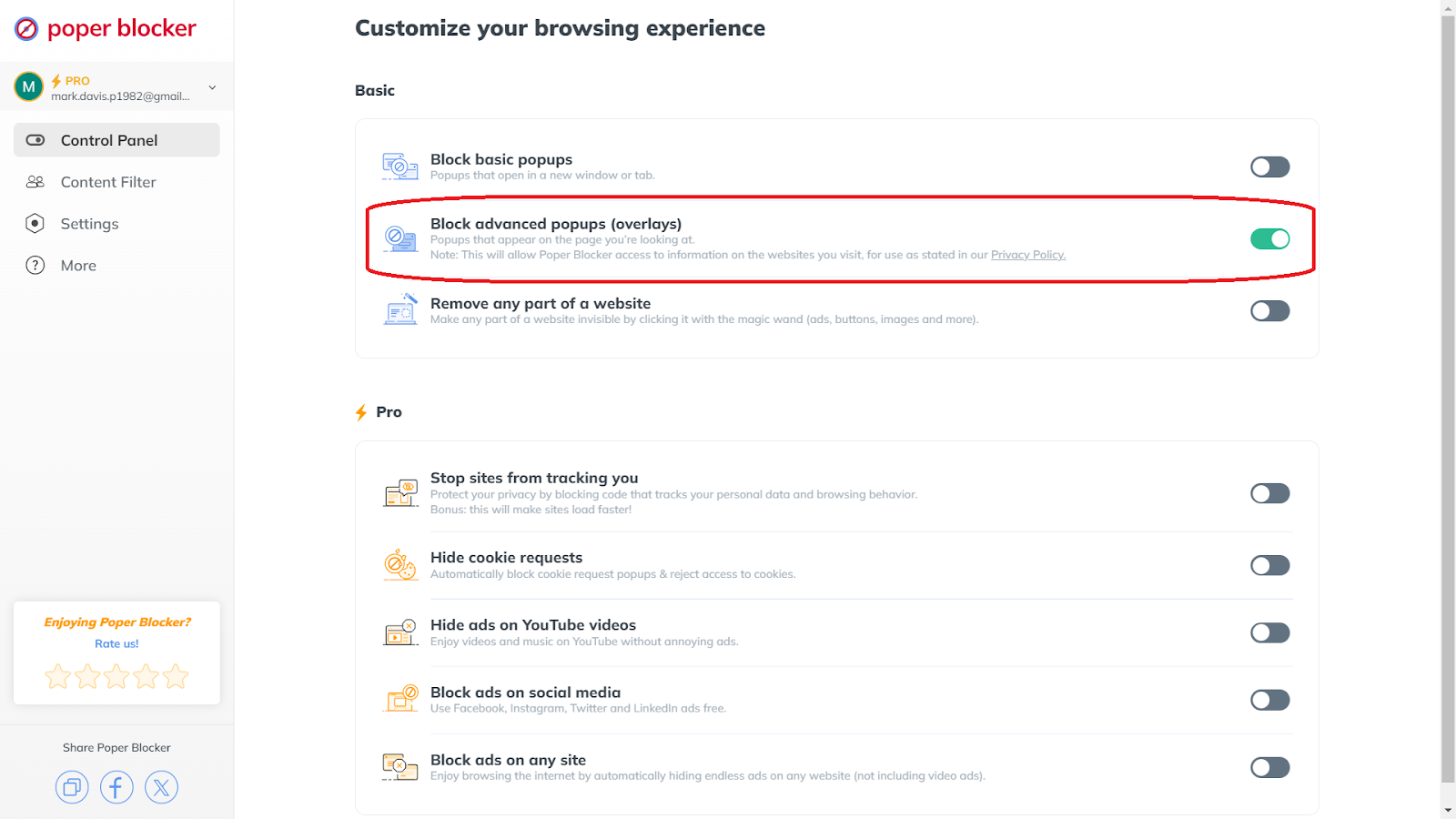
4. Adjust the settings as needed
This extension offers additional settings to fine-tune your ad blocking preferences. You can whitelist certain sites or adjust the level of blocking to suit your needs.
Wave goodbye to annoying overlays
Blocking overlays allows you to enjoy content without unnecessary interruptions. When you use Poper Blocker, you can effectively eliminate these intrusive elements and browse through websites seamlessly. The process is straightforward: install the extension, access the control panel, and enable the overlay blocking feature. With this browser extension, you’ll enjoy faster load times and a cleaner interface. Say goodbye to frustrating overlays and hello to a smoother, more enjoyable time online today!
FAQs
How do overlays affect user experience?
Overlays can significantly disrupt the user experience by covering important content and demanding immediate attention. These interruptions can lead to user frustration and cause visitors to leave the site prematurely. It can also slow down page loading times and make the browsing experience less enjoyable. In some cases, they may even interfere with accessibility features, which complicates navigation for users with disabilities.
Are overlays used for malicious purposes?
While most overlays are designed for legitimate marketing and informational purposes, some can be used for deceptive or malicious activities. Malicious overlays might trick you into clicking on harmful links or downloading malware. They can disguise themselves as legitimate prompts, like system updates or critical notifications. It’s important to be cautious and use trusted tools to block these potentially harmful overlays.
Can overlays slow down my browser?
Yes, overlays can contribute to slower browser performance. Many overlays are resource-intensive. They contain heavy scripts, animations, or high-resolution images that require significant processing power. And when multiple overlays load simultaneously, they can consume a substantial amount of system resources, which leads to slower page loading times.
Do all websites use overlays?
No, not all websites use overlays but they are prevalent on many commercial and content-heavy sites. Websites often use them to capture leads, promote offers, or deliver additional information to their users. However, the frequency and intrusiveness can vary significantly between sites. While some use them responsibly, others may use aggressive overlay tactics that may become disruptive.
Can I manually close overlays without an extension?
In some cases, you can manually close overlays by clicking the close button or an ‘X’ in the corner of the overlay. However, many of these are designed to be persistent and difficult to manually dismiss. Either they don’t have a visible close button or are positioned in a way that obscures important content until you interact with them. Using a dedicated ad overlay blocker like Poper Blocker provides a more reliable solution to automatically block and remove these interruptions.
Data from Pew Research Center shows that more seniors are now using the Internet. About 96% of those aged 50 to 64, and 75% of those 65 years and older, are online. Staying connected and informed has many benefits. However, these benefits also come with risks like scams and fraud, which often target older adults. It’s necessary to be alert and knowledgeable about online safety to protect yourself and your personal information.
Why Are Elderly People More Prone to Online Scams?
Older adults often face unique challenges that make them more vulnerable to online scams. Knowing these factors can help in taking steps to promote internet safety for seniors:
Limited Tech Skills
Many seniors did not grow up with modern technology and this makes them less familiar with online dangers. This lack of experience can be a challenge for them to spot phishing attempts, fake websites, or other scams. They might not know about the latest security measures or understand how to use them, like recognizing secure websites or using two-factor authentication.
High Trust in Others
Older adults often come from a time when trust was more common. Scammers exploit this trusting nature by using convincing tactics to deceive them. They often create a sense of urgency or make up believable stories and this makes it easier for them to gain the trust of seniors and get their personal information or money.
Social Isolation
Many seniors experience loneliness, which can make them more open to scams. Scammers exploit this by forming relationships through social media or dating sites. These relationships can lead to requests for money or personal information under false pretenses. The emotional bond can make it hard for seniors to recognize the scam.
Financial Stability
Scammers often target seniors because they are seen as having significant savings or assets. Older adults might be managing retirement funds, pensions, or other investments, which makes them attractive targets for financial scams. Scammers use fake investment opportunities, lottery scams, or fraudulent charities to exploit their financial stability.
Cognitive Decline
As people age, their thinking abilities can decline, and this could also affect their memory and decision-making skills. This decline can make it harder for seniors to critically evaluate information and identify scams. Scammers take advantage of this by creating complex scenarios that confuse and deceive their victims.
Lack of Cybersecurity Knowledge
Cyber security for seniors might seem confusing as they might not be aware of all the best practices, such as updating software, using antivirus programs, or setting strong passwords. This lack of knowledge can leave them open to various online threats, including malware and ransomware. Education and awareness are important in helping seniors protect themselves online.
Online Safety Tips for Seniors
Staying safe on the internet is very important for seniors who use it for talking to friends, shopping, banking, and socializing. Knowing how to protect yourself from scams and other online threats can help keep you secure and private:
Know the Red Flags
If someone contacts you asking for payment by wire transfer or gift card, it’s likely a scam. These requests often come with urgent messages to make you act quickly. Ending the conversation immediately can help you avoid becoming a victim. Scammers use these methods because they are hard to trace and undo.
Use Strong Passwords
Longer passwords are better than complex ones. A strong password should be at least 12 characters long. Use positive and easy-to-remember phrases like “IL0veCountryMusic!.” Keep a written list of passwords stored safely away from your computer. Using a different password for each account can stop one security breach from affecting other accounts.
Think Before You Click
This one never gets old (no pun intended). Don’t click on links in emails or social media posts from banks, credit card companies, government agencies, or other organizations unless you are sure they are real. Phishing scams use links to take you to fake websites to steal your information. Even if the web address looks familiar, it’s safer to type it into your browser. If you’re not sure, call the organization using a known phone number.
Dealing with Unsolicited Email
Junk email, or spam, is common but can be managed. Legitimate companies usually let you unsubscribe. However, true spammers often ignore these requests. Use the spam filter provided by your email service to reduce unwanted emails. Avoid clicking on links in unsolicited emails, as they may lead to scam sites or infect your computer with malware.
Always Verify
Emails, text messages, or phone calls that create urgency and ask for sensitive information should be viewed with caution. Instead of responding right away, verify the request by contacting a trusted source. Scammers often create panic to get quick responses without proper checking.
People Online Aren’t Always Who They Say They Are
Be careful when interacting with strangers online. Criminals can easily pretend to be friends or family. Only accept social media friend requests from people you know. If someone asks for money or personal information, verify their identity through a trusted method, like a phone call. Avoid sending money or sensitive details to anyone you haven’t met in person.
Meet New Friends and Romantic Partners Responsibly
Online dating scams are common and target both seniors and younger people. Always be cautious when meeting new people online. Verify their identity through multiple ways and be wary of those who quickly ask for money or personal information. Building a relationship should not involve financial transactions.
How Poper Blocker Can Help Seniors Stay Safe Online
Poper Blocker is a browser extension for Chrome and Edge that helps make online activities safer, especially for seniors. It blocks annoying pop-ups and ads and filters harmful content on social media. With this tool, seniors can have a safer and more pleasant time on the web.
1. Pop-up and Ad-Blocking
Blocking Basic Pop-ups
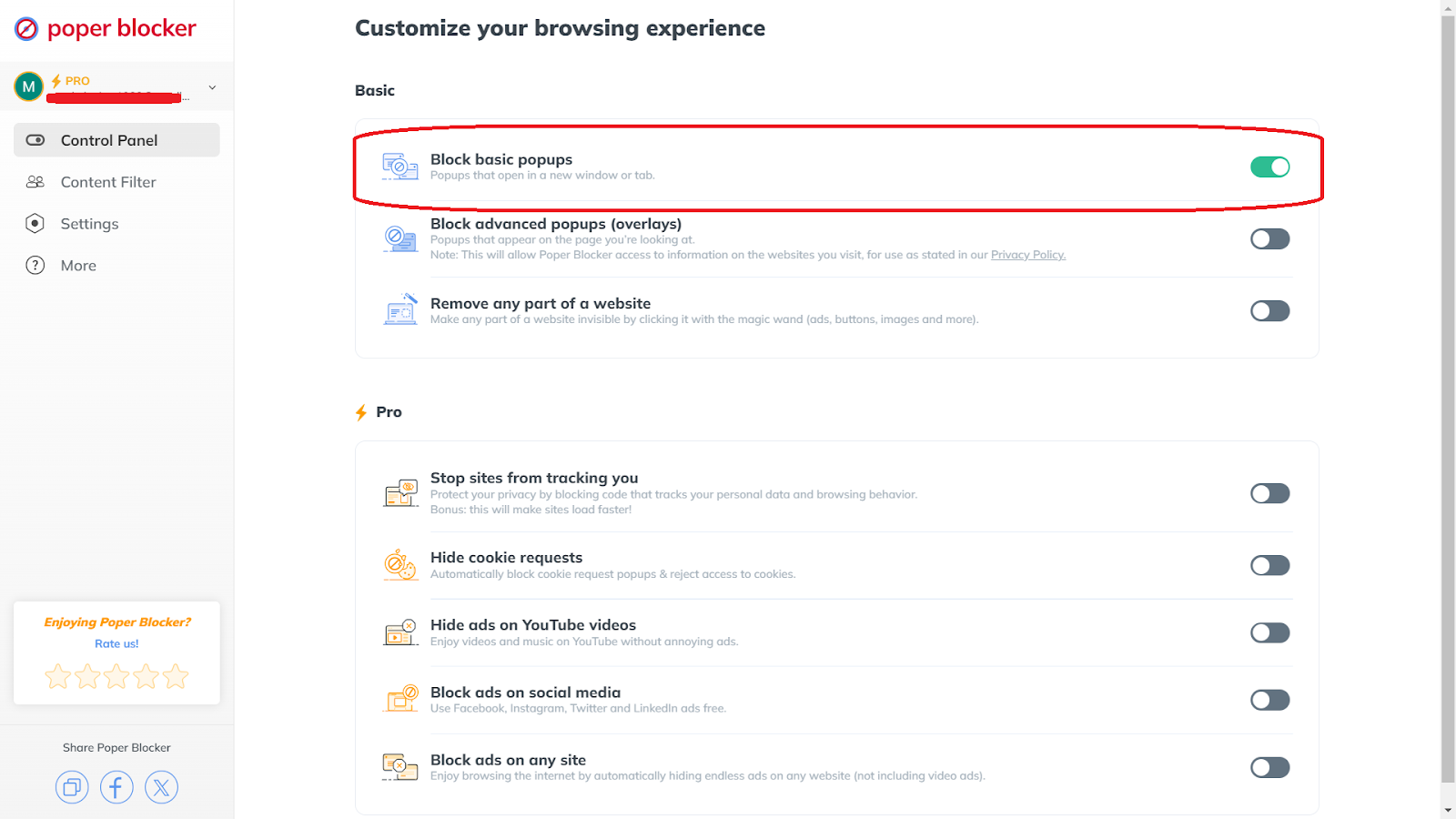
Basic pop-ups that open in a new window or tab can be annoying and risky, leading to harmful websites. Poper Blocker’s “Block basic popups” feature stops these interruptions, making browsing smooth and reducing the chance of clicking on scam pop-ups, landing on dangerous sites
Blocking Advanced Pop-ups (Overlays)
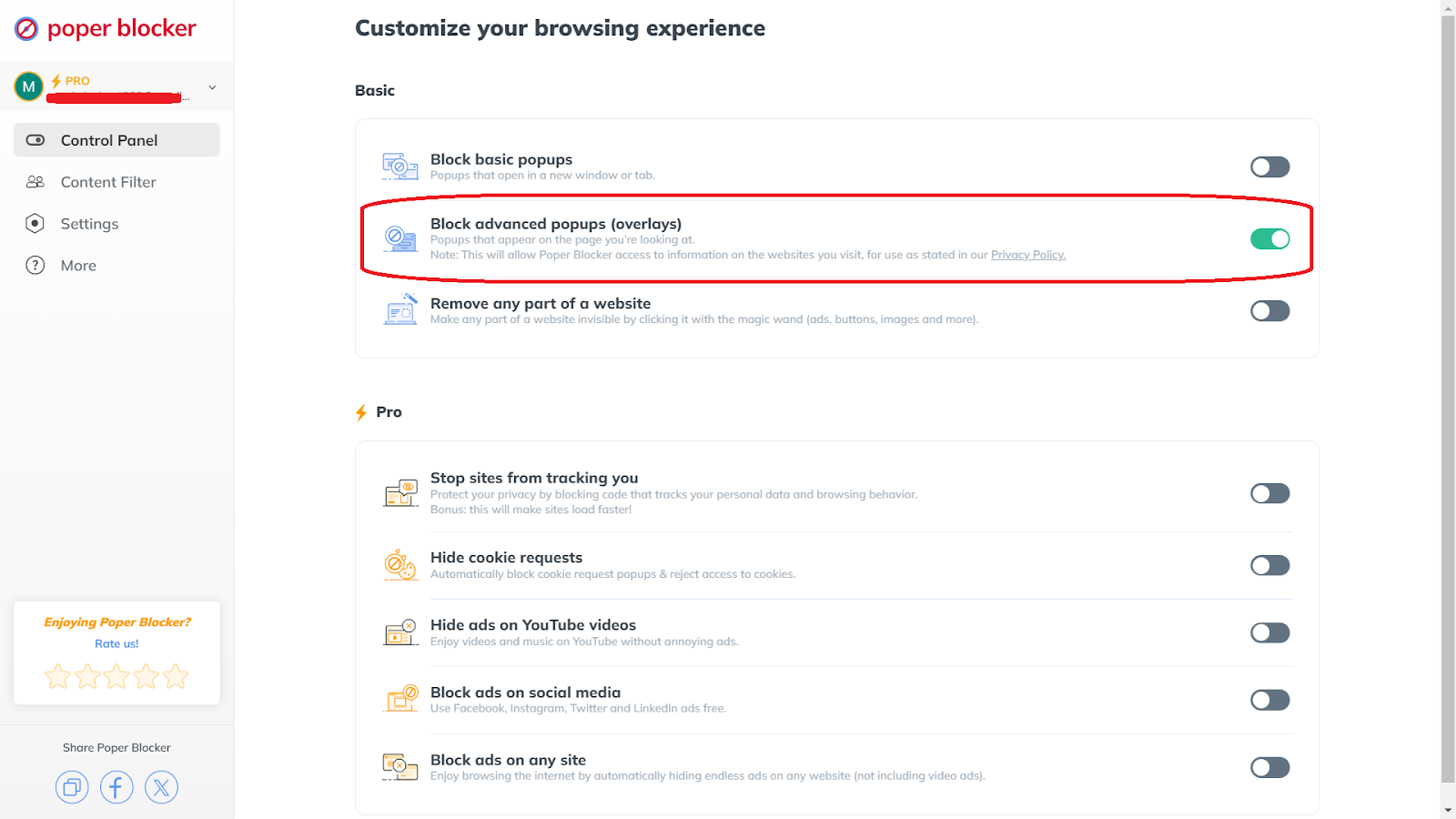
Advanced pop-ups, or overlays, appear on the current page, often blocking content and trying to catch your attention. These can be tricky, mimicking important messages or alerts. Using the “Block advanced popups (overlays)” feature of this pop-up blocker helps avoid these distractions so users will be able to focus on what matters without being misled.
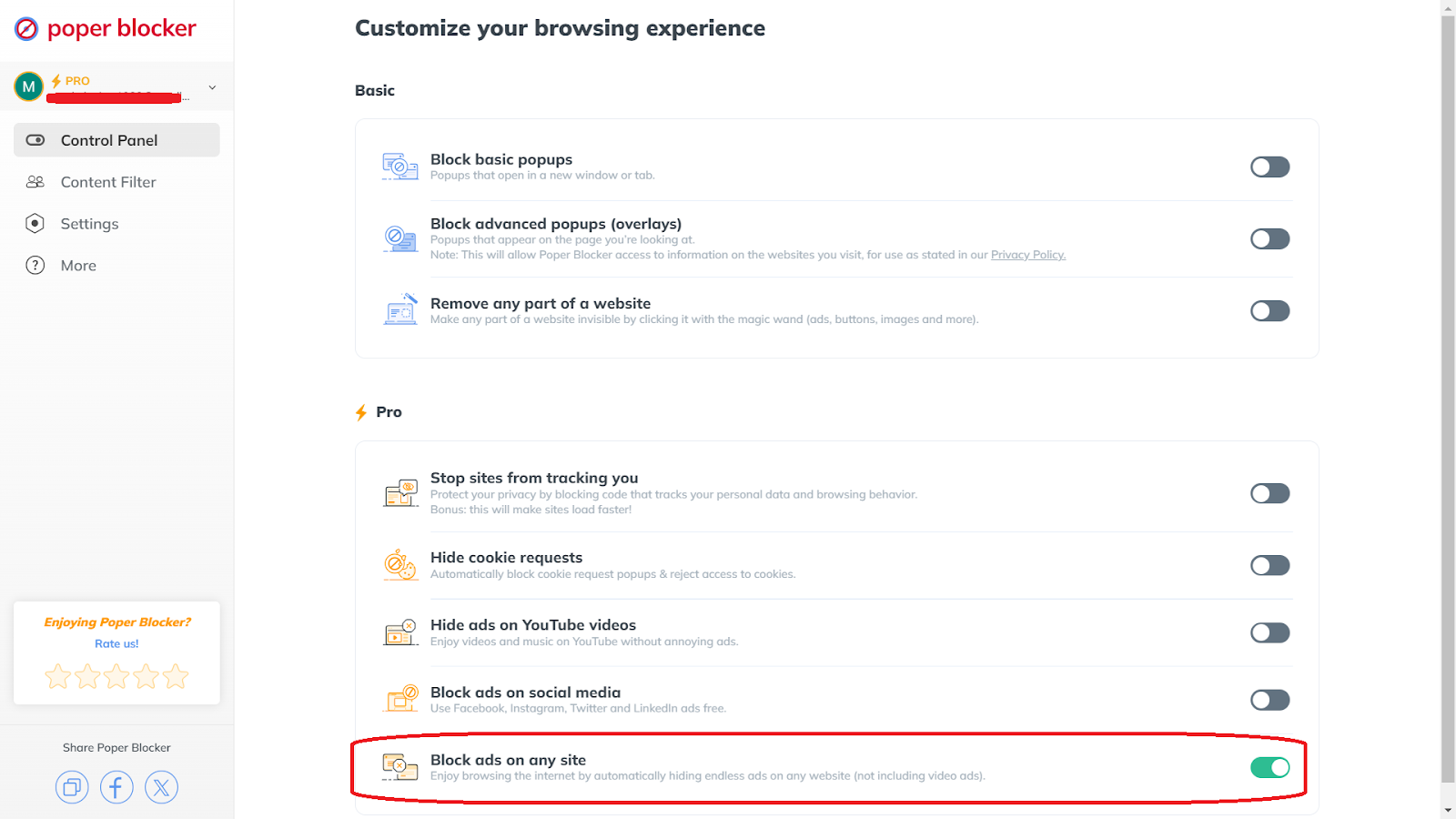
Ad-Blocking on YouTube
YouTube is popular for watching videos and music, but constant ads can be annoying. Poper Blocker’s “Hide ads on YouTube videos” feature can block ads on Chrome or Edge so seniors can enjoy watching videos from these browsers without interruptions from these misleading or harmful ads.
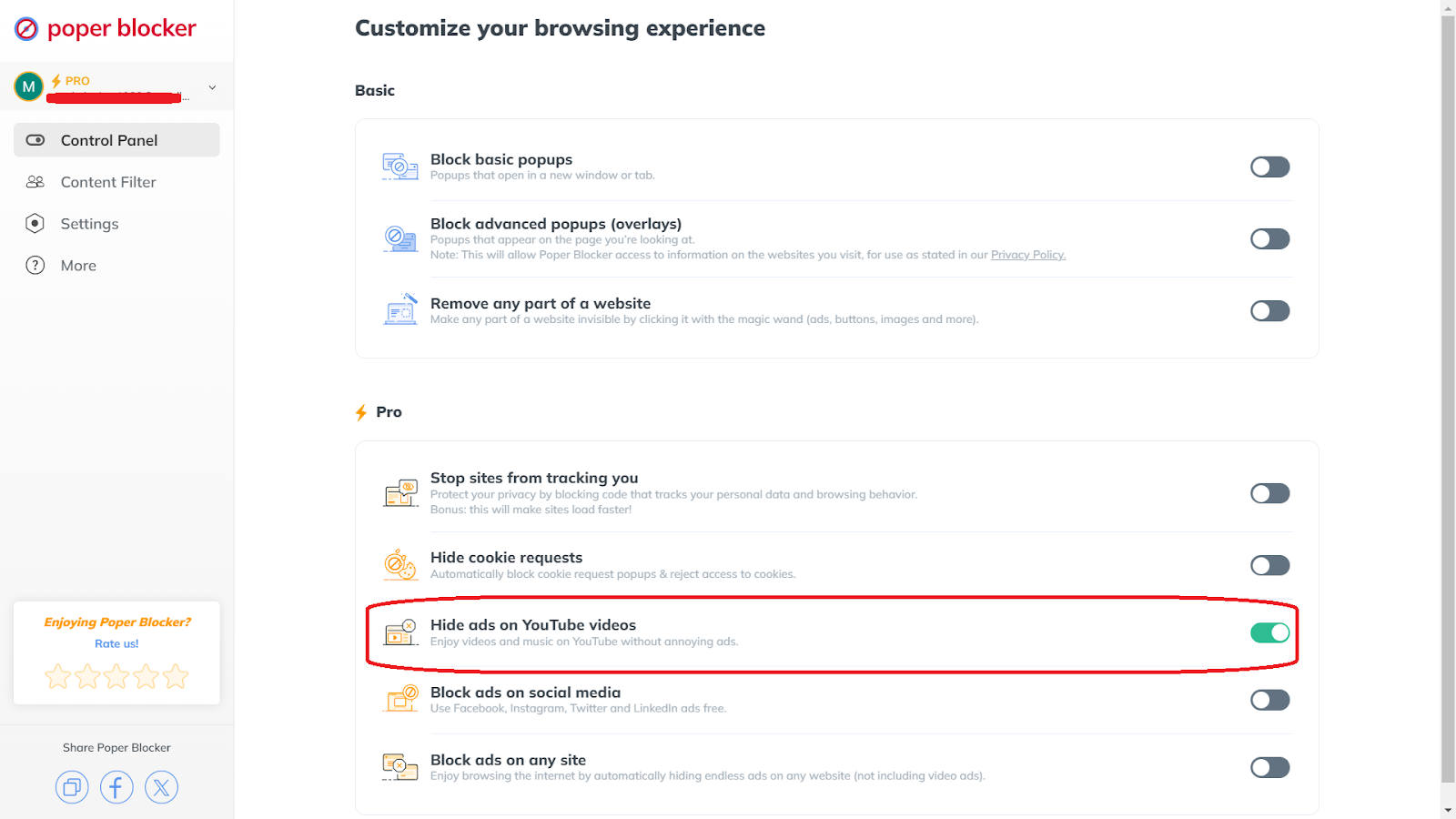
Blocking Ads on Social Media
Social media platforms like Facebook, Instagram, Twitter, and LinkedIn are full of ads, some of which can be misleading or inappropriate. This ad blocker has a “Block ads on social media” feature that creates a cleaner and safer browsing environment. This is especially helpful for seniors who may find it hard to tell the difference between real content and ads.
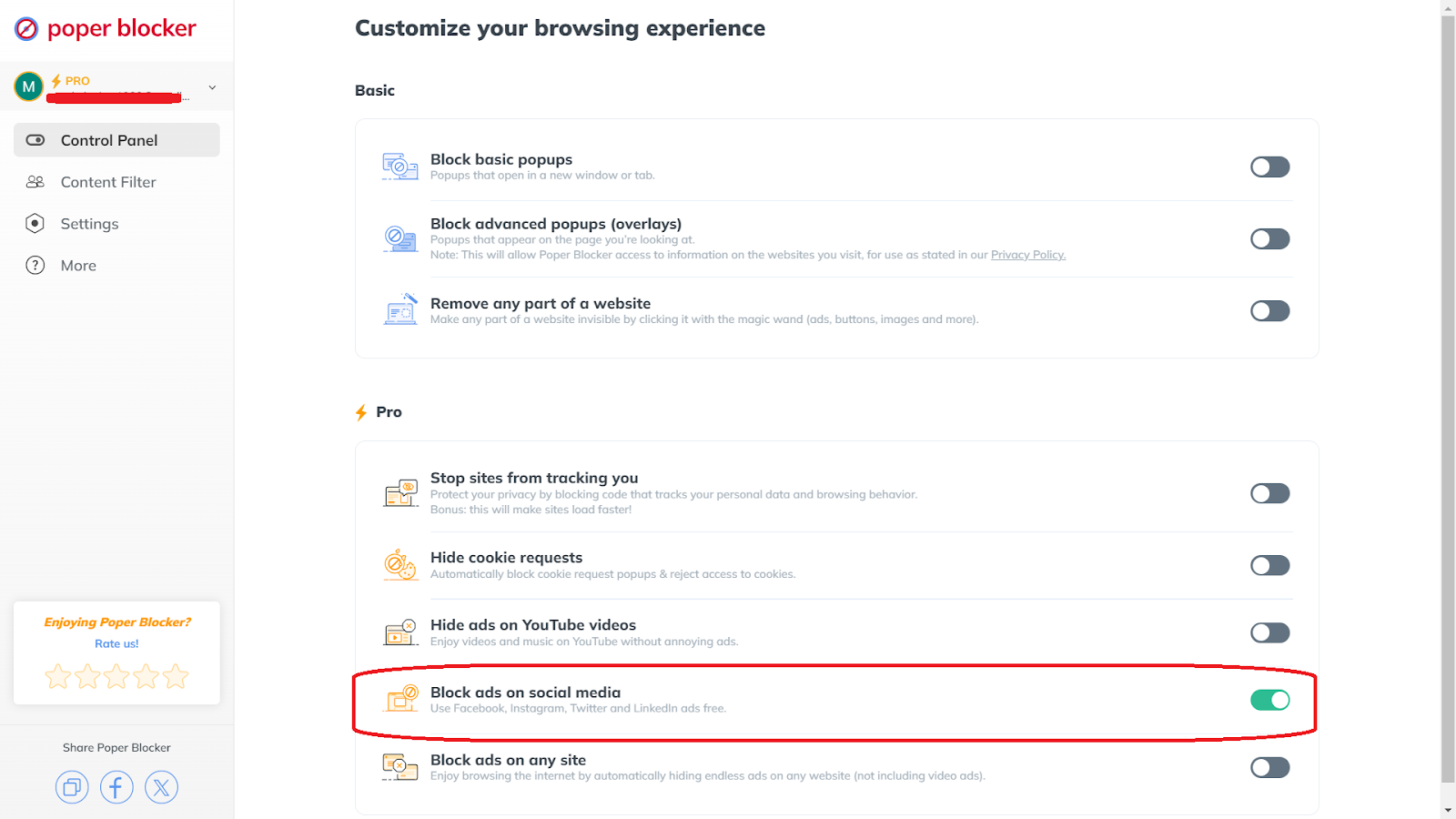
Blocking Ads on Any Site
There are too many ads on the internet and this often clutters the browsing experience. This tool’s “Block ads on any site” is an ad-blocking feature that hides them automatically and helps seniors browse without constant distractions. It can block ads on news sites, blogs, online magazines and other types. This makes the online experience more enjoyable and safer by reducing the chances of clicking on these harmful advertisements.
2. Social Media Filtering
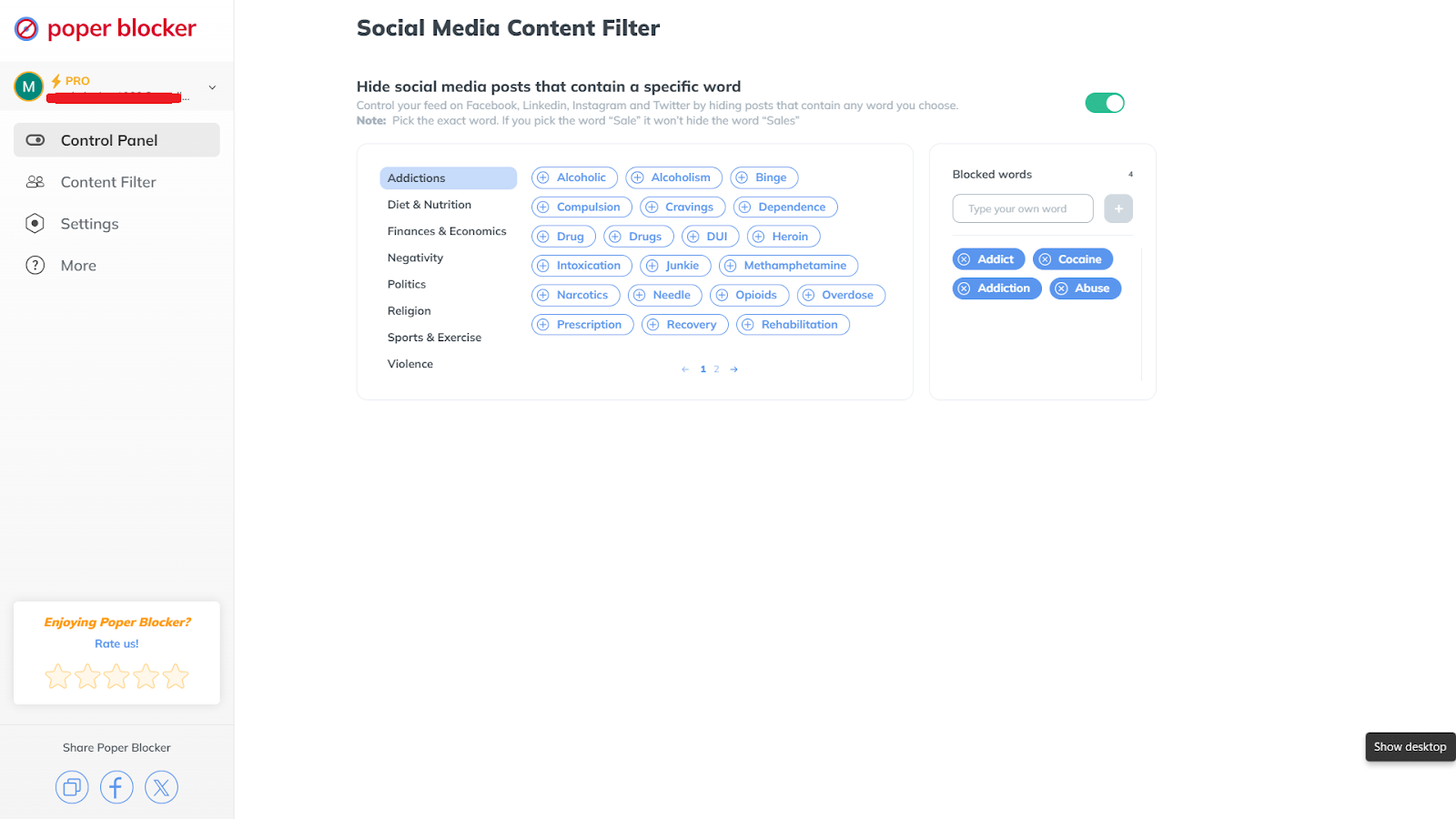
Filtering Harmful Words
Social media platforms can sometimes show harmful or inappropriate content. Poper Blocker’s social media filtering feature protects seniors by filtering out harmful words and phrases on Facebook, Twitter, Instagram, and LinkedIn. This creates a safer online environment, reducing exposure to offensive or distressing content.
Staying Safe Online as a Senior
Staying safe online as a senior means being aware of possible dangers and taking steps to protect yourself. When you follow the tips in this guide—like spotting warning signs, using strong passwords, thinking carefully before clicking on links, and checking unexpected messages—you can lower your chances of being tricked by online scams.
Also, tools like Poper Blocker can make your online experience better as it can successfully block annoying spam popups and ads and filter harmful content on social media. Use these practices so you can enjoy the internet safely and with confidence.
Stay safe online; get the Poper Blocker extension
FAQs
How can I tell if a website is secure?
To check if a website is safe, look for an “https” at the start of the URL and a padlock symbol next to it. The “s” in “https” means that the site uses encryption to keep your information safe. Click on the padlock to see the security certificate details. Verify that the certificate is valid and that it came from a trusted source. Avoid sites with security warnings or those without these features.
What should I do if I receive a suspicious email?
If you get a suspicious email, don’t click any links or open attachments, as they might contain malware or lead to scam sites. Mark the email as spam or junk in your email program. Report the email to your email provider’s abuse team. If the email claims to be from a real company, it would be best to contact the company directly using information from their official website to check if this email is indeed genuine. Always be careful with unexpected emails, especially those asking for personal details or money.
How can I protect my personal information on social media?
To keep your personal information safe on social media, adjust your privacy settings to control who can see your posts and details. Never share sensitive information like your address, phone number, or financial details to further protect your privacy online. Be careful about accepting friend requests and interacting with strangers. Regularly check your friends list and remove people that you don’t know. You might also want to use two-factor authentication for added security. Be careful about what you share, as even harmless information can be misused.
What are some common signs of a phishing scam?
Common signs of a phishing scam include generic greetings like “Dear User,” spelling and grammar mistakes, and urgent requests for personal information. Phishing emails often pretend to be from real companies but may have slight differences in email addresses or domains. Be cautious of messages that create a sense of urgency, like threats that they will close your account if you don’t act quickly. Look for inconsistencies in the email’s design, such as logos or formatting that look off. If you’re unsure, contact the company directly using a trusted source.
How often should I update my passwords?
Updating your passwords every 3 to 6 months is a good idea. Use strong, unique passwords for each of your accounts to prevent multiple accounts from being compromised if one of your passwords is stolen. A strong password should be at least 12 characters long and include letters, numbers, and symbols. Avoid using easily guessable information like birthdays or common words. Consider using a password manager to keep track of your passwords and create strong ones. Regular updates also help in protecting against unauthorized access.
The internet offers endless opportunities, but it’s also a playground for cybercriminals. One of the most sneaky threats today is malvertising. This involves placing harmful code into online ads, which may lead to malware infections, data theft, and other cybercrimes.
A report by Safety Detectives says that the total damage from malvertising and other malware-related frauds may reach a whopping $10.5 trillion by the end of 2025. This shows how common it is and the need for strong security measures.
What is Malvertising and How Does It Work?
Malvertising, or malicious advertising, involves putting harmful code into legitimate online ads to spread malware or direct users to dangerous websites. Cybercriminals take advantage of the complex advertising system, and this makes it hard for even well-maintained websites to avoid showing these harmful ads.
Auto-Redirects
This method automatically redirects you to a harmful site without your knowledge. When you visit a page with an auto-redirect ad, the ad then triggers a script that will send you to a dangerous website that may contain malware.
URL Malvertising
Using this technique, harmful ads include URLs leading to malware-filled sites. These ads may look legitimate and harmless, but when you click on them, they will take you to a compromised site that’s been designed to exploit your browser’s weaknesses or trigger downloading malware.
Malicious Ad Cloaking
Cybercriminals disguise their harmful ads to pass through ad network security checks. They use methods like hiding the true destination URL or showing different content to ad network reviewers and regular users. This makes it more challenging to detect and block.
Malvertising Campaigns
This involves coordinated efforts to spread malvertisements across multiple websites. Cybercriminals create seemingly harmless ads that pass through ad network checks and appear on popular sites. Once these ads are displayed, they can infect many users. This is why staying informed and updated about the current malvertising trends is a good practice. Doing this helps in reducing the risks that are associated with these campaigns.
Malvertising vs. Ad Malware
Malvertising and ad malware both involve harmful ads but differ a lot in how they work and their effects:
Distribution Method
Malvertising uses legitimate ad networks to spread harmful ads and these can appear on any website displaying those ads. Cybercriminals insert harmful code into these ads to reach many people. Ad malware, on the other hand, gets installed directly onto a user’s device. This is often bundled with software downloads or phishing attacks. Once the malware is installed, it shows unwanted ads directly on the infected device.
Scope of Effect
Malvertising affects many users by taking advantage of widely used ad networks. It targets anyone who visits a site that’s displaying harmful ads. An ad malware primarily affects the individual user who unknowingly installs it on their device, which will then get persistent unwanted ads and experience system slowdowns.
Detection and Prevention
It’s harder to detect malvertising because it exploits legitimate advertising channels. This makes them difficult to differentiate from ads that are safe and harmless. Preventing malvertising can be done by using tools with ad-blocking features and keeping security measures updated. Ad malware is easier to detect with the help of antivirus software since the software resides on the device. Preventing these can be done by implementing safe browsing practices and being careful when installing any software.
User Interaction
Malvertising often doesn’t require user interaction to execute. For example, just viewing an ad can trigger auto-redirects. Ad malware typically requires some form of user action before it starts displaying unwanted ads. The most common action involves downloading and installing a harmful program.
How Do Malvertisements Affect Users?
Malvertisements pose serious threats to users by delivering harmful software and causing various problems. Here are the most common ways on how they can impact you:
Malware
Malvertisements often deliver malware, which can damage or disrupt systems. This harmful software has the capability to corrupt files, slow down your device, and open backdoors for further cyberattacks. You might not realize that your device has been compromised until it shows signs of an infection.
Ransomware
As the term suggests, this type of malware encrypts files or locks devices and, in exchange for their release, they will demand payment from you. Ransomware can spread through malvertising, and those that get infected with it may incur significant data loss and financial damage. The ransom is often demanded in cryptocurrency so it’s more challenging to trace and recover the funds.
Spyware
Spyware silently monitors user activities and steals sensitive information, such as login details and personal data. Delivered via malvertising, this software can track your browsing habits, record your keystrokes, and send this information back to cybercriminals without your knowledge.
Adware
Adware displays unwanted advertisements that are often intrusive and annoying. It can also slow down your device and make it difficult to use. Malvertisements often introduce adware and this can result in a frustrating experience as your computer, tablet, or smartphone gets bombarded with different types of pop-ups and banners.
Read more: How to Remove Adware from Android Phones and Tablets
Viruses
Viruses are malicious programs that replicate themselves and spread to other files and programs. They can cause significant damage to systems and may result in data corruption and loss. Malvertisements can carry viruses that infect a user’s device, leading to widespread issues and potentially costly repairs.
The Main Types of Malvertising Attacks
There are different kinds of malvertising attacks and all of them are designed to do one thing: take advantage of different weaknesses and trick users. This is why knowing the main types of these tactics can help you spot and avoid these threats:
Drive-by Downloads
These are among the most dangerous types of malvertising. It automatically downloads and runs malware on your device without your permission or knowledge. Its advantage is that it exploits weaknesses in browsers, plugins, or operating systems. In fact, just loading a webpage with an infected ad can start the malware. You don’t even need to click on the ad for the attack to happen. This is why regularly updating your software and using security tools is critical to protect your devices against drive-by downloads.
Clickjacking
What this type of tactic does is that it tricks you into clicking on something that you really didn’t intend to. This technique places invisible or disguised elements over real content or buttons on a webpage. For example, a malicious link might be hidden under a play button for a video or an exit button for a pop-up. When you click on these elements, you unknowingly activate the malicious link and this can take you to harmful websites or start malware downloads. It’s important to be aware and careful with every click to avoid clickjacking.
Fake Alerts
These alerts are malvertisements that show fake warnings or offers on your screen to scare or tempt you into clicking. Examples of these alerts are:
- Your device is infected with malware
- That software needs updating
- That you’ve won a prize
- That a free program is available for download
Clicking on these fake alerts often starts the malware installation or redirection to phishing websites that are designed to steal personal information. As a user, you should be skeptical of unsolicited alerts and check the legitimacy of any warning before you take any action.
Examples of Malvertising
Malvertising may appear in various forms and each is designed to trick and harm users. Knowing these examples can help you spot and avoid potential threats:
Pop-ups
Malvertising often uses pop-ups to grab attention. These pop-ups might claim that you:
- Have won a prize
- Need to update software
- Have a virus
Clicking on these pop-ups usually results in malware installation or phishing sites.
Ads
Regular display ads can also deliver harmful content and it’s sometimes hard to detect them. These ads may look like regular banners or sidebars on websites and appear legitimate but the thing is, they contain hidden malware. When you click on these ads, you might unknowingly download harmful software or be redirected to bad sites.
Video
Video ads are another common tactic that’s used to spread malware. Malvertisers might take advantage of weaknesses in video players by embedding harmful code within video content. Your device might get infected without clicking on anything and just by simply watching a video ad.
Compromised URLs
Clicking on an ad may redirect you through multiple URLs before you land to the final page. If any of these URLs are compromised, your device can be exposed to malware. Malvertisers use this redirection process to insert harmful code at any point so it’s hard to trace and block.
Landing Pages with Malware
Did you know that even legitimate websites can have malvertising if their ad networks are compromised? If you click on an ad from a trusted site, it could take you to a landing page that looks seemingly safe but has hidden malware. This can then infect your device through drive-by downloads or exploit kits.
How to Prevent Malvertising
Malvertising poses significant risks, but there are several effective strategies that you can use to protect your devices and personal information. Check out these tips so you’ll be able to reduce the chances of encountering these harmful ads:
1. Use an Ad Blocker
This comes in the form of software, app, or browser extension, which is designed to prevent different types of online ads from loading on a web browser. This is how ad blockers work and this feature is essential in stopping malvertising. Poper Blocker is among the top Chrome and Edge extensions today that includes a number of useful tools:
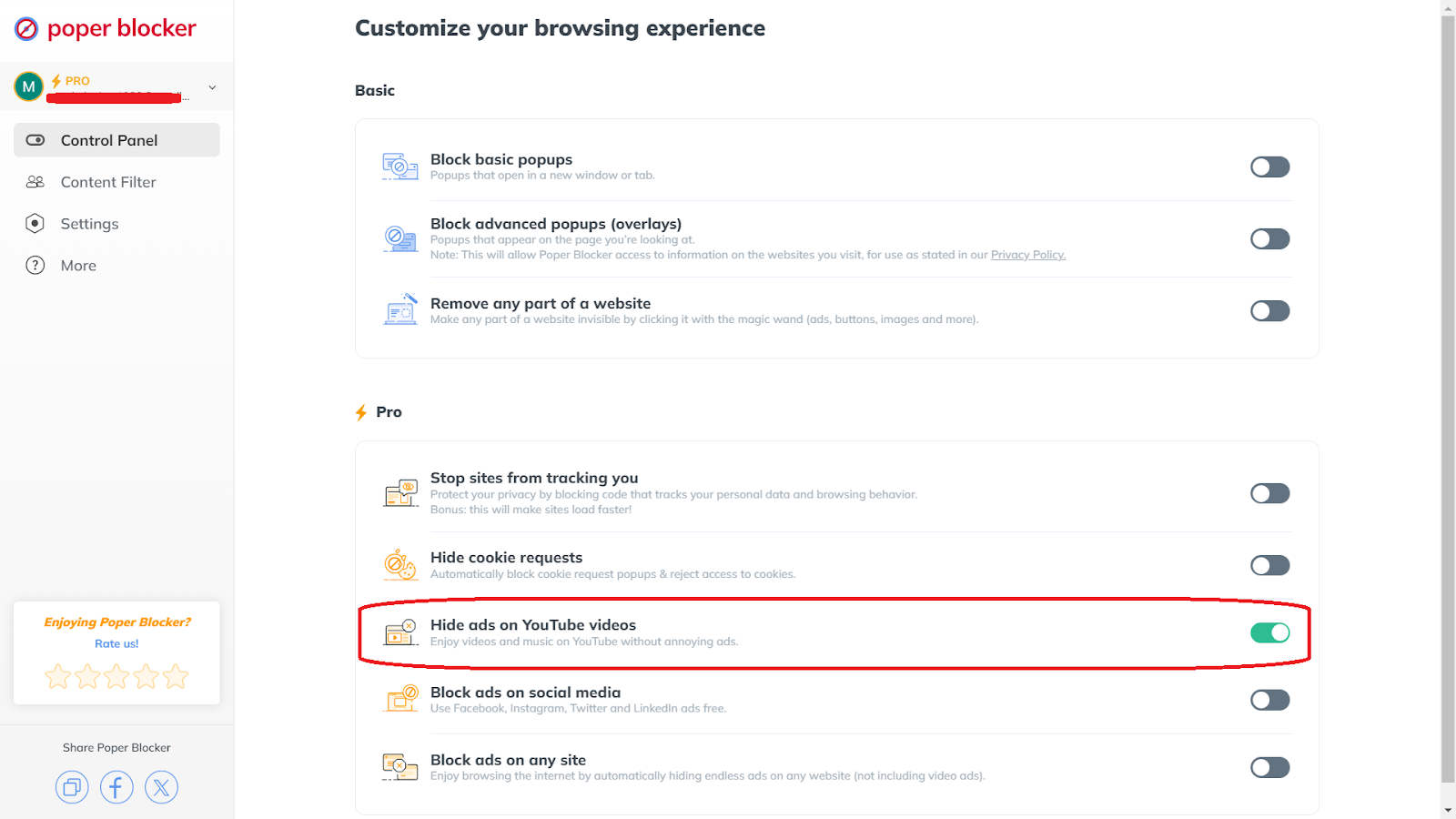
Hide ads on YouTube
Turn on Poper Blocker’s YouTube ad blocker feature to watch videos without any ad interruptions.
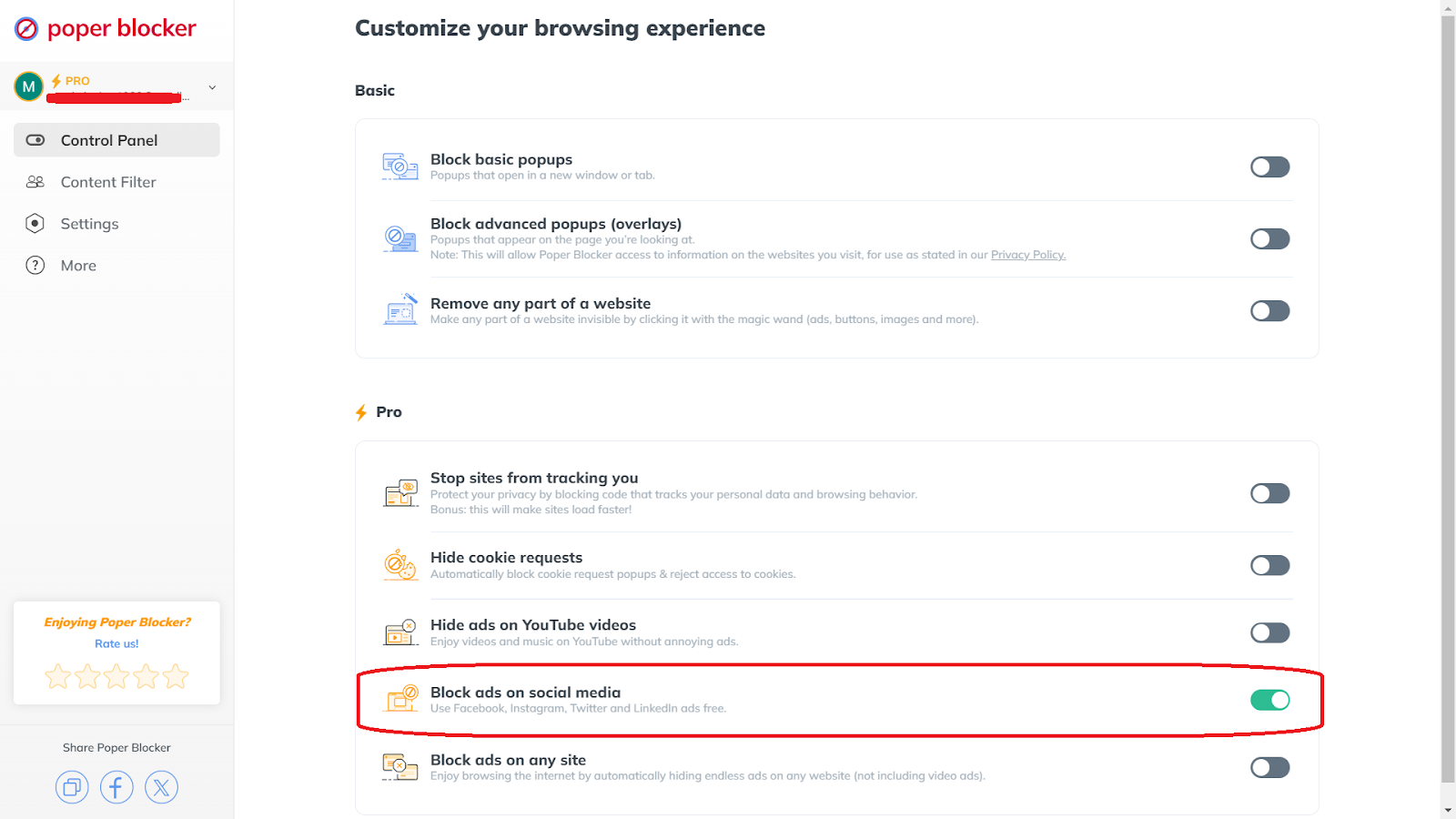
Block ads on social media
If you’re always on Facebook, Instagram, or Twitter, use this to browse without ads.
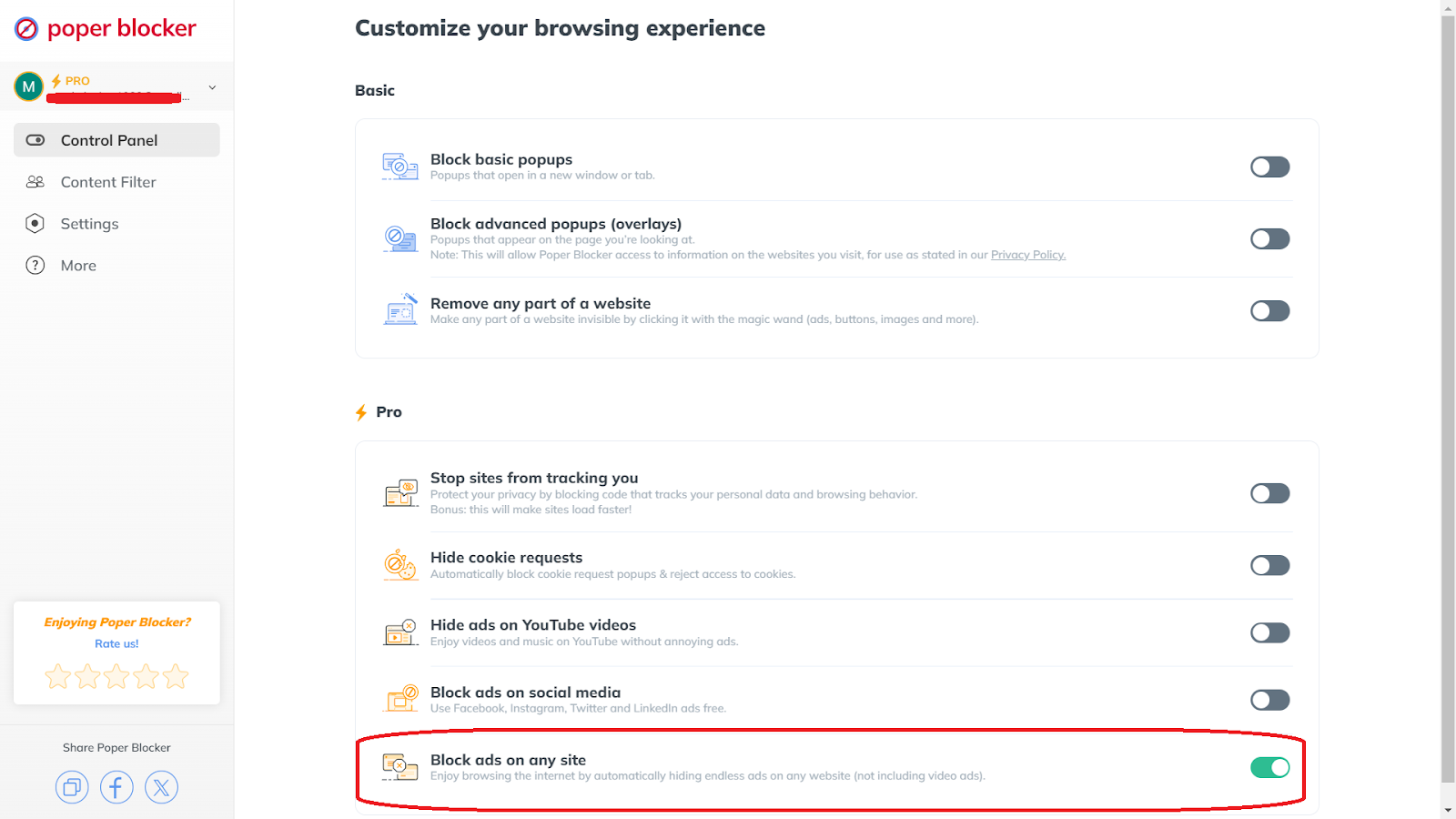
Block ads on any site
Enable this feature to remove ads from all websites (except video ads). For added protection against malicious sites that serve malvertising, Poper Blocker also includes a malicious site protection feature that blocks harmful websites before they can load.
2. Be Careful with Pop-ups
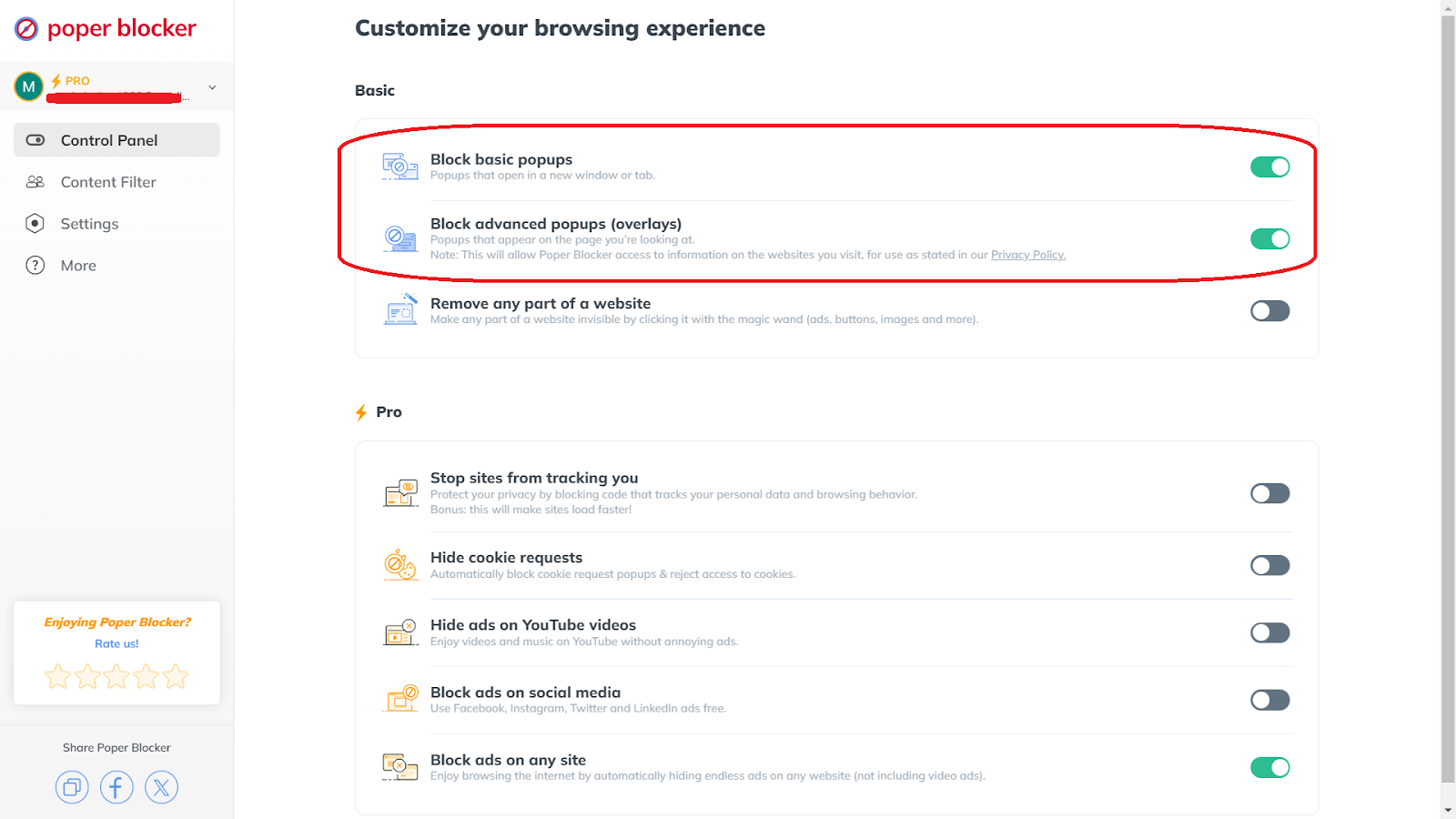
Pop-ups often carry malvertising so blocking these can prevent accidental clicks on harmful content. Poper Blocker’s popup blocker feature addresses that with 2 pop-up blocking modes:
- Block basic popups: This stops new windows or tab spam pop-ups that may contain ads.
- Block advanced popups (overlays): It prevents pop-ups that appear on the current page.
3. Use an Anti-virus
The great thing about antivirus software is that it adds an extra layer of protection by finding and removing malware. Be sure to regularly update your antivirus software to guard against these latest threats. Good antivirus programs can effectively detect and stop malvertising before it harms your device.
4. Keep Your Software Updated
Outdated software can have weaknesses that malvertisers can potentially exploit. This is why you need to regularly update your operating system, browsers, and plugins so that critical security patches are applied, which can then greatly reduce the risk of attacks. Automated updates help keep your software secure without the need to do constant manual checks.
5. Disable JavaScript and Flash
JavaScript and Flash are often used to run malicious code. Disabling these features can help to prevent some malvertising attacks. Do take note though that while this might limit some website functions, it greatly increases security. Most modern browsers will let you enable these features only on trusted sites.
6. Be Skeptical When You’re Online
Be cautious when you see ads that seem too good to be true, have spelling mistakes, or look unprofessional. Avoid clicking on suspicious links and check the legitimacy of websites before interacting with them. Promoting online safety for seniors, family members, and friends, and educating others about these risks can also help prevent them from falling victim to malvertising.
The Battle Against Malvertising Continues!
Malvertising is no doubt a big threat to online safety, but with the right tools and precautions, you’ll be able to protect yourself and your organization. Using Poper Blocker is an effective way to block harmful ads and pop-ups, and even make your browsing smoother. Additionally, regularly updating software, using antivirus programs, and being careful with unknown links can greatly reduce the risk of falling victim to this new cyberattack tactic. Stay alert and proactive to have a safer online experience.
Install Poper Blocker to block malicious ads instantly
FAQs
How does malvertising spread across websites?
Malvertising uses legitimate ad networks to spread malware. What cybercriminals do is that they create ads that have harmful code and use these networks to distribute them. Since these ads will appear on many different websites it’s capable of reaching numerous users. There’s even a chance that well-maintained sites can accidentally show these harmful ads.
What should I do if I suspect malvertising?
The first thing that you should do if you suspect that an ad is malicious is to avoid clicking on it. Immediately close that page and do a thorough antivirus scan (use the most comprehensive one) to look for any potential threats and remove them. It would be wise to do regular updates on your antivirus software and use an ad blocker as well.
Can malvertising affect mobile devices?
Yes, malvertising can also target mobile devices. They do this by using ads in mobile apps and websites. Just like on desktops, these ads can redirect users to phishing sites or download malware.
Is it safe to click on ads?
While many online ads are safe, it’s still important to be careful. You should use an ad blocker to reduce your exposure to potentially harmful ads. Be wary of ads that seem too good to be true or those that look unprofessional. Consider visiting the company’s website directly instead of clicking on the ad if you’re interested in a product or service.
Can malvertising affect my personal information?
Yes, malvertising can steal your personal information. Cybercriminals may use hidden harmful code in ads to install spyware on your device. This spyware can then track your online activities, capture your login details, or access your personal data. They can use this information for identity theft, financial fraud, and other harmful activities.
Get Poper Blocker and shield yourself from malvertising
Visiting a website and later seeing ads related to the content you viewed is the work of tracking cookies. These are small text files that store your browsing information to personalize ads and improve user interactions. It’s important to understand that around 42% of websites globally use cookies. However, this may also raise privacy concerns, which is why knowing how they function and learning to manage them is important for maintaining your online privacy.
What is a tracking cookie?
Tracking cookies are small text files placed on your browser by websites you visit. These cookies are designed to collect data about your online behavior and preferences. When you visit a website, the server generates a unique identifier and stores it in a cookie on your device. This identifier is used to track your interactions with the site and other websites that recognize the same cookie. There are different types of internet cookies. They can be first-party, which are set by the website you are visiting, or third-party, those that are set by external domains, typically for advertising purposes.
The primary goal of tracking cookies is to monitor your browsing habits and gather information so that they can create a detailed profile of your interests. This data is then used to personalize your online experience, such as displaying targeted ads that are more relevant to you. However, their extensive data collection capabilities also raise significant privacy concerns, as they can track your activities across multiple sites and over long periods, which may potentially lead to unwanted profiling and data misuse.
How do tracking cookies work?
Cookies and tracking operate by embedding small text files into your browser. When you visit a website, the server places a cookie on your device with a unique identifier. This identifier allows the server to track your activities and also recognize you when you visit in the future. So every time you access the website or another site that recognizes the same cookie, the browser sends this identifier back to the server. This helps them monitor your behavior, such as the pages you visited, the links you clicked, and the time you’ve spent on each page. They collect this data to build a profile based on your interests and preferences.
What information do tracking cookies collect?
Tracking cookies collect various types of data to build a detailed profile of your online activities. This information helps websites and advertisers understand your behavior and preferences for the purpose of offering personalized content and ads. Here’s a detailed look at what these persistent cookies collect:
Browsing history
They monitor the websites you visit, the pages you view, and the time you spend on each page. They use this information to create a detailed log of your online activities and interests.
IP address
Your IP address reveals your geographic location and this allows websites to show tailored content and advertisements based on your region. It also helps them in localizing search results and services.
Device information
Cookies can also collect data about the device you are using. This may include:
- Type of device
- Operating system
- Browser version
This helps websites optimize their functionality and appearance for different kinds of devices or platforms.
Purchase history
Cookies record your activities across different sites, including your online purchases and also the products that you viewed. Such data can be used for retargeting ads, so that they can show you similar products which you might find interesting.
Search queries
The terms you’ve searched on websites and search engines can be tracked and advertisers utilize them to know your interests and preferences. This information is often used to display relevant ads and content according to your search history.
Login credentials
Cookies can store login information such as usernames and session IDs to keep you logged in on websites. This feature eliminates the need to sign in repeatedly.
Are tracking cookies dangerous?
Tracking cookies themselves are not inherently harmful like malware or viruses but they do pose significant privacy concerns. These cookies track your online activities and collect extensive data, which can then lead to unwanted profiling and privacy invasion.
Privacy invasion
Websites that use cookies can collect information about your browsing habits, such as the sites you visited, the pages you viewed, and the items you clicked on. This data can be used to create comprehensive profiles that may feel intrusive, especially when this is used without your consent.
Data sharing
Collected data from tracking cookies can be shared with third parties, including advertisers and data brokers. This sharing can lead to the dissemination of your personal preferences and browsing history across various platforms.
Security risks
Although tracking cookies are not malicious, they can still pose security risks. If a third-party cookie is compromised, it could potentially expose your browsing data to cybercriminals. Additionally, some cookies may track sensitive information and this could increase the potential for data breaches.
Examples of how tracking cookies are used
Tracking cookies serve multiple purposes and they provide valuable data for website owners and advertisers. Here are some detailed examples of how they are utilized:
Personalized advertising
Advertisers use tracking cookies to display ads tailored to your interests. When they analyze your browsing history and search queries, they’ll be able to show products or services you are more likely to be interested in. For instance, if you frequently visit sports equipment websites, you might see ads for running shoes or gym gear.
E-commerce recommendations
Online stores make use of tracking cookies to suggest products based on your browsing history or previous purchases. If you viewed a particular item but didn’t purchase it, you might still see it featured in a “Recommended for You” section or receive follow-up emails that showcase similar products.
Social media integration
Cookies help social media platforms track your interactions with social media buttons and plugins across different websites. They can use this to personalize your social media feed with content related to your online activities, such as articles that you read or products that you recently liked or viewed.
User preferences
Tracking cookies remember your preferences and settings on various websites. For example, they can store your language selection, log in details, and personalized settings, so they’ll keep these settings each time you return to the site.
How to block tracking cookies on your browser
Tracking cookies can compromise your privacy by collecting data about your online activities. So how do you delete tracking cookies to maintain your privacy? Here’s a detailed guide for the major browsers:
Chrome
- Open Chrome and go to “Settings”.
- Click on “Privacy and security”.
- Select “Cookies and other site data”.
- Choose “Block third-party cookies”.
Edge
- Open Edge and go to “Settings”.
- Click on “Cookies and site permissions”.
- Select “Manage and delete cookies and site data”.
- Toggle on “Block third-party cookies”.
Safari
- Open Safari and go to “Preferences”.
- Click on “Privacy”.
- Check the box for “Prevent cross-site tracking”.
- Select “Block all cookies”.
Firefox
- Open Firefox and go to “Options”.
- Click on “Privacy & Security”.
- Under “Enhanced Tracking Protection”, choose “Custom”.
- Check the box for “Cookies” and select “All third-party cookies”.
Using Poper Blocker to block cookie consent pop-ups
Poper Blocker is a browser extension for Chrome and Edge that offers a simple solution to stop cookie pop-ups and maintain your privacy. Here’s how to use it:
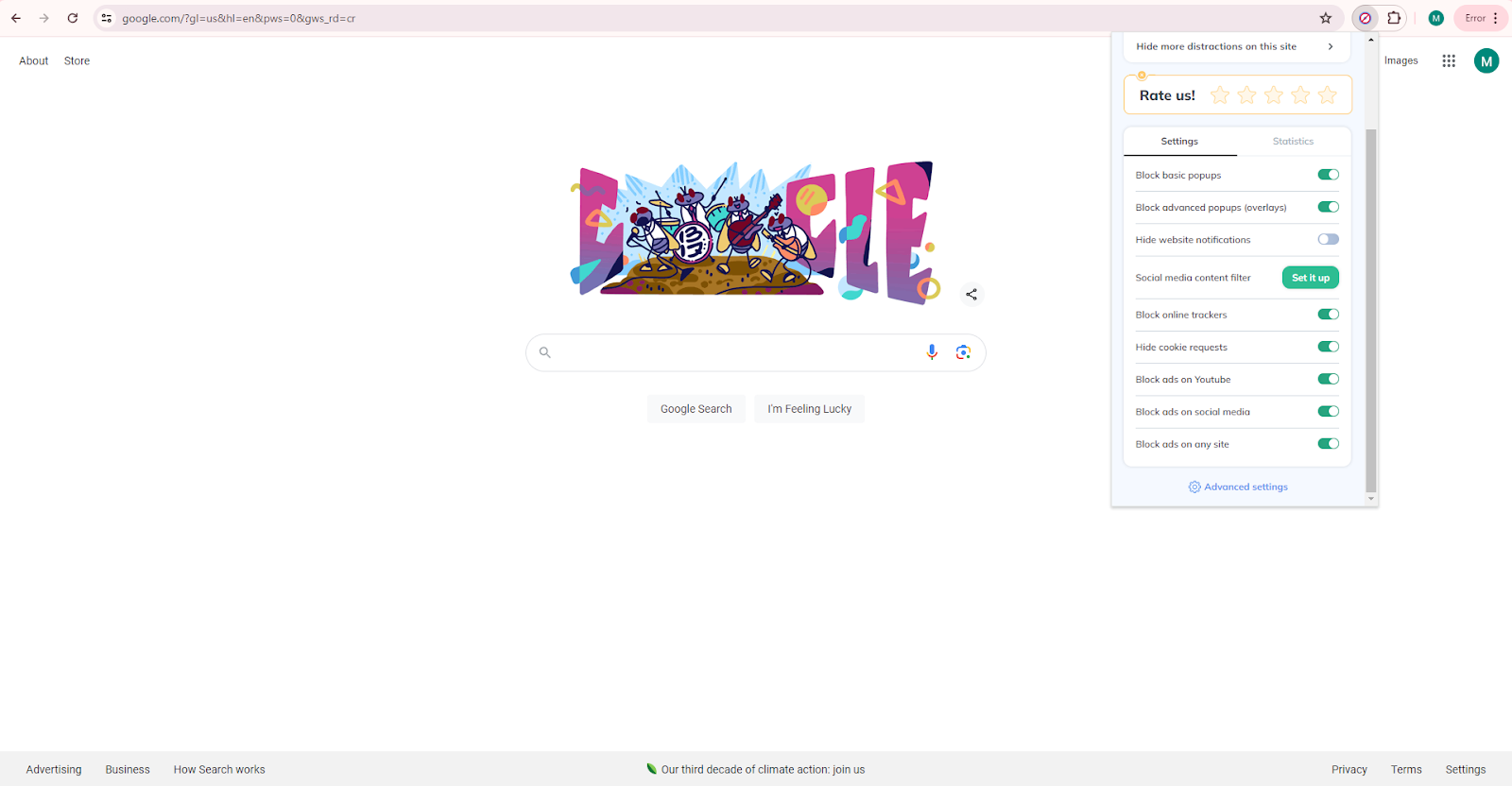
1. Open the Control Panel
Click on the Poper Blocker icon in your browser’s toolbar. Select “Advanced settings” to access the Control Panel.
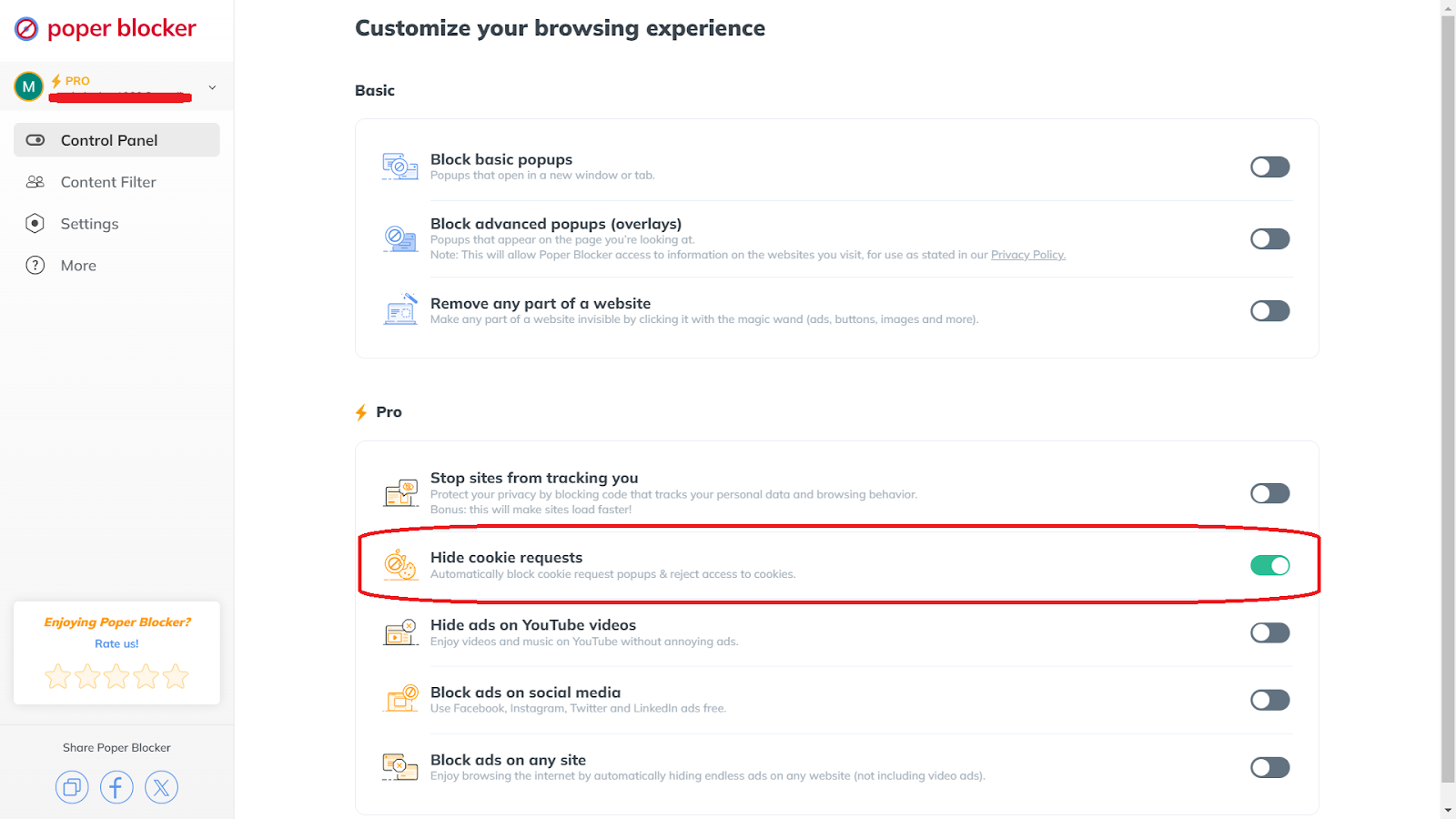
2. Enable cookie consent blocking
Under the Pro section, locate “Hide cookie requests”. Turn on this feature by clicking the toggle button.
3. Automatic blocking starts
With the cookie request feature enabled, Poper Blocker will automatically hide cookie consent pop-ups and block cookies so you won’t have constant interruptions from these annoying notices.
Start taking control of your privacy
Tracking cookies are a common tool used by websites to monitor user behavior, gather data, and personalize ads. And while they offer convenience, they also pose significant privacy risks. It’s important for you to know how tracking cookies work and what information they collect so you can make informed decisions about your online privacy.
When you implement measures to block trackers like cookies on your browser and use tools like Poper Blocker to handle cookie consent pop-ups, you’ll be able to protect your data and enjoy a safer browsing experience. So stay proactive in managing your online privacy and take the necessary steps to prevent unwanted tracking.
FAQs
Can tracking cookies see my personal information?
No, tracking cookies do not have access to your personal information like your passwords, social security numbers, or banking details. They only collect data that are related to your online activities, such as the websites you visit, the items you’ve clicked on, and how much time you spend on specific pages. Such information is used to build a profile of your interests and habits so that they can provide you with targeted advertising or to improve the functionality of their website.
Do tracking cookies slow down my browser?
Tracking cookies themselves are small files and do not inherently slow down your browser. However, having a large number of them stored on your computer or device can have a slight effect on the performance of your browser. Over time, as cookies accumulate, they can take up storage space and cause your browser to load more slowly. Regularly clearing your cookies and cache can help maintain optimal browser performance.
Are tracking cookies legal?
Yes, tracking cookies are legal but their use is regulated by privacy laws such as the General Data Protection Regulation (GDPR) in Europe and the California Consumer Privacy Act (CCPA) in the United States. These laws require websites to inform you about the presence of tracking cookies and obtain your consent before collecting such data. You also have the right to know what information is being collected and how it will be used.
Can I clear tracking cookies manually?
Yes, you can clear cookies of this type manually through your browser’s settings. Most browsers have an option to delete cookies, and it’s either for individual websites or all at once. In Chrome, for instance, you can go to Settings > Privacy and Security > Clear Browsing Data. This removes cookies and other site data so you can free up storage space.
Do all websites use tracking cookies?
No, not all websites use tracking cookies but a significant number do. Websites use these cookies for various purposes. This includes understanding user behavior, improving user experience, and delivering targeted advertisements. While some websites might not use tracking cookies at all, others heavily rely on them to function effectively and generate revenue through personalized ads. This is why it’s always a good idea to check a website’s privacy policy so you’ll be able to understand how they will use your data.
Download Poper Blocker and block cookies instantly
Have you ever been deep into reading an article online, only to have your flow disrupted by a sudden window popping up out of nowhere? That’s a pop-up for you, the internet’s way of catching your eye, for better or for worse.
OptiMonk’s insights has revealed that the average conversion rate for popups stands at 11.09%. It just goes to show how much of an effective tool they are for advertisers, which is why they are not likely going away anytime soon.
What Is a Pop-up, and What Is Its Purpose?
In its simplest form, a pop-up is a website user interface element that suddenly appears and demands immediate attention from a viewer. It gets its name from this sudden appearance, mimicking the act of popping up unexpectedly. Its primary goal is to quickly capture the users’ attention and encourage action. This action might include:
- Subscribing to newsletters
- Claiming discounts
- Taking part in surveys
- Notifying the user about the most recent updates or offers
Is It Pop up, Pop-up, or Popup?
When discussing online terminology, it is important to understand the distinct differences between “pop up”, “pop-up”, and “popup” for clear communication.
As a verb, “pop up” refers to the action of appearing suddenly. This phrase is most commonly used when describing any moment that something comes into view without warning and isn’t exclusive to the internet.
On the flip side, “pop-up” can be used as both an adjective and a noun. When used as an adjective, it describes anything that appears unexpectedly such as a pop-up ad or pop-up window on a website. As a noun, it just refers to the thing itself like in the phrase “a pop-up.” This version is more grammatically proper and often considered correct in formal writing or technical descriptions.
Despite its lack of grammar prowess and shortcomings in formality, “popup”, with no space in between letters, is actually the most widely used spelling. Its popularity across informal settings, especially in online conversations, reflects society’s preference for brevity and convenience.
Why Are Pop-ups Important?
Online ecosystems cannot do without pop-ups since they are a great help in many ways than just advertising:
Lead Generation
This is among their main functions. By capturing visitor information through forms, pop-ups enable businesses to grow their email lists and nurture leads through targeted marketing campaigns. This direct method of gathering contact details is efficient and effective, allowing for a personalized approach to follow-up communications.
Promotions
Additionally, content promotion and special offers are some of the reasons why advertisers might consider using pop-ups. They offer an opportunity to highlight discounts, new products, or exclusive content directly to their audience.
This immediate visibility increases the likelihood of conversions as offers are presented at a point in time when the user is already engaged with the site. The strategic placement and timing of these internet pop-ups can significantly enhance their effectiveness making them a valuable tool for boosting sales and engagement.
Feedback
Pop-ups also act as a means for collecting feedback from people visiting websites. At certain moments during the users’ journey through a website, businesses can present surveys or feedback forms that yield useful insights about their target audience.
It contains essential information that helps in understanding their behavior on websites, upgrading goods or services, and improving the overall experience of users on their platforms.
User Guidance
These dialogs are also an excellent medium for user guidance. Whether it’s browsing through a website, highlighting new features, or offering assistance, pop-ups can enhance the visitor’s user experience, so that they can find what they’re looking for and might even be encouraged to explore further.
Pop-up Examples
There are various types of pop-ups used for specific purposes. Every form serves a purpose ranging from building relationships with users to maintaining compliance with legislation requirements:
Subscription Invites: Sign up for newsletters or updates
Subscription prompts commonly appear on the screen when a user is deeply involved in the content. In many instances, such pop-ups propose something valuable. It can be a discount or an exclusive article that can only be accessed by giving your email address.
Consequently, in this way, other than increasing the number of subscribers to the mailing list, this can be a means for a company to apply a one-to-many marketing strategy.
Discount Offers: Grab a code for a sweet deal
Another category of pop-ups is discount offer prompts that give users instant incentives for purchases. This approach thoughtfully creates a sense of urgency by presenting time-limited discounts or special offers to compel users into acting immediately. This strategy comes in handy mainly in e-commerce platforms regarding savings being able to alter buying decisions significantly.
Exit-Intent Surveys: Share your thoughts before you go
Exit-intent surveys intend to comprehend user behavior and preferences. They tend to emerge each time a visitor seems likely not interested in staying on that web page anymore to receive feedback or give them reasons why they should reconsider their decision to leave the page.
In any case, where one wants an opinion about improving websites or quick last-minute proposals, these exit-intent surveys can be very enlightening and reduce bounce rates.
Age Verification: Confirm you’re old enough for the content
The regulatory function of age verification pop-ups is to ensure appropriate access to content. Age confirmation requests by these pop-up windows help websites adhere to legal obligations and guard minors from accessing unsuitable things. Such a type of pop-up is crucially important for websites trading age-restricted goods or those featuring adult materials to have a responsible online environment.
Pros and Cons of Using Pop-ups
The Pros
Effective for capturing attention and driving action
Pop-ups can remarkably improve user engagement and conversion rates if applied correctly. Primarily, they have the advantage of being attention-grabbing. By springing into view for users, they easily command attention and are therefore great tools for promoting special offers, collecting emails, or giving important information.
Versatile in use, from marketing to feedback collection
Another advantage is that pop-ups are versatile. They can be programmed differently – timing, content, trigger events – based on specific user journeys on the site. This personalization can make content more relevant thereby increasing the chances of positive feedback.
The Cons
Can be seen as intrusive, disrupting the user experience
One disadvantage is that they may disrupt the overall user experience. Sometimes pop-ups seem annoying since they might appear intrusive thus breaking one’s line of thought which leads to frustrations. This is especially disruptive if the pop-up cannot be easily dismissed or continues appearing frequently as it deters visitors from further accessing your website services.
Risk of being blocked by pop-up blockers
Additionally, the wider use of a pop-up blocker is likely to hamper the effectiveness of pop-ups too. Many online users resort to using these tools to enhance their browsing experience by preventing interruptions. Consequently, some well-designed ones may never reach some segment of targeted recipients hence reducing their efficiency.
Hate Pop-ups? Use Poper Blocker
Pop-ups occur in several forms, including ads coming out of the blues, subscription forms, or confirmation of your age, and can annoy many end users.
This is where Poper Blocker comes in handy as it offers an effective pop-up blocker for a less cluttered browsing experience. The first line of defense in stopping a pop-up window from appearing on your computer while you are browsing is this browser extension, which works perfectly with Chrome and Edge.
Here’s how to use it:
1. Installation
Start by adding Poper Blocker to your browser. Chrome users should visit the Chrome Web Store, while Edge users should go to the Microsoft Edge add-ons page.
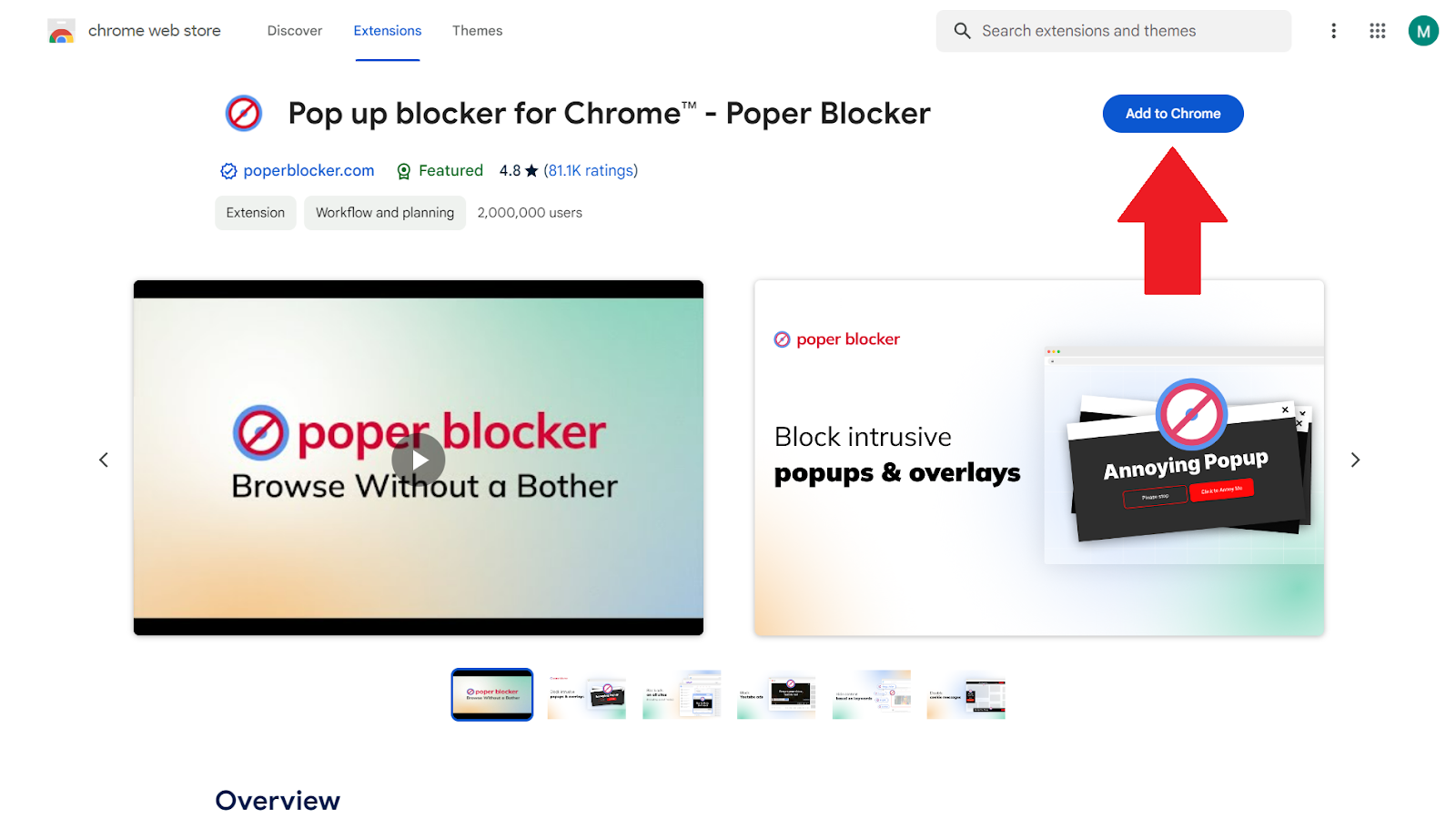
Look for Poper Blocker then click ‘Add to Chrome’ or ‘Get’ if you are using Chrome or Edge, respectively. Following this, the plugin will seamlessly integrate into your browser thereby enabling a pop-up free browsing experience.
2. Activation
Once installed, locate the Poper Blocker icon at the top right corner of your browser. This button opens up possibilities for a personalized online environment. Upon clicking on it, the control panel shall show up and here, the settings can be modified.

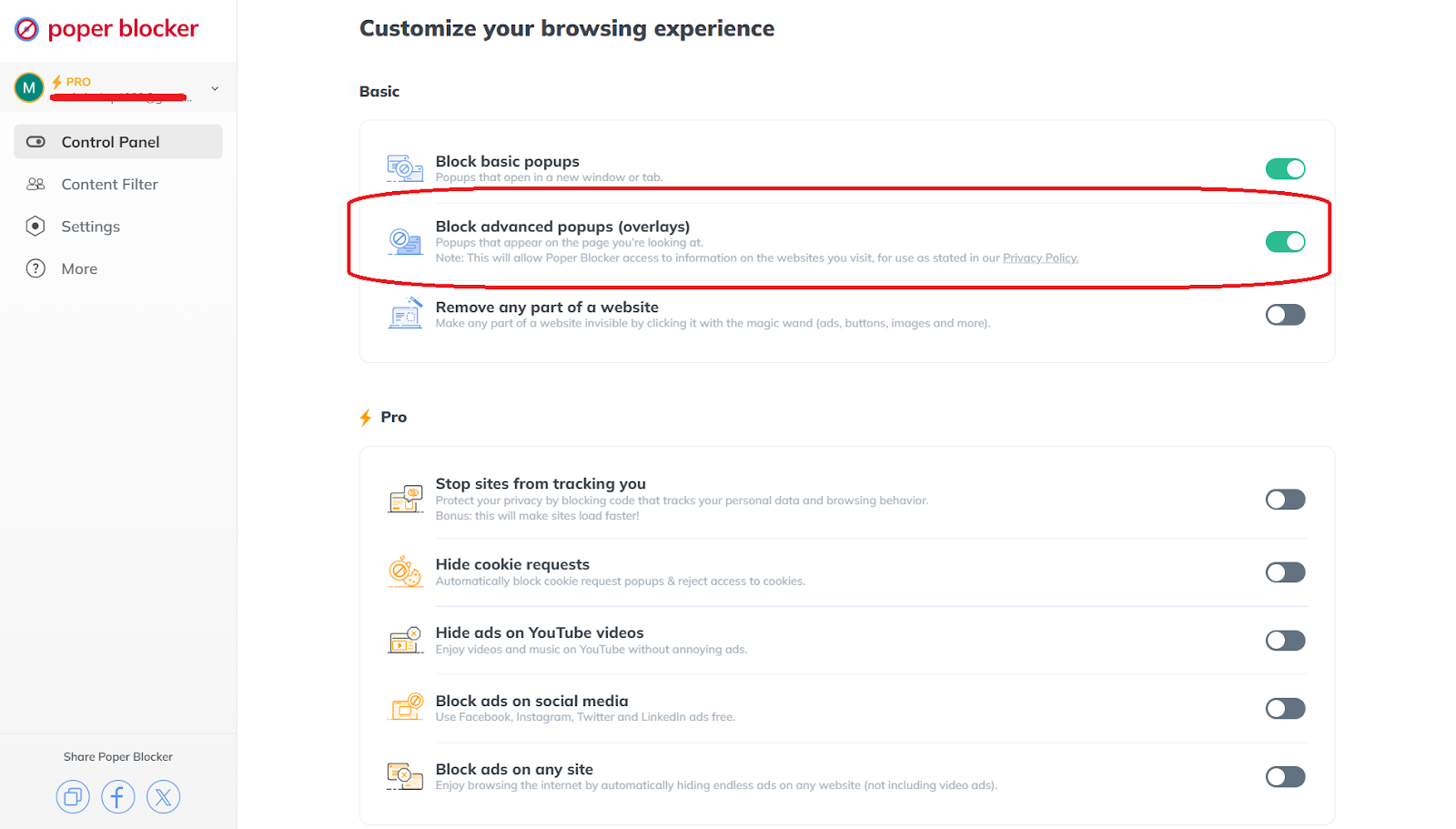
3. Blocking Basic Pop-Ups
To disable pop-ups that open in new tabs or windows, activate the ‘Block basic popups’ option. This is a quick fix that deals with the most prevalent types of pop-ups, therefore giving immediate relief against disturbances like this one.
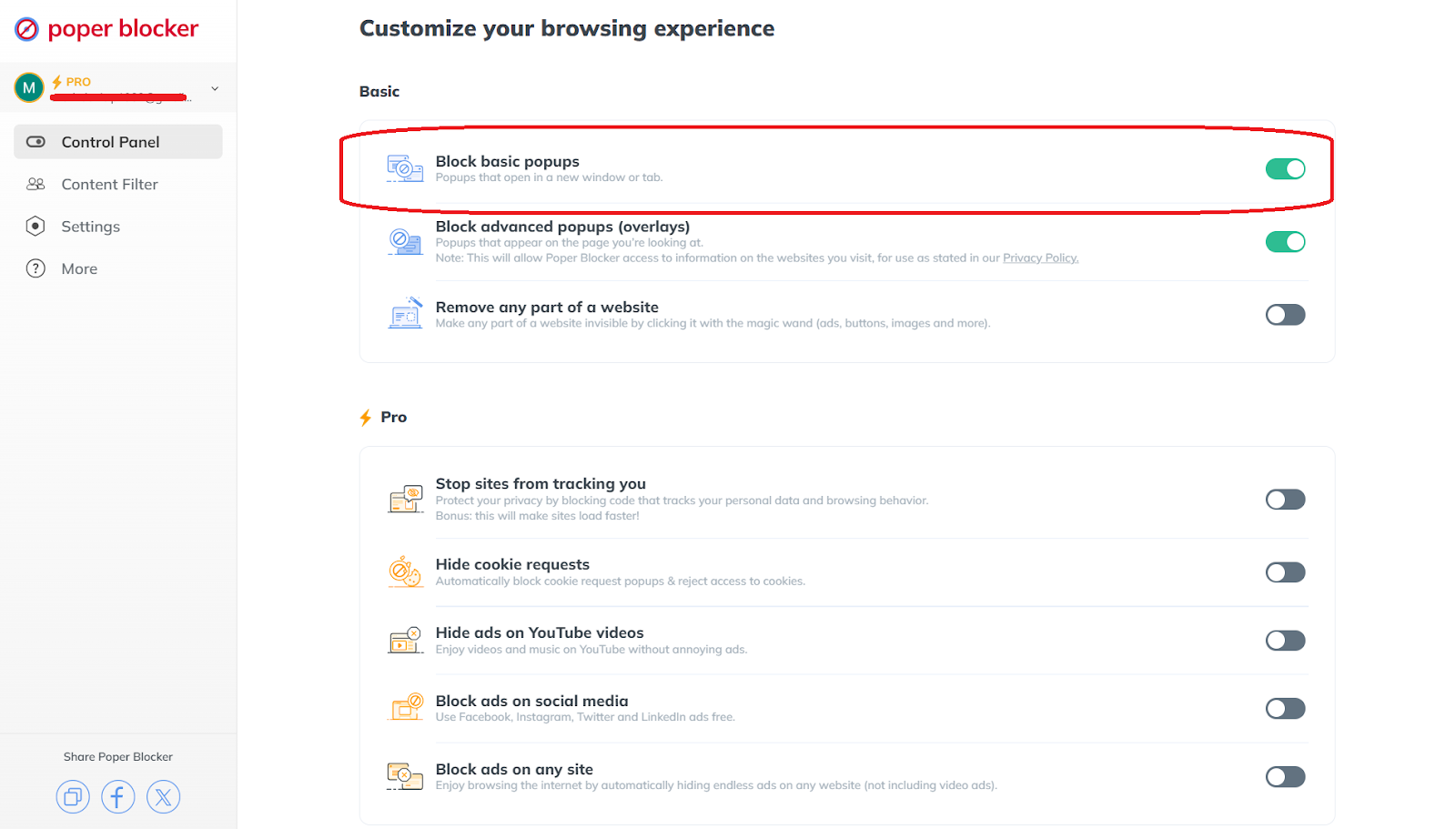
4. Blocking Advanced Pop-Ups (Overlays)
For aggressive and persistent dialogs that usually appear on the same screen, switch on the ‘Block advanced popups (overlays)’. This feature was specifically developed to stop pop-up ads that tend not to close easily, from annoying you.
A Cleaner Browsing Experience Awaits!
One should have a smooth internet experience without being interrupted by pop-ups. Whether it is reading the latest news, extensive research, or catching up on your favorite blogs, one thing you do not need is an intrusive pop-up distracting you from your train of thought. Here comes Poper Blocker, with its smart responses to bring back your peace and tranquility online.
With this powerful extension you’re not just blocking annoying spam pop-ups, you’re also customizing your web surfing experience. So start filtering out the noise and focus on what truly matters to you. This is more than just an ad blocker, this is your trusted online guardian that keeps out all unwanted advertisements for uninterrupted browsing.
FAQs
Are pop-ups of any use to users?
Yes. Pop-ups, if developed with the user in mind, can do more than just promote something. Some of these may alert you on exclusive discounts, others offer valuable resources such as eBooks and guides that require very little information in return, while some even send you crucial updates or alerts. If they are relevant and timed perfectly, such pop-ups add to your browsing experience rather than interfering with it.
What is the distinction between a pop-up and a banner ad?
The two are ways of getting attention but occupy different spaces within your browsing view. Online pop-ups act like unexpected guests who appear over the content you have been viewing asking for your immediate attention, whereas banner ads are the residents of the web page where you are on; they live inside its layout either at its top, bottom or sides and try to catch your eye as you scroll or navigate through the site. Pop-ups can be dismissed, while banner ads remain visible as long as you stay on that page.
How do websites understand when to show an exit-intent pop-up?
It is a smart technology called exit-intent. It observes your interactions on a website by monitoring your mouse movements. Rapid upward movement across the screen towards browser tabs and close buttons positioned near the top is taken as an indication that a user intends to leave, triggering an exit-intent pop-up, and asking users to stay longer either via special offers, intriguing content, or questionnaires.
Can pop-ups affect website loading speed?
Yes. Pop-ups may cause additional load time for a web page, slowing down their full display time considerably. Therefore, marketers and web designers should ensure that every popup is optimized for fast loading speeds. Techniques include compressing images, reducing the usage of excessive scripts, and making sure that the pop-up does not interfere with the main pages’ performance by loading it asynchronously.
Do all pop-ups contain ads?
Not at all. Most of them, however, are made for advertising purposes but they can be used in various non-commercial scenarios as well. Age verification on sites with age-restricted content, gathering feedback via short surveys, providing navigation assistance, or updating the users about some important information are just a few examples of the many other uses to which they can be put. Their flexibility has seen them used beyond mere adverts to add functionality and user engagement to a site.
Every day, an internet user is bombarded with an average of 5,000 ads (source G2 Learning Hub). This overwhelming flood of advertisements spans across various platforms, from social media to search engines, making it nearly impossible to avoid them. But what if you could browse through this ad-laden online landscape more smoothly?
What are Online Ads?
Online advertising works in a similar way to billboards. Its aim is to catch your attention and make you interested. Online ads can be found in different formats that all communicate messages or promote products, services, or brands. These ad-tracking tactics utilize the extensive reach of the internet and target specific audiences with precision by using data about browsing habits, interests, and even geographical locations to deliver content that is relevant.
The core goal of online ads is to encourage traffic and conversions i.e., moving users from being curious to taking action. Each ad does this differently by asking users to click through a website, buy something, or even sign up for a newsletter as long as there’s an interaction happening between the ad and the user. The beauty of online ads lies in their ability to be measured and adjusted in real-time so they remain effective throughout their time on the web also providing advertisers with performance insights. This dynamic nature allows strategies to be refined for maximum impact making online advertising an incredibly powerful tool for marketers.
Despite its many advantages, being constantly bombarded with too many ads could have a negative effect on people who seek cleaner, more focused experiences while surfing the web. That’s why tools have been created to do just that: filter out unwanted ads and block distractions so you only see what matters most!
Types of Internet Ads
The world of Internet advertising is always in flux and complex, with a variety of ways to reach consumers. Each serves a different purpose and meets customers at different points in their journey, from not knowing what they want, to hitting that “add to cart” button. Below are the different types of online ads:
Search Engine Ads
You’re probably most familiar with these ads. They pop up on search engine results pages when you look up something specific. Their use is pretty self-explanatory — they aim to connect people with products and services they’d like that match up with their search terms. They operate on a pay-per-click basis, which means brands only have to pay for ads when users actually click on them. It’s a much more effective way of using marketing budgets than paying for impressions or views, since if someone is interested enough to click through, the chance they’ll purchase goes up too.
Social Media Ads
Social media has become one big fat ad space (when you’re not just looking at cute puppy pictures). Platforms use our personal data to tailor ads specifically for us based on our interests and behaviors. Facebook, Instagram, Twitter, and LinkedIn all offer unique ad options for businesses trying to target different types of users. Whether it’s a sponsored post or a carousel ad doesn’t matter — each option gets brands’ messages across in different ways and engages users as much as possible.
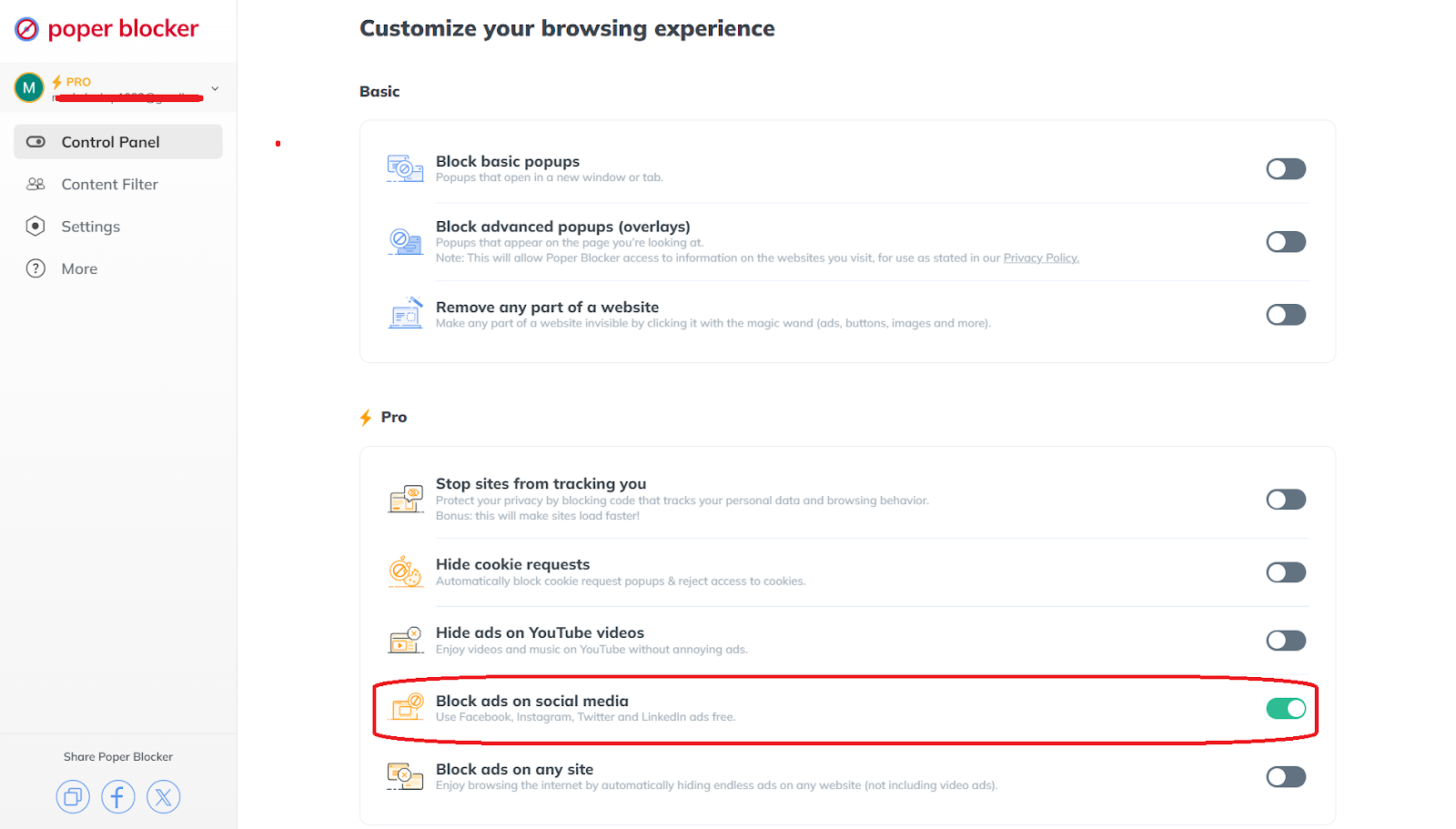
With the help of Poper Blocker, you’ll be able to manage your exposure to these ads, so that you’ll have a cleaner, more focused social media experience by blocking unwanted content.
Banner and Pop-Up Ads
Think back to early 2000s web design — that’s where you might remember banner ads. Ad spaces appear as rectangles around website content instead of taking over an entire page like pop-ups do. While both formats are great for increasing visibility, we’ve come to hate them due to how obnoxious some can be (especially those that refuse even after we hit the exit button three times).
The rise of ad blockers helps prevent these from popping up while we’re trying to read an important article. When designing future banners or pop-ups, companies are pushed to make them engaging enough to entice clicks without making users want to throw their computers out of a window.
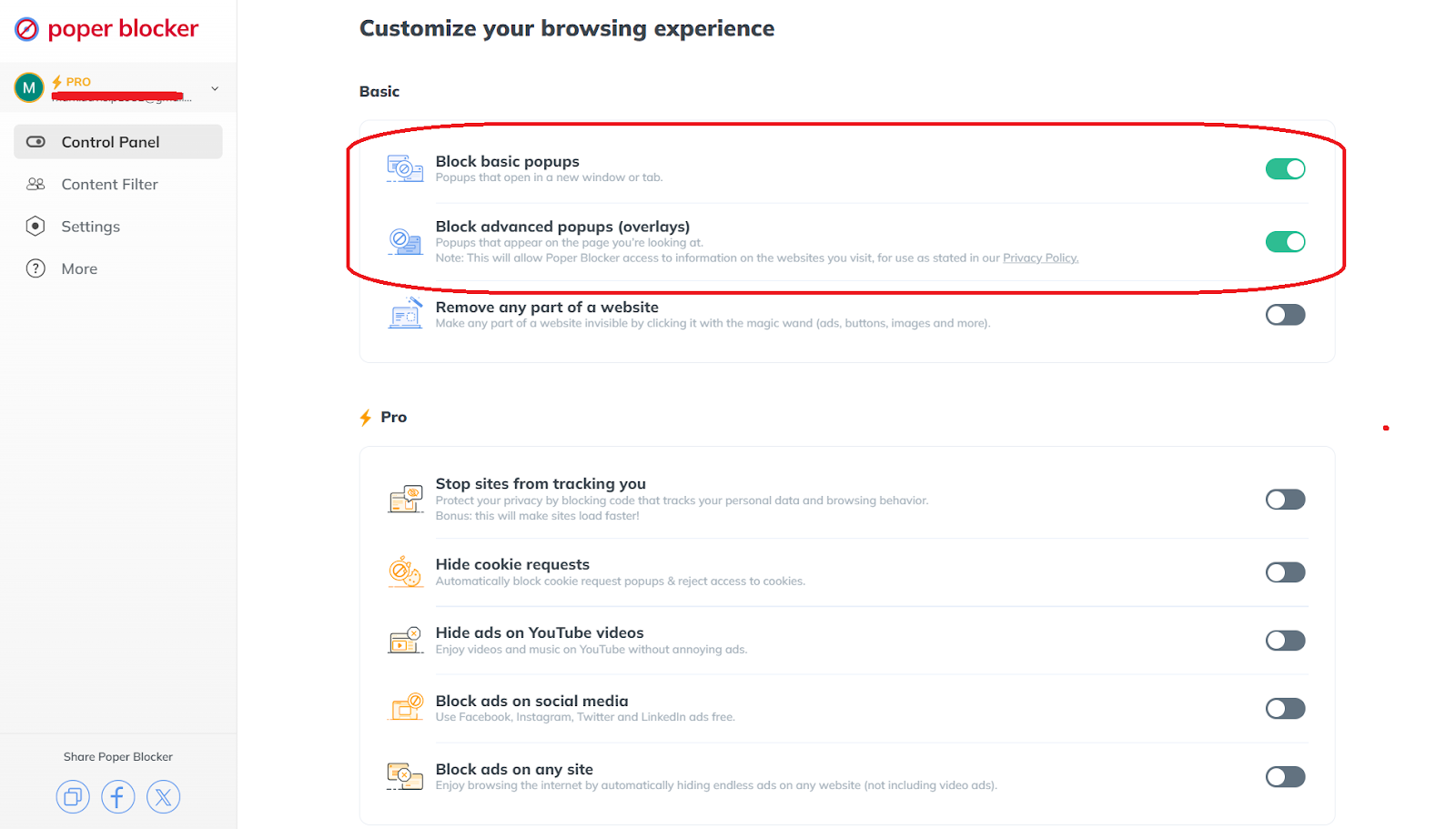
Poper Blocker addresses this challenge head-on, as it has advanced features to block both basic pop-ups and advanced overlays so you can have a smoother browsing experience. With this browser extension’s capability of stopping pop-up ads, you’ll be able to engage with content without interruption.
Video Ads
With faster internet and infinite streaming services, videos have become the go-to ad format for many brands. They can tell a story or evoke an emotion in a way that simple text or static images just won’t do. YouTube offers skippable and non-skippable options for advertisers, providing plenty of versatility in how they deliver messages. These include pre-roll ads that play before a video begins, mid-roll ads that interrupt content midway, and post-roll ads that appear after the video ends. Such a variety makes it more frustrating for viewers to block YouTube ads. And they’re not just confined to video platforms, you’ll see them across social media and other websites as well.
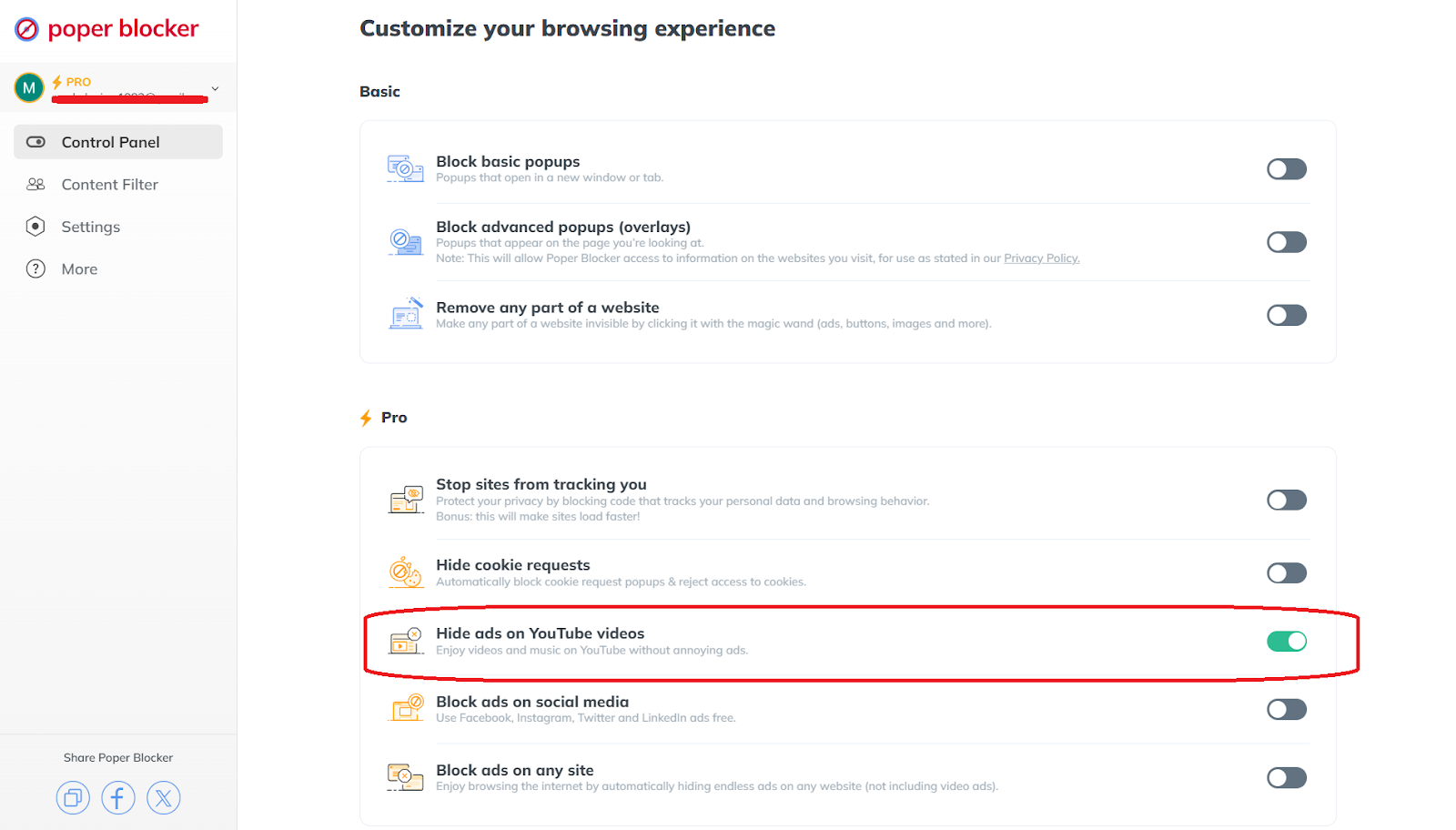
For those who don’t want their favorite cooking show or any important videos interrupted, tools like Poper Blocker exist to help block video ads on certain platforms, such as YouTube and social media where they run rampant.
The diversity in which ads are presented on the internet shows the creativity and adaptability found within online marketing. Advertisers have an extensive set of tools they can pull from, allowing them to finely target their audience and make real-time adjustments based on performance data. But with the rise of ad-blocking technology comes an increasing desire among internet users for more control and less intrusion. This trend challenges advertisers to find new ways to engage their audience while also preserving the user experience.
A Seamless and Uninterrupted Browsing Awaits
The quest for a seamless and uninterrupted browsing experience is paramount. With the proliferation of different types of internet ads, tools like Poper Blocker can be your primary tool in seeking solace from the relentless ad barrage. By empowering users to take control of their online environment, Poper Blocker not only improves the browsing experience but also redefines the relationship between content consumers and advertisers.
As we move forward, the balance between effective advertising and user satisfaction will continue to evolve, with innovative solutions like Poper Blocker leading the charge. This evolution promises a future where online spaces are tailored to the preferences of each individual, offering a cleaner, more enjoyable way to explore, engage, and connect online.
FAQs
How do online ads influence buyer behavior?
Various types of Internet advertising can greatly impact a buyer’s behavior by gaining brand visibility, influencing perception, and driving purchases. Well-targeted ads can introduce new products or services to a receptive audience, encourage exploration of a brand’s offerings, and ultimately lead to conversions. The key is making sure these campaigns are relevant; and if they resonate with viewers’ interests or needs more positively.
Can ad blockers affect website revenue?
Of course! While there are benefits of using an ad blocker, they have been able to hinder site revenue for years now especially since those websites rely so heavily on ad income. Simply put; when users use ad-blockers, they won’t see any ads, which means the website doesn’t earn money from those views or clicks thus leading them to seek alternative ways of bringing in money.
What’s the future of online advertising?
The future of online advertising isn’t certain, but we do know that technology will always play a major role in shaping it over the coming years – along with regulatory laws and consent changes from consumers as well. In terms of ideas though, personalized ads will definitely become much more common in everyday life as algorithms improve and reach their peak efficiency levels.
How do personalized ads work?
This type uses collected data about a user’s online activities (such as browsing history, search queries, social media interactions, etc.) all aimed at displaying way more engaging and relevant ads to their interests and needs. This strategy is designed to maximize the likelihood of conversion by aligning ads with a user’s current interests. It’s safe to say that it requires sophisticated algorithms and data analysis tools to accurately match ads with potential customers, but once it gets going… there’s just no stopping it!
Online ads are everywhere. From spam popups that interrupt your video binge-watching to banners that crowd your favorite websites, the digital space seems cluttered with advertising. But why has it reached the point where there are just too many ads, and more importantly, why are these so annoying?
Studies reveal a stark reality: a whopping 70% of internet users find digital ads annoying, and a similar percentage report a negative impact on their perception of brands due to poor ad experiences. This sentiment is echoed across various platforms, with users lamenting the intrusion of ads into their online activities.
Why are ads so annoying now?
Advertisers are finding it harder to reach their audience online because the landscape has changed. Below is an examination of some of the core factors behind the increased frustration:
Interruption and Distraction
The basic intention behind advertising is to be noticed but in more recent times, this has become increasingly invasive. These days, ads burst out right in the middle of videos abruptly interrupting what is happening.
It is not just a minor disturbance but also a huge obstacle to internet content enjoyment. Imagine getting into an article or video only to be jerked out by an ad; this is tiring and does not make one enjoy online spaces anymore and it’s one of the reasons why users want to find ways to block distractions.
Irrelevance
Another major issue is irrelevance. Given the amount of intelligence technology these days has reached, you would think there should be relevant targeted ads. However, they often miss the mark. Advertisements for things that users have no interest in keep coming up on their screens thereby making them feel spammed with billboards nobody would ever buy.
Overload
The number of ads being posted has gone beyond the limits that most people can handle. Websites are flooded with banners, sidebars display recommendations while videos start after commercials which cannot be skipped.
This saturation makes it challenging to find the actual content one is looking for. Navigating through this online maze becomes even more frustrating leading to feeling lost among countless advertisements.
Privacy Concerns
There are fears about privacy as a result of targeted ads that intrude on people’s lives too much. The realization that one’s online activities, preferences and at times personal information are being monitored with the aim of generating ads might be quite unsettling for many individuals out there. This breach of privacy adds insult to injury since it appears as if one’s personal space has been invaded upon by others without consent. This reaction against ad tracking shows how sensitive people have become over use and protection of private data in cyberspace.
These elements combined raise questions about whether or not advertising today is more irritating than before. The interruption of content, irrelevance of the ads, overwhelming presence, and privacy concerns combine to create a user experience that is far from ideal, pushing many towards seeking solutions to block or limit these advertisements.
Where do people encounter online ads the most?
The internet is awash with too many ads, each trying to commandeer the user’s attention. These ads are not randomly placed; they are carefully placed where they will be most noticed and engaged with. Here is a closer look at the types of online ads and where they dominate:
News and Media Sites
Advertisers love these platforms. The moment users visit this site for the latest updates, their eyes are overwhelmed by countless ads on it. That means top-of-page banner ads, videos that play before content, etc.
It’s simple: high traffic means more visibility. Nonetheless, in many cases this results in an overbearing user experience that pits news against advertisements for space and attention resources to avail a distracting environment from the main objective of delivering news.
Read More: How to Block Ads on News Sites and Stop Distractions
Social Media
Facebook, Instagram, Twitter, and LinkedIn as examples have become ad-heavy environments. These platforms collect massive data on their users enabling them to have highly targeted adverts. The sheer number can be daunting though this may make adverts more relevant.
On social media platforms like feeds, stories or even as sponsored messages, there are a lot of adverts making them one of the most saturated areas online. Given their personal nature, these spaces may feel invasive, blurring social interactions with commercial solicitations.
YouTube
For many users, video ads on YouTube remain controversial issues till date. Such an ad could be a pre-roll, which plays just before the video you are about to watch or mid-roll interruptions or other forms of interruption that come up during your viewing session thereby significantly causing interference to smooth the viewing process.
But YouTube has found a way of tailoring its ads according to viewer’s interests thanks to its algorithm-driven approach. This does not mean that they are less irritating either way you put it. With an extensive audience base and engaging video content availability, advertisers find it attractive hence leading to overabundance of adverts on this platform.
Streaming Services
While paid streaming services often promise ad-free viewing, many free or lower-tier options come with ads. These may include short clips between episodes or full commercial breaks. Ads can be particularly disruptive when they interrupt immersive content such as movies and TV shows, because they take viewers out of the experience. With the increasing popularity of streaming, we will see more and more ads being used to monetize these platforms reaching a larger audience.
Read More: How to block pop-ups on movie streaming sites
Blogs
There are a lot of ads on blogging websites that have made them major sources of income for most bloggers. Various forms of ads appear on blogs such as:
- Banner ads
- In-text links
- Sponsored posts
Monetizing without degrading user experiences is the goal of most bloggers hence; finding the best mix is not always easy. Because they are often personal and tailored to specific subjects, blog advertisements tend to feel alien or overly aggressive sometimes, especially when there’s no good match with the page topic.
Entertainment Websites
Entertainment sites like online magazines, gaming pages, and celebrity gossip portals also come under this category that have a lot of ad support for it. These sites target various demographics making them attractive for advertisers. These adverts can be rather distracting, owing to dynamic elements like flashy animations that insistently grab attention. The fun and leisurely nature of such websites means that they distract much from what users are supposed to enjoy while on this type of web page.
Apart from these main locations, ads are found on many different platforms and services online. These advertisements can be found everywhere, from search engines to e-commerce websites.
It is obvious why certain ads are placed there: this is because it is where most of the users will be found. However, as the adverts grow more rampant and invasive, more people get irritated about their presence, forcing them to look for viable ad-blockers that will help them repossess a tidier internet without much congestion.
Use Poper Blocker to block ads, everywhere
Most web users find it almost impossible to browse the internet without encountering ads. Poper Blocker is a Chrome and Edge browser extension with an effective solution for this challenge.
By installing this tool, one can keep away from too many ads on websites, including some of the most ad-intensive platforms like social media, news sites, and video-playing services.
Ad Blocking on Any Website
One of the features that make Poper Blocker so appealing is its “Block ads on any site”, which simply means that you don’t have to be perennially bombarded with advertisements.
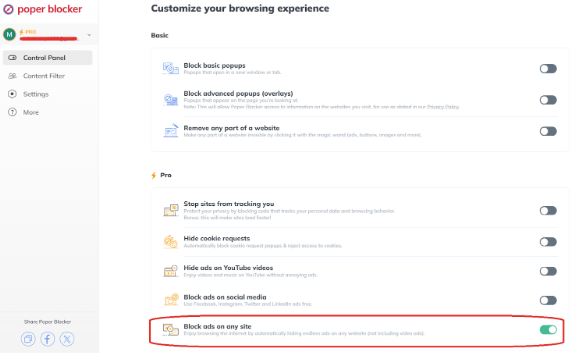
This feature works quietly in the background once activated, hiding any advertisement that may appear whilst browsing through any website visited. This includes stopping pop-up ads, those annoying banner adverts, or sidebars that clutter your screen when all you want is just to concentrate on what you are reading or watching. It is worth noting however that while this capability will be able to get rid of most types of ads, it does not block video ads.
Ad Blocking on YouTube
For many people, YouTube is a daily destination for entertainment, learning and relaxation. In such situations though, unskippable ads and frequent interruptions can really spoil the mood as well as dilute the content being viewed or listened to some extent.
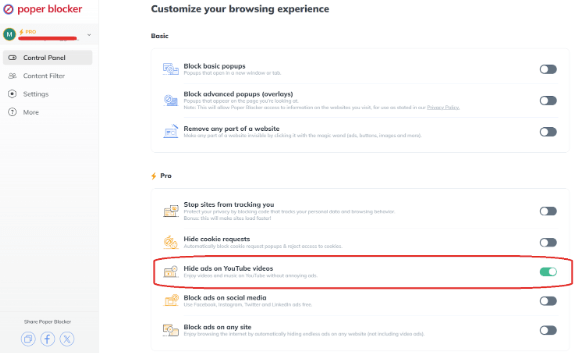
Poper Blocker has provided relief for this by introducing “Hide ads on YouTube videos”. By turning it on while using YouTube, people can now watch videos and listen to music without being bothered by advertisements hence making their experience more enhanced.
Read More: How to Block YouTube Ads on Chrome
Ad Blocking on Social Media
On social media platforms targeted advertising often results in sponsored posts clogging up people’s feeds. “Block ads on social media” offered by Poper Blocker removes advertisements from Facebook, Instagram, Twitter and LinkedIn, among other platforms thus cleaning your experience in these areas up again.
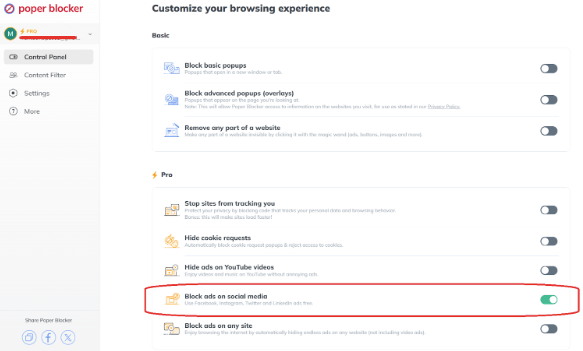
For example; what if instead of seeing unwanted ads, we only saw content from our friends and family’s pages that we actually care about?
Simplicity and efficiency are what define Poper blocker which provides a direct way of improving one’s internet experience. By addressing the primary sources of ad frustration, Poper Blocker helps users reclaim control over their online environment, making browsing a pleasure rather than a chore.
Read More:
Don’t let ads ruin your day. Get Poper Blocker today!
Take a stand for a cleaner, more enjoyable online experience
It could have been expected that the internet, having a massive number of resources and an infinite amount of information, would be a place where people can have ease while discovering new things rather than get frustrated or interrupted. However, for many users, this has become a constant battle to fight off ads that crowd their screens and disrupt the flow of information. Poper Blocker is a formidable companion in this fight against ad overload, as it offers a seamless solution to the problem.
When you add Poper Blocker to your browser, you do not just block unwanted ads; you are taking a stand for a cleaner and more enjoyable online experience. It is about regaining control over what you see and when you see it, in order to ensure that your time on the internet is spent as desired. It’s not just likely but with Poper Blocker, it’s within reach: an ad-free online browsing experience. No more too-many-ads frustration—just smooth uninterrupted browsing!
FAQs
What makes an ad effective instead of annoying?
The right advertising strikes a balance between being seen without interrupting the user’s activities on the internet. This is based on personalization; user preference-oriented ads that consider their browsing habits are more likely to be accepted. Time and context are also important factors—ads that appear in time and in sync with what users are doing may improve rather than worsen user experience.
How do ad blockers affect the economics of the internet?
While there are benefits of using an ad blocker, they have a dual role to play as far as the internet’s economic model is concerned. On one side, they pose a challenge to the conventional ad-supported model used by many websites, and this means less revenue for them because content creators and service providers rely on advertising. On another hand, such an application forces marketers and advertisers to invent new ways to get through to people that will not disturb them so much or distract their attention from what they are doing.
Can websites tell if I use ad blockers?
Yes, many sites can detect when someone has installed an ad blocker. There may be some sites asking you to turn it off before you view their content while others can offer a subscription fee for either ad-light or no ads at all. Consequently, living in an advertisement-free online environment remains under discussion between digital natives who prefer cleaner browsers and publishers aiming at sustainable earning sources.
Can using ad blockers lead to ethical considerations?
This raises ethical questions about user experience versus content monetization. However, while users are entitled to clean web browsing without interruptions, content creators also deserve monetary value for their work. The moral consideration lies in striking a balance that respects both parties’ wishes which would facilitate a transition towards unobtrusive advertisements supporting free content while maintaining user comfort.
How do advertisers adjust to increased usage of ad blockers?
Advertisers are increasingly using more advanced strategies in order to engage users amidst the increasing use of ad-blockers. This involves developing more relevant, engaging content that improves the user’s experience, incorporating native advertising and sponsorship into the platform’s content, as well as monetizing through sponsored ads or subscriptions. The objective is to create messages that resonate with the audience rather than lecturing them with intrusive ad strategies; aiming at genuine interest and interaction.
Did you notice that there are too many ads online? They are everywhere, bombarding users with unwanted distractions. It’s estimated that digital advertising spending worldwide could reach $870.85 billion by 2027. This rising number highlights the alarming growth of online ads, leading many to seek a solution.
What is Ad Blocking?
Ad blocking is a technological intervention made to improve the user’s experience by removing advertisements from web pages. This process includes identifying and stopping ad content from loading, hence providing a cleaner and more streamlined browsing environment. In other words, it aims to block distractions which are often in the form of pop-up ads, banner advertisements, or video commercials interrupting and slowing down web navigation.
What is an Ad Blocker?
So what do ad blockers do? These tools usually come as browser extensions or standalone apps, scanning web pages for elements, such as ads, and blocking them from loading. Ad blockers are built with complex algorithms that remove adverts based on user-defined filters, which ensures uninterrupted content browsing.
Their rise can be linked to people’s desire to avoid cluttered websites. Users want their visual field back and they want to minimize the mental energy consumed by irrelevant advertisements that are often imposed on them. These tools eliminate these distractions, thus making it easier for users to concentrate on what matters more while browsing, making the content smooth-flowing without any frequent pop-ups, banners and video ads vying for attention.
Is Ad Blocking Safe?
Ad blocking has gained in popularity as more people desire a neat and secure browsing experience. Whether these tools are safe enough or they are as effective, remains the question we should ask ourselves. It is apparent that ad blockers bring about multiple benefits not only to users but also to online security.
Minimizing Malicious Ads
Primarily, malicious ads risk gets minimized with the help of ad blockers. Malware is often embedded within advertisements by cybercriminals through “malvertising.” Such advertisements may look like real ones. It can automatically download malware on your device when you click on it or even sometimes without any interaction at all.
Enhanced Privacy Protection
Furthermore, enhanced privacy protection is achieved through the use of ad blockers. Many ads track what you do online taking into account browsing habits, preferences and even places visited amongst others. This data is then used for personalized advertisements, a practice whose privacy implications are profound.
Lessens Phishing Risks
There is also a safety aspect related to the decrease in phishing risks due to ad-blockers. Phishing ads resemble genuine websites or services but aim to steal sensitive details such as log-ins or financial credentials from unsuspecting users.
Improves Browsing Experience
Ad blockers play a major part in improving overall browsing performance, which indirectly contributes to safety. Ads, which are resource-heavy, especially can slow down browsers and cause system instability in general terms.
More Focused and Less Stressful Online
Using ad blockers can help to create a more focused and less stressful experience while online. Ads overwhelm people due to their innumerable presence leading to distractions and annoyance. This state of distraction might make users more susceptible to clicking on harmful ads inadvertently.
Pros and Cons of Ad Blocking
Ad-blocking technology has revolutionized internet usage by providing benefits and disadvantages. For one to make a rational choice on whether to use an ad blocker, it is important to understand its pros and cons.
Pros
Enhanced Browsing Speed
Ads consume bandwidth and processor resources, thus slowing down the load time of web pages. Blocking them leads to faster browsing speeds when ads are eliminated through ad blockers, for a smooth navigation experience as well as efficiency of online activities. This is particularly useful for people who have slow internet connections or multitask over the internet.
Improved Privacy
Many advertisements track user behavior over websites in order to create targeted ads that can be displayed to them. Ad blockers prevent these tracking cookies from running thereby safeguarding user privacy. Thus, less information is collected about an individual by advertisers because there is limited such data available and this guarantees his anonymity on the Internet.
Reduced Data Usage
Every kilobyte counts when one has a limited data plan. Ads, especially videos or high-resolution images can consume data allowances quickly. By blocking ads that are responsible for large file downloads, blockers may save users from being charged for exceeding their limits.
Better Battery Life
Loading and playing advertisements drains out battery life, most especially on mobile devices. Users can make use of ad-blocking tools to extend their device’s battery life so much so that they are ideal for those who need to use devices all day long.
Focus on Content
Ads tend to distract users from content they actually want to see. By blocking ads, it creates a clean space where only relevant information can be accessed without any interruption at all.
Cons
Impact on Free Content
Many websites depend on advertisement revenues to keep their content free of charge. When users use ad-blocking software, they may inadvertently kill off the revenue sources supporting these sites. This can lead to less content being freely accessible while paywalls might become commonplace for others.
Website Functionality Issues
Some websites employ ad-blocking detection mechanisms to block access to content once they detect an ad-blocker. Users are therefore not able to visit specific sites or use some functionalities unless they disable their ad-blockers.
Ethical Considerations
The use of ad blockers raises ethical questions about the relationship between consumers and content creators. While blocking intrusive ads enhances the user experience, it also deprives content creators of revenue. This dilemma forces users to consider the broader implications of their choice to block ads.
Block Ads with Poper Blocker
Poper Blocker is a top pop-up blocking solution where people can seek respite from the countless online advertisements. This browser extension, which works with Chrome and Edge, has been designed to give you a more satisfying browsing experience by eliminating unwanted ads. Poper Blocker’s features are designed to fit different ad-blocking needs of users so as to provide them with an advertising-free internet journey that is cleaner, faster, and fun.
It does not mean that the strength of this extension lies in removing visual clutter only; it is rather about facilitating seamless interaction with the web. Poper Blocker intelligently identifies and blocks an extensive range of adverts by stopping pop-up ads, video ads, and even the less conspicuous sponsored posts on social networking platforms.
To fully optimize Poper Blocker, follow these steps:
1. Installation
Start by adding Poper Blocker to your browser. Visit the Chrome Web Store or Microsoft Edge Add-ons page, type in Poper Blocker in the search bar then click ‘Add to Chrome’ or ‘Get’ for Edge. The extension will integrate itself into your browser automatically.
2. Activation
Once installed find the Poper Blocker icon at the right-hand corner on top of your browser, click it and this will open up its control panel.
3. Customize Your Experience
Within this control panel, there are options for customizing your own ad-blocking preferences:
Hide ads on YouTube videos: By turning on this feature you can watch YouTube videos without any advert interruption which improves the viewing experience.
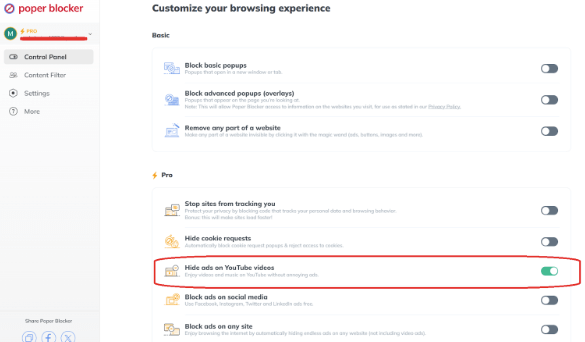
Block ads on social media: If enabled, this option allows you to browse Facebook, Instagram, Twitter, or LinkedIn without seeing sponsored content.
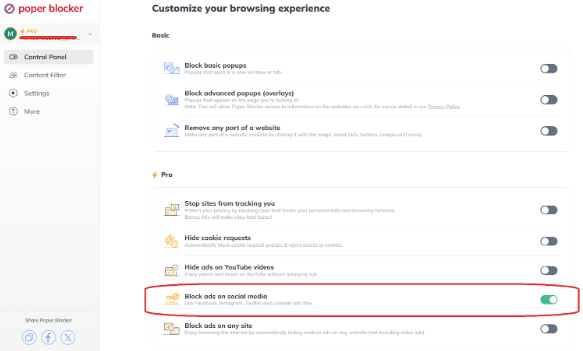
Block ads on any site: By enabling this feature you will be able to navigate through the entire internet while facing minimal distractions – making all (excluding video) ads disappear from the websites you visit automatically.
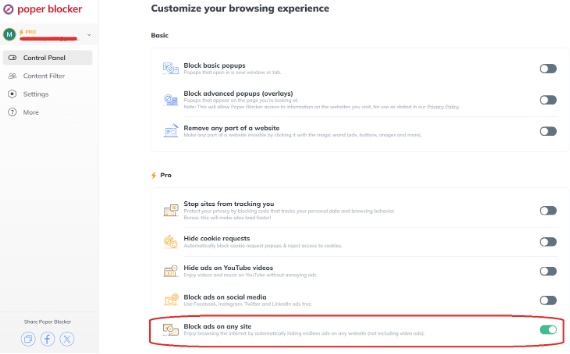
By adhering to these steps, you gain an effective tool against online advertisements. Poper Blocker’s user-friendly interface and customizable settings make it a perfect fit for those who wish to feel in charge of their online experience again. Be it your favorite YouTube channel, social media, or any other website you are researching, Poper Blocker keeps the focus uninterrupted by ads.
A Cleaner Web on the Horizon
The development of ad-blockers like Poper Blocker signifies a major transformation in the way we experience the internet. We repossess our online space through tools that make it a place for concentration, productivity, and fun. Blocking ads is a choice that is not just about irritation; it is about creating a browsing environment that centers on content while being free from junk and annoying distractions.
This improved experience is at your fingertips with Poper Blocker, available for Chrome and Edge users. You can customize your ad-blocking settings to enjoy all that the worldwide web has to offer you without compromising between supporting your favorite sites and having an uncluttered internet surfing session and keeping yourself away from digital noise.
FAQs
Can ad blockers protect against all types of ads?
An ad blocker stops you from coming across various types of online ads such as pop-ups, banners, and video ads that will make your browsing experience less cluttered and more focused. Nevertheless, some advertising, especially those that are embedded in content or dynamically generated, are not always blocked. Advertisers keep changing their tactics to outsmart the ad blockers so while they actually block most of them, there is no guarantee that they can catch every single one.
Do ad blockers affect website analytics?
Yes, it is true that ad blockers can have an impact on how website traffic and user behavior are tracked and analyzed. Many ad blockers prevent the execution of tracking scripts, which record data on page views, and session duration, among other visitor interactions. That means analytics platforms might not capture everything, thus interpreting information only partially and sometimes, distorting this essential data for purposes of making informed choices by site owners and marketers.
Are there ethical ways to use ad blockers?
It doesn’t have to be a matter of either using an all-or-nothing approach with regard to employing ad-blockers. Many users install them to get a better browsing experience but at the same time, acknowledge the importance of compensating creators and publishers as well. This entails a principled outlook in which you select certain websites or content providers who are whitelisted whereupon their advertisements are shown unlike blocking them entirely. In this manner, one gets the advantage of having an ad blocker while still helping websites generate revenue.
Can I decide what ads I don’t want to be displayed?
You’ll find this flexibility feature present in several ad blockers including Poper Blocker. You’ll be able to adjust your choices on what advertising materials you choose not to see at all times. For instance, you can either go for universal blocking with respect to all ads or use customized settings that allow certain sites or content categories to continue showing adverts. By doing this, you are able to browse according to your preferences and needs.
Will ad blocking slow my browser down?
No. In fact, one of the benefits of using an ad blocker is that it usually results in faster page load times and a more responsive browsing experience. Ads like media-rich displays or those with heavy scripts can cause serious delays in loading pages and bringing them up on screen. Blocking these ads reduces the amount of data that has to be downloaded by your browser making it more efficient.
Poper Blocker: Your solution to block unwanted ads. Get it today!