Chrome Web Extension
 Edge Web Extension
 Android App
 iOS App


You open a page because you want answers. Maybe it’s an article, a product review, or a quick video. Instead, your screen gets hijacked. An email form slides in. A discount box blocks the text. Close that one, and another one appears. Miss the tiny X? You’re redirected somewhere random. Sound familiar?
This is everyday browsing now, especially on mobile, slower devices, and ad-heavy sites.
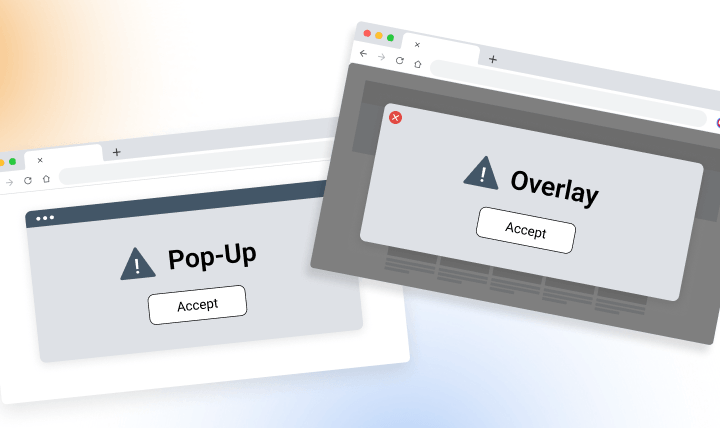
This is also where the confusion begins around what a pop-up is vs an overlay. The terms often get lumped together, but they are not the same thing. They behave differently, interrupt users in different ways, and come with different consequences for usability, performance, and search visibility.
In this guide, we’re going to explain how pop-ups and overlays actually work, why the difference matters, and how Poper Blocker can be your tool for cleaning up the mess on your desktop and mobile.
What is a pop-up?
You are reading an article. Halfway through a paragraph, something slides in from the side. Or drops from the top. Or opens in a brand-new window you never asked for.
That is a pop-up.
In web browsing, a pop-up is an element that appears automatically on top of or outside the main page content. It can load as a new browser window, open in a separate tab, or sit as a floating box layered over the page itself. In most cases, it appears without direct user intent. Timing rules, scroll depth, cursor movement, or delayed triggers usually control when it shows up.
Pop-ups are widely used for newsletter sign-ups, discount offers, coupon codes, and account prompts. Many publishers rely on them to capture leads or push short-term promotions. You will also see more advanced versions triggered when you move your cursor toward the back button. These are often labeled as exit intent prompts and are designed to catch your attention right before you leave.
Of course, not every pop-up serves a helpful purpose.
Many types of pop-up ads go far beyond basic marketing. Aggressive affiliate promotions, autoplay video windows, and redirect-based pop-ups can interrupt browsing altogether. Some are built to deceive. Fake virus warnings claim your device is infected and pressure you to click immediately. Others fall squarely into the category of pop-up scams, while the most dangerous cases escalate into a ransomware pop-up that attempts to lock your browser or demand payment.
From a user perspective, pop-ups introduce friction. They break reading flow, steal focus, and cause accidental taps, especially on mobile screens where space is limited. When overused, they turn into spam pop-ups that clutter sessions and slow pages down.
That frustration explains why modern browsers introduced native blocking features and why so many users actively search for ways to stop pop-up ads across desktop and mobile platforms.
What is an overlay?
An overlay is a visual layer that sits directly on top of a webpage’s existing content. Nothing opens in a new window. Instead, the page stays put while the background is dimmed or partially blocked, with a focused message placed front and center. Think semi-transparent screens with a clear call to act.
You’ll see overlays everywhere online. Log-in prompts, cookie consent notices, age checks, image lightboxes, and product tours all rely on them. Some lock the page until you respond. Others still allow limited scrolling or clicks underneath.
The real distinction comes down to integration. Overlays are built into the page experience rather than launching separately. Used sparingly, they can feel more controlled. When used too often, they slow people down. That’s why many users actively look for ways to block overlays when access to content starts feeling gated.
Popup vs overlay – key differences
Pop-ups and overlays often get lumped together, but they behave very differently once they hit your screen. Knowing how each one works explains why some feel mildly annoying while others make you want to close the tab immediately.
- Interaction blocking: Pop-ups tend to hijack the experience. They either open in a new window or pull focus away from what you were trying to read. Overlays stay on the same page, placing a layer on top of the content instead of pulling you somewhere else.
- Trigger type: Pop-ups usually appear on a timer or load automatically. Overlays are more intentional and often fire based on actions like a first visit, scroll depth, or account login.
- User flow: Pop-ups break momentum. You are reading, scrolling, or clicking, then suddenly interrupted. Overlays pause the experience but keep context intact, which makes them easier to recover from.
- Use cases: Pop-ups are commonly used for ads, email capture, or promotions. Overlays show up more in UI guidance, confirmations, and system messages.
- Mobile behavior: Pop-ups are clumsy on small screens and frustrating to close. Overlays can still be intrusive, but dismissal is usually simpler.
Both formats can damage usability when overused. Heavy scripts slow pages down and push users away. In conversations about pop-ups and SEO, analysts point to mobile frustration and early exits as real risks. Knowing the difference helps users browse more comfortably and helps site owners choose wisely.
Why blocking pop-ups & overlays matters
Interruptions while browsing
For most users, the problem is simple. Constant interruptions ruin the experience. Pop-ups and overlays break focus, cover the content you came for, and add friction where there should be none.
Mobile frustration
On mobile, it gets worse. One wrong tap and you are sent to a random page, an app store listing, or a download you never asked for. No surprise people actively look for ways to stop pop-up ads on Android and across desktop browsers.
Privacy and security concerns
Privacy and safety are part of the issue, too. Many pop-ups track behavior, load third-party scripts, or push users toward questionable destinations. Some even copy system alerts or browser warnings. That is exactly how fake virus warnings and shady redirects catch people off guard.
SEO
There is also the SEO angle. Google has made its position clear on intrusive mobile experiences. In a Moz report mentioning Google’s updated mobile guidelines, one thing was notable. It says that if an overlay, modal, or pop-up blocks users from reading the main content of a page, there may be consequences. Pages like this can lose their mobile-friendly label, along with the ranking advantages that come with it.
Mobile performance (specifically Android devices)
Then there is performance on Android devices. Extra scripts, images, and network requests slow pages down and increase data usage. Remove them, and browsing feels cleaner, faster, and far less frustrating.
Use Poper Blocker to solve it
If pop-ups and overlays are turning a simple browsing session into a mess of distractions, this tool is built to deal with that problem head-on. Poper Blocker works across Chrome, Microsoft Edge, and Android, so the experience stays consistent whether you are on a laptop, desktop, or phone.
At its very core, the extension focuses on pop-up blocking. The moment an intrusive element tries to load, Poper Blocker identifies it and stops it before it takes over your screen. That covers common offenders like aggressive ad windows, misleading system alerts, forced redirects, and prompts designed to push clicks rather than content.
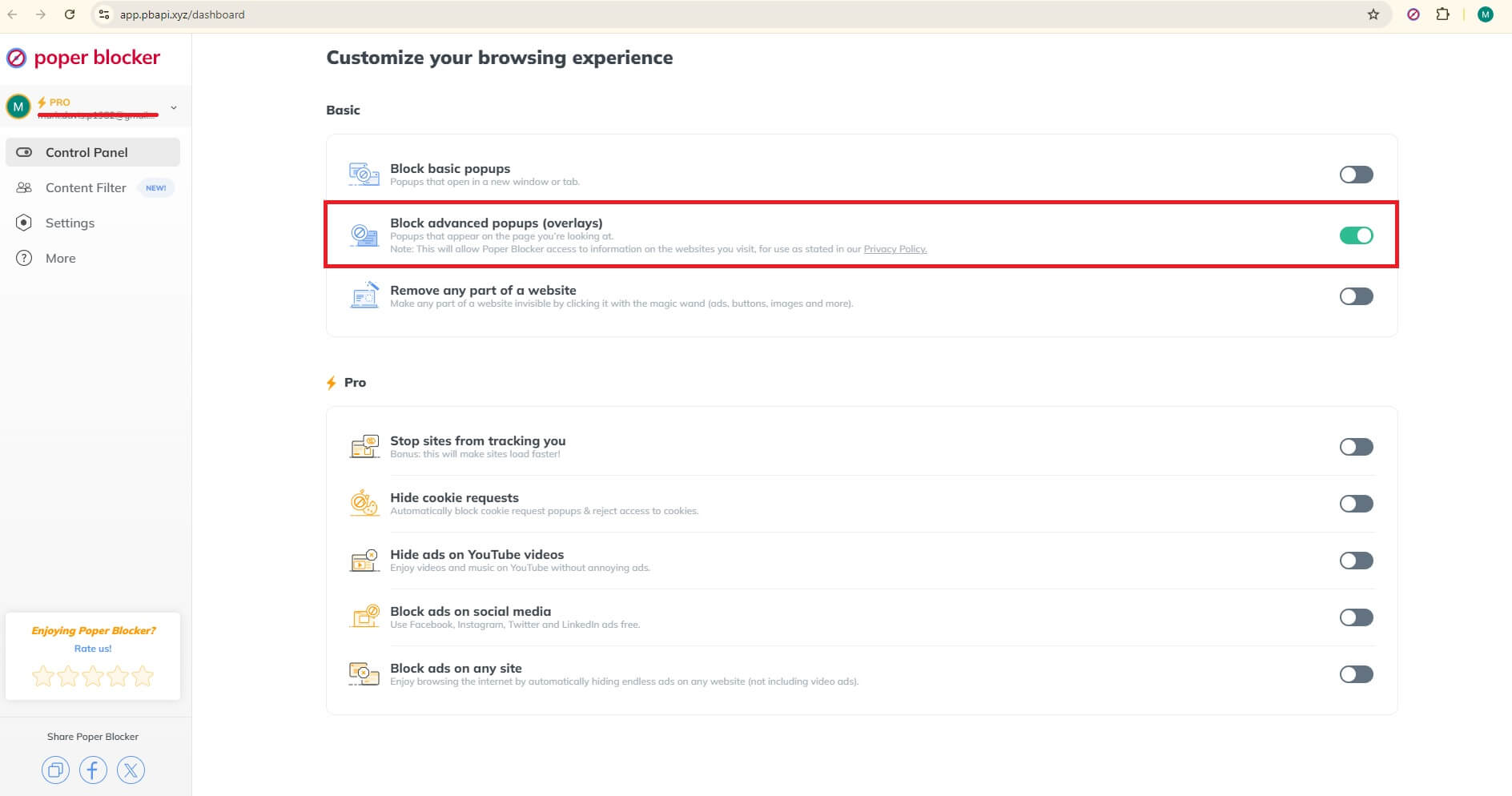
Pop-ups are the main priority, but overlays do not slide through unnoticed. When a full-screen banner or layered message blocks text, buttons, or navigation, Poper Blocker steps in to restore access. The goal is simple: let you read, scroll, and click without fighting the page.
The setup is straightforward. It runs quietly in the background without breaking site layouts or requiring constant input. If you want to block ads on Edge while keeping pages usable, the extension handles that balance automatically.
Mobile users benefit just as much. The pop-up blocker for Android helps clear clutter that causes slow loading, accidental taps, and constant interruptions, especially on content-heavy or ad-heavy sites.
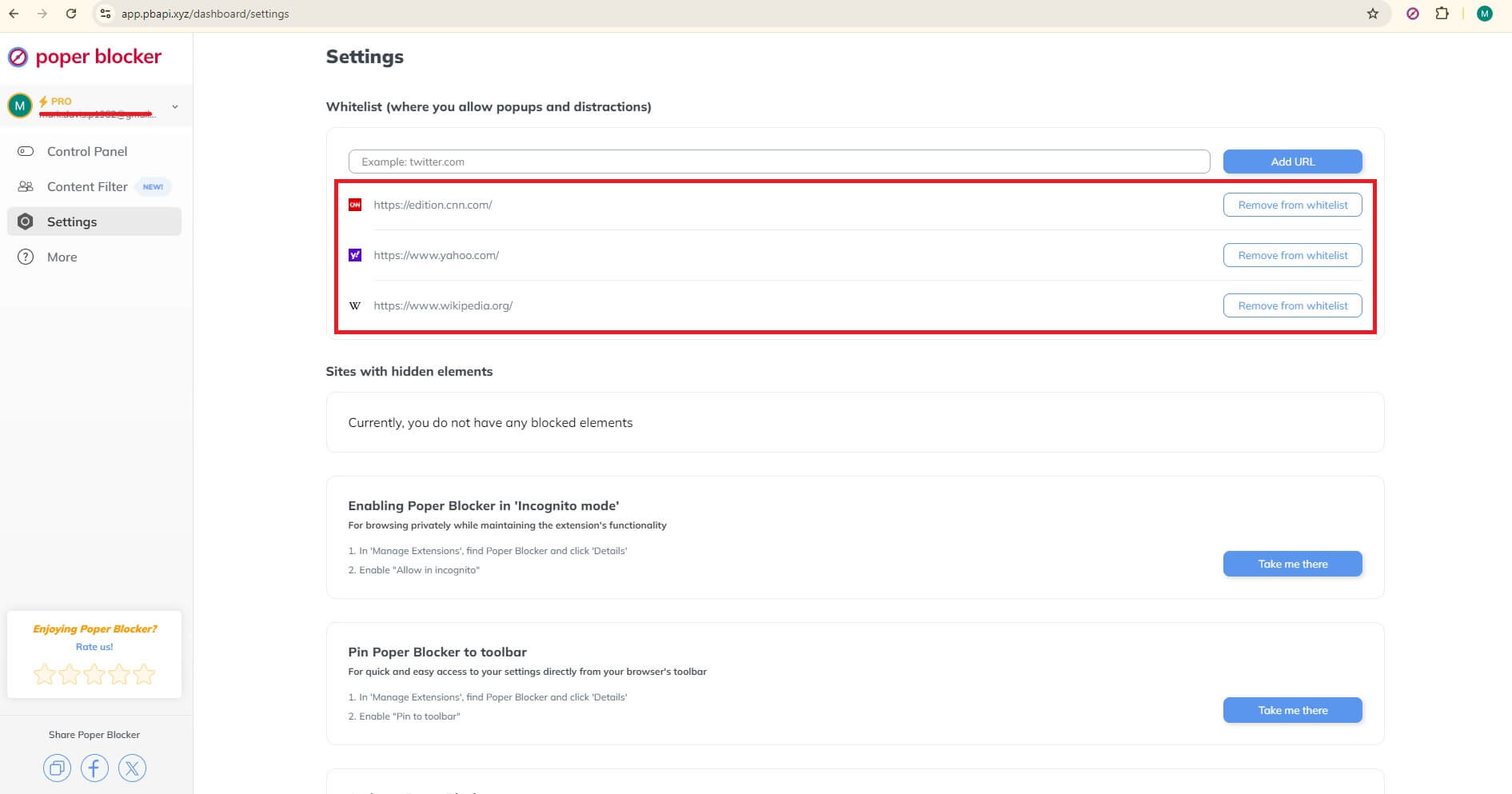
There is also room for control. Trusted websites can be whitelisted in seconds, so essential pop-ups or overlays can still function when they are genuinely needed. No digging through browser menus or the need to disable your pop-up blocker entirely. Say hello to fewer interruptions and a cleaner browsing experience.
Best practices for users
A few simple habits go a long way. You get fewer interruptions, fewer broken pages, and far less frustration overall.
Don’t block everything automatically
Going nuclear rarely helps. Some sites use pop-ups or overlays for practical reasons such as logging into an account, confirming age, completing a payment, or showing consent notices.
In these cases, allowing limited access keeps things working as expected instead of breaking important actions halfway through.
Keep blocking enabled by default
The safer setup is to leave blocking turned on and only make exceptions when something genuinely needs to appear. This filters out most interruptions while giving you flexibility when a site depends on a pop-up to function.
Poper Blocker’s whitelist makes this easy without forcing you to switch protection off entirely.
Use whitelisting for trusted sites
If you visit certain platforms often, whitelisting them can save time and irritation. Important prompts show up when needed, and you avoid endless reloads or strange layout issues caused by blocking required elements.
Be selective when sites demand full access
When a site insists you disable all blocking, stop and think. Many of these prompts serve tracking or advertising goals rather than real functionality.
Staying selective keeps your privacy intact and your browsing sessions fast, clean, and predictable.
It’s time to take back control of your browsing experience
At this point, the pattern should be clear. Pop-ups and overlays are not random annoyances. They are intentional, aggressive tactics that clutter pages, slow load times, and hijack attention, especially on mobile screens where space is limited.
The good news is that this cycle is easy to interrupt once you know where the problems come from. A reliable blocker that handles both pop-ups and intrusive overlays changes how the web feels almost instantly. With Poper Blocker running in the background, pages load faster, content becomes readable again, and interruptions drop off sharply across Chrome, Edge, and Android.
If browsing feels tiring instead of useful, that is your signal. Removing the noise puts you back in charge, so your screen works for you and not against you.
FAQs
What’s the main difference between a pop-up and an overlay?
Think of a pop-up as something that jumps in from the outside. It usually opens as a separate window or floating box and often triggers automatically. An overlay stays within the same page. It sits on top of the content using layers, sometimes dimming the background so your attention shifts to a single message.
Are pop-ups always bad for websites?
No. When used carefully, they can serve a clear purpose. Things like cookie consent notices, age verification, or login prompts are often necessary. The problem starts when pop-ups appear too frequently, block content without warning, or stack on top of each other. That’s when users get frustrated and leave.
Do pop-ups affect page speed and performance?
Yes, especially on mobile. Pop-ups usually rely on extra scripts, trackers, and third-party assets. These add weight to the page, slow down loading times, and increase data usage. On slower connections, that delay is very noticeable.
Can I control which sites are allowed to show pop-ups?
Yes. With Poper Blocker you can whitelist trusted sites. That way, important prompts still work where you need them, while everything else stays quietly out of the way.